Quick Answer
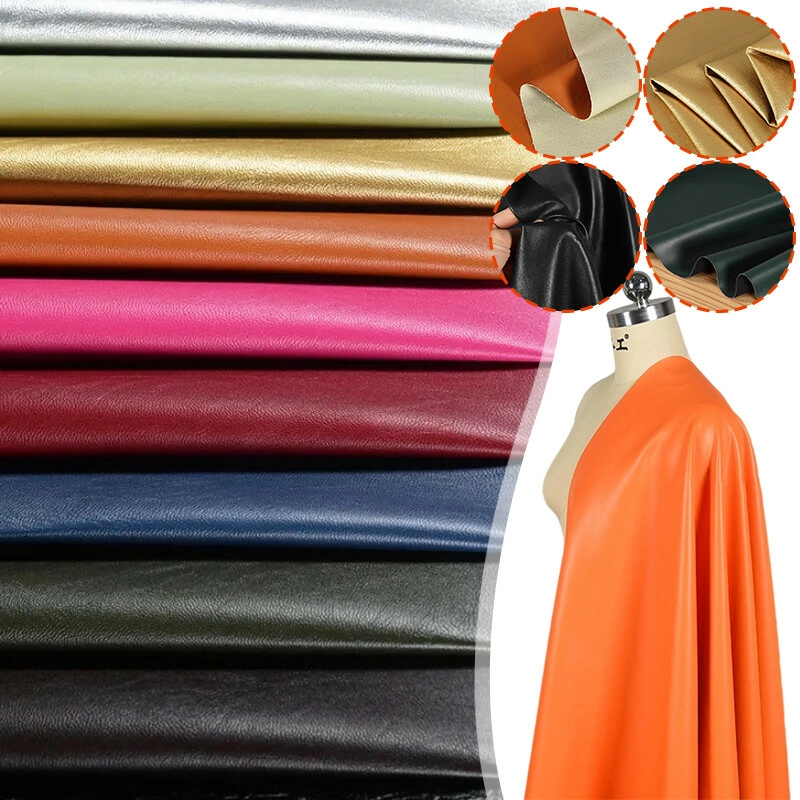
PU leather dress material should be chosen by softness, drape, backing feel and surface stability, not only by color or grain. A dress panel needs to fall, fold and move differently from bag or shoe material. For apparel brands, the most useful review is a physical sample check that compares hand feel, thickness, surface shine and how the material behaves in larger panels.
Soft PU leather for apparel can work for dress, skirt, jacket and fashion-panel projects when the material matches the garment structure. A material that looks good as a small swatch may feel too stiff, too glossy or too heavy when cut into a dress panel. Buyers should confirm the surface and backing together before production approval.
Why Dress Material Needs a Different PU Leather Review
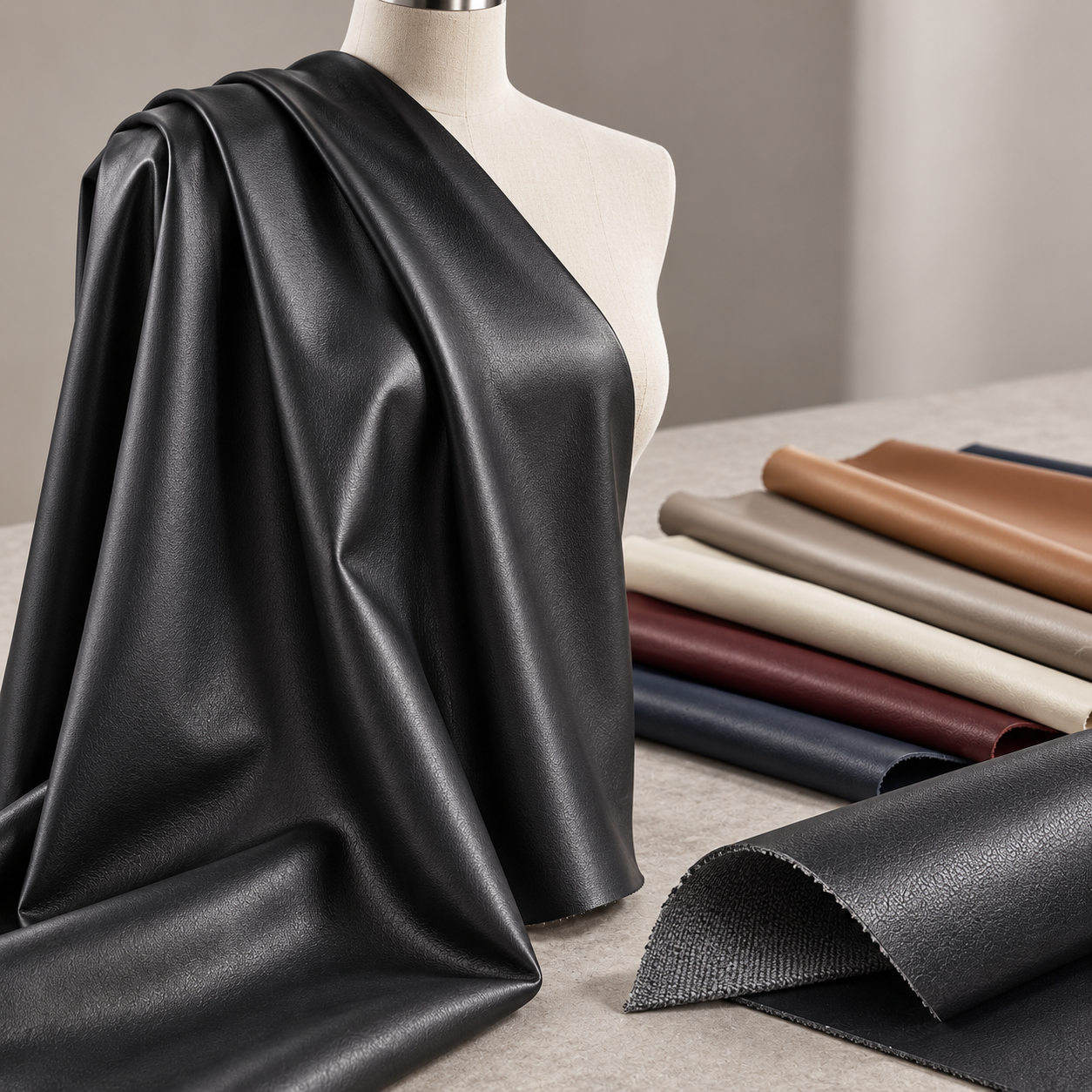
Apparel brands often begin with a surface idea, such as smooth black faux leather dress fabric or soft PU leather for apparel. That is useful, but it does not answer how the material will hang on the body, fold at seams or move when cut into panels. Buyers who already understand PU leather fabric by backing and finish should still review dress material through garment behavior.
Dress material is less forgiving than small accessories because large panels reveal stiffness, shine and color variation. A slightly firm backing may help structure in one garment, but it may make a dress look heavy or rigid in another. This is why the sample review should include both small swatches and a larger drape check when the style depends on movement.
Softness and Drape Are Related, But Not the Same
Softness describes the hand feel when the buyer touches or bends the material. Drape describes how the fabric falls under its own weight; the ACT textile glossary is a useful external reference for basic textile terms when buyers compare fabric behavior. A PU leather can feel soft in the hand but still fall with firm folds if the backing, coating or thickness is not suitable for the dress style.
For a fitted dress, the buyer may accept more body and structure. For a loose or gathered dress, the material usually needs softer folding behavior. In our material selection experience, apparel buyers often reject samples not because the surface is wrong, but because the fabric does not move the way the sketch or reference garment suggests.
Surface Checks Before Approving Faux Leather Dress Fabric
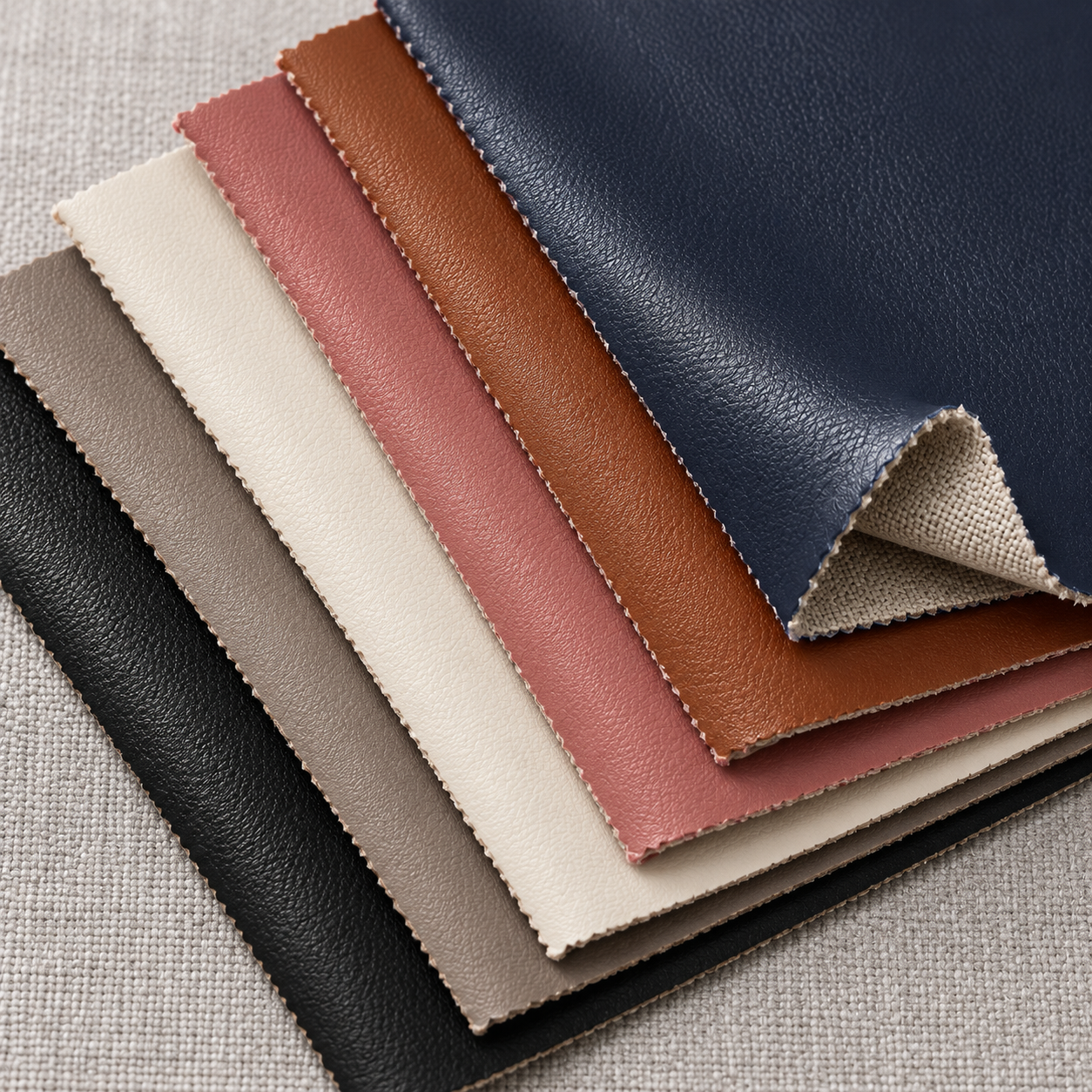
Surface checks should include grain depth, shine level, color consistency, wrinkle behavior and how marks appear under light. Danhon’s PU leather texture guide is useful because texture can change both appearance and touch. A smooth glossy surface may look sharp, but it can make scratches or fold marks more visible in a dress panel.
Matte and satin surfaces may be easier to style across larger panels, but they still need color and rubbing checks according to project requirements. Fine grain can hide small marks better than a perfectly smooth finish, while deeper embossing may reduce the soft apparel feeling. Buyers should compare the material under the lighting used for product photos and retail display.
Backing, Thickness and Weight Affect Apparel Comfort
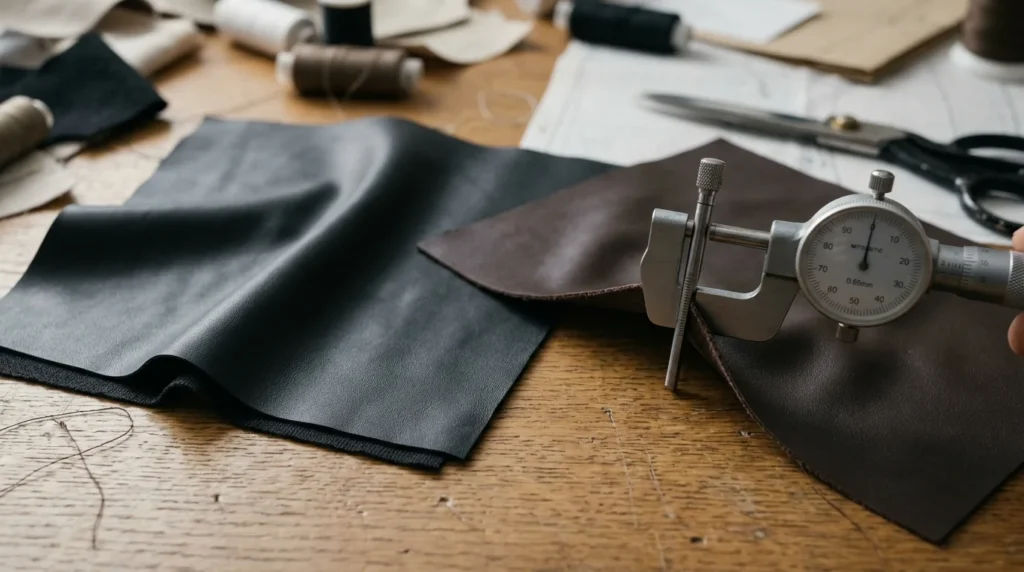
Backing is often the hidden reason a PU leather dress material succeeds or fails. A soft knitted backing may improve comfort and flexibility, while a firmer backing may add structure but reduce drape. Thickness should be discussed together with backing, because two materials with similar thickness can behave differently when folded or sewn.
For apparel brands, the goal is not always the thinnest material. Very thin material may lack body, while thicker material may feel heavy or stiff. A practical sample review should include bending, folding, edge checking and a small sewing trial before the buyer approves the material for a dress program.
Do Not Reuse Bag or Shoe Material Without Testing
Bag and shoe materials can look attractive, but they are often designed for structure, abrasion needs or panel support. Dress material usually needs a softer balance. A buyer can compare this topic with Danhon’s existing guide to faux leather jacket material, but dress projects need even closer review of panel movement and garment silhouette. For a trouser project, review faux leather pants material separately because loaded seams and knee recovery add requirements beyond dress drape.
A material that works for a structured handbag may create bulky seams in a dress. A shoe upper material may resist bending in a way that feels too firm for apparel. Before reusing an existing PU leather, buyers should test the real garment construction instead of assuming that one soft leather-like surface works across all applications.
Sample Approval Checklist for Apparel Brands
| Check Point | Why It Matters | Buyer Action |
|---|---|---|
| Softness | Controls touch and wearer comfort | Bend and handle the sample, then compare with the target garment feel |
| Drape | Decides whether panels fall softly or look rigid | Review a larger panel, not only a small swatch |
| Surface finish | Affects shine, marks and photo appearance | Check matte, satin or gloss under real lighting |
| Backing | Changes comfort, stretch feeling and sewing behavior | Fold the edge and review underside texture |
| Color | Large panels can show shade and gloss differences | Confirm color by physical sample and lighting condition |
How Danhon Can Support PU Leather Dress Material Selection
Danhon can support apparel buyers with PU leather directions for garments, including soft surface, color, texture, backing and hand-feel discussions. Buyers can also review the PU leather for garments product category to understand available garment-facing material directions. Final selection should still be confirmed through samples and application-specific checks.
The most helpful inquiry usually includes the garment type, target hand feel, color reference, surface finish, approximate thickness and whether the material needs soft drape or more structure. If the buyer has a current fabric, a physical reference or clear photos can help narrow the first sample direction. This reduces unnecessary sample rounds and makes the material discussion more precise.
FAQ
Should dress material be approved with the final lining and interlining?
Use a representative assembly because lining friction and reinforcement can change the way a skirt or bodice hangs. Revisit the relevant drape and seam checks after a meaningful lining change.
What if a roll shows a persistent crease before cutting?
Separate the affected material and ask for a construction-specific handling assessment before trying heat or pressure. Do not assume a crease can be removed safely by ironing a PU face.
Can an approval for one dress length cover a longer silhouette?
Review the new panel size, weight and movement on a prototype. A longer skirt can change hanging load and visual crease behavior even when the material code is unchanged.
How should a brand define an acceptable minor surface mark?
Approve a physical appearance reference and viewing conditions for the finished dress. Distinguish acceptable handling marks from coating damage, and communicate the criterion before bulk inspection.
Review Soft PU Leather for Your Apparel Project
If you are sourcing PU leather dress material, prepare the dress style, target softness, drape requirement, surface finish, backing expectation and color reference before requesting samples. Danhon can help compare soft PU leather options for apparel projects and discuss whether the material direction fits your garment structure. Contact Danhon for apparel material selection support and share your sample target before bulk approval.