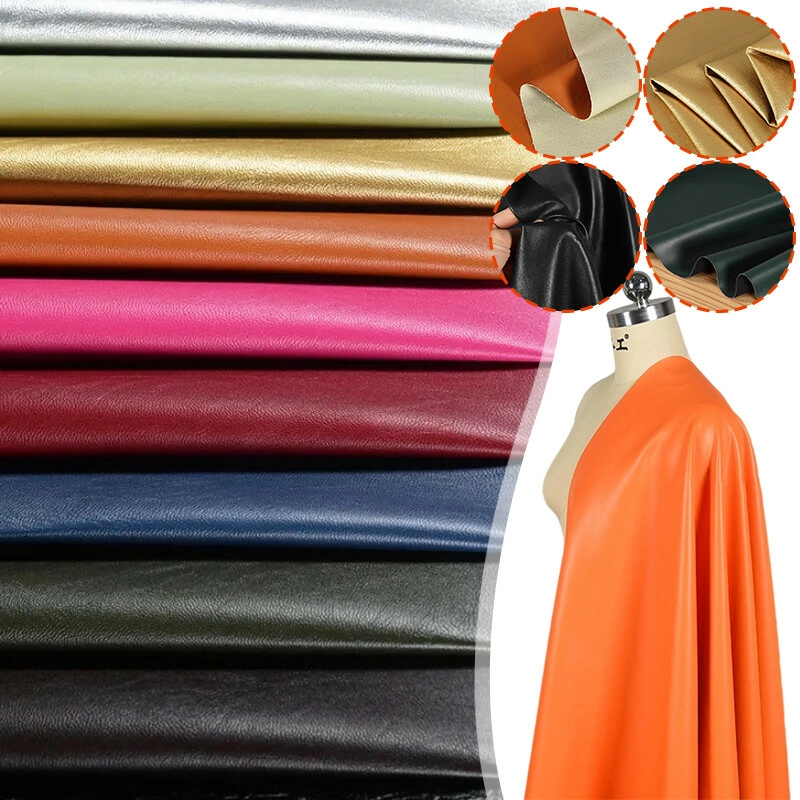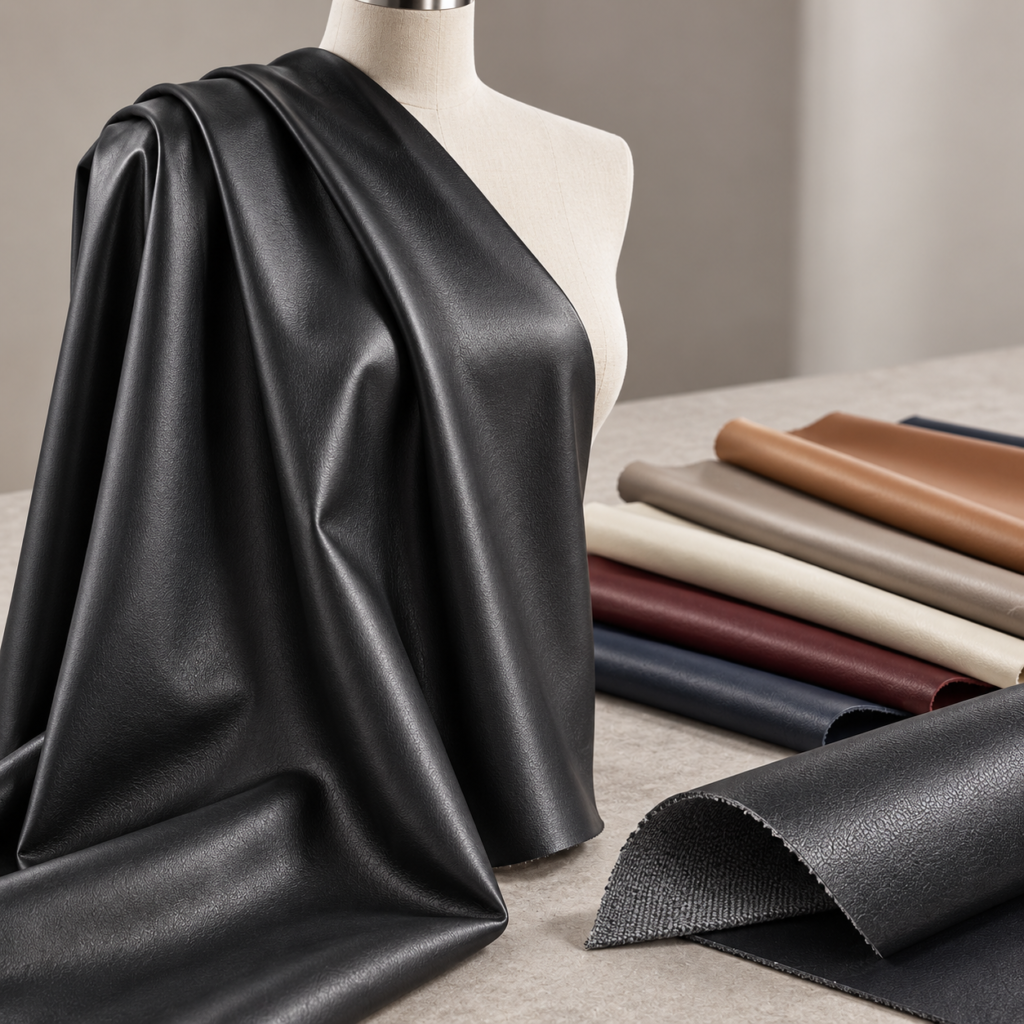
Quick Answer: Choose faux leather pants material by the trouser pattern, recovery after movement, seam behavior and approved surface feel. Thickness and backing must be evaluated together on sample yardage rather than selected from a universal gauge or recovery target. Before bulk cutting, agree suitable tests for the coated construction, garment trials and project-specific acceptance criteria with the supplier and laboratory.
Why Apparel-Grade Faux Leather Requires a Distinct Engineering Route
Faux leather pants material must be selected for the pattern and repeated body movement, not borrowed unchanged from a bag or shoe specification. A fitted trouser needs controlled extension and recovery, while a relaxed cut may place greater emphasis on drape and seam bulk. Review PU leather for garments on a sewn prototype rather than treating an apparel label as a performance guarantee.
Knee bagging, seam damage and surface whitening can have several causes, including excessive pattern strain, poor recovery or an unsuitable seam. Map the knee, seat and crotch zones on the proposed pattern before selecting a backing and coating combination. Use wearer trials to establish the required movement allowance and inspect residual growth after an agreed recovery period.
Thickness Calibrations: Matching Gauge to Pant Silhouette
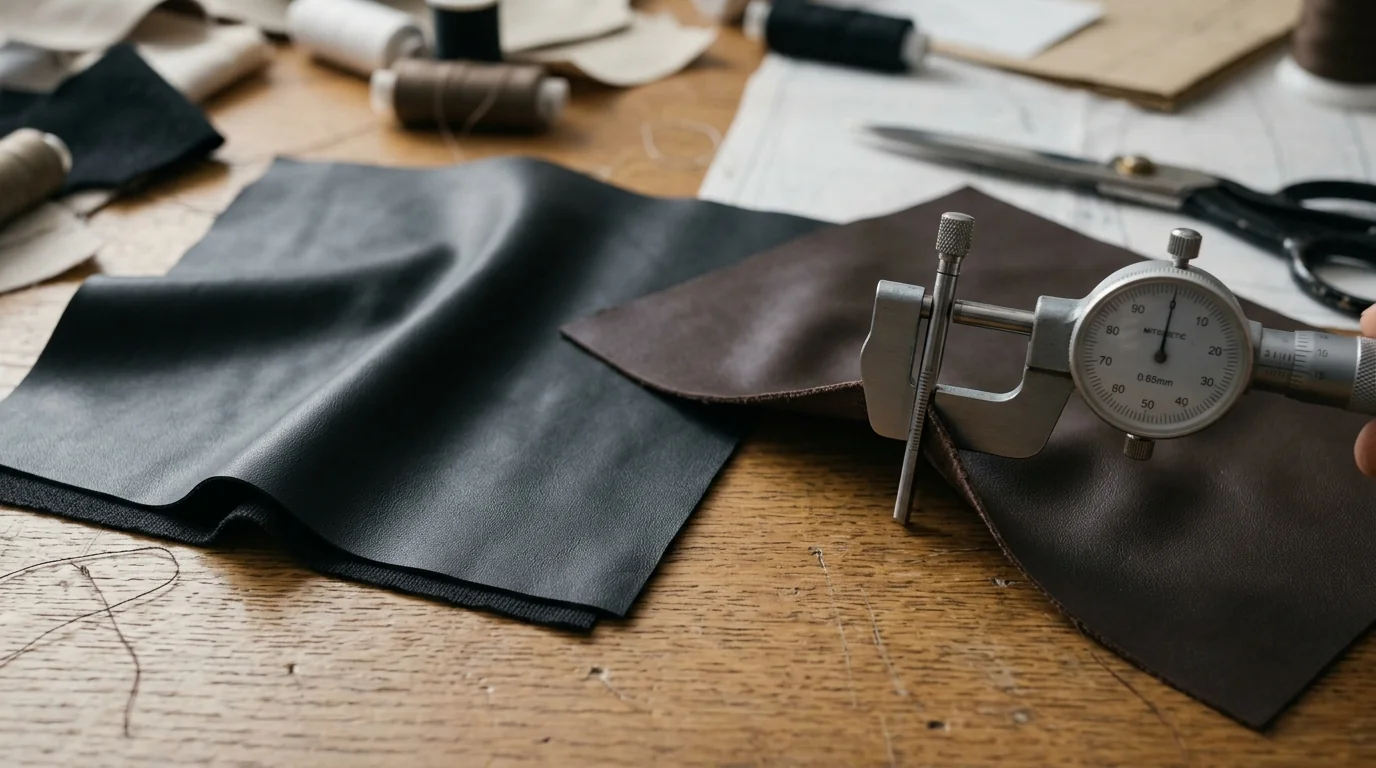
Measure the complete material under a documented pressure and conditioning procedure, then agree a nominal gauge and tolerance suitable for the construction. The usable width and thickness tolerance must come from the actual quotation and approved sample; they are not fixed industry values. Use softness and drape checks for PU apparel alongside trouser-specific recovery and loaded-seam checks.
| Pants silhouette | Gauge decision | Backing options to evaluate | Approval focus |
|---|---|---|---|
| Fitted leggings / skinny pants | Approve on a fitted movement trial | Stretch jersey or another validated elastic backing | Check directional recovery, opacity and seam opening without assuming that more stretch is better. |
| Straight-leg / tailored trousers | Balance drape with waistband and seam bulk | Interlock or other suitably stable knit | Confirm sitting comfort and shape retention on the final pattern. |
| Wide-leg / relaxed pants | Assess weight and hanging behavior together | Stable knit or other construction matching the cut | Check swing, hem appearance and show-through under intended lighting. |
| Thermal / lined trousers | Measure the full layered assembly | Brushed backing or separate lining, if available | Assess thermal comfort and seam bulk; a fleece appearance does not prove insulation performance. |
Increasing the gauge alone does not establish a longer service life. Different backing density, coating weight and lamination can produce different stiffness at the same total thickness. Compare approved sewn samples rather than replacing one material with another solely because their gauge readings match.
Stretch Dynamics and Backing Selection: Preventing Knee Bagging
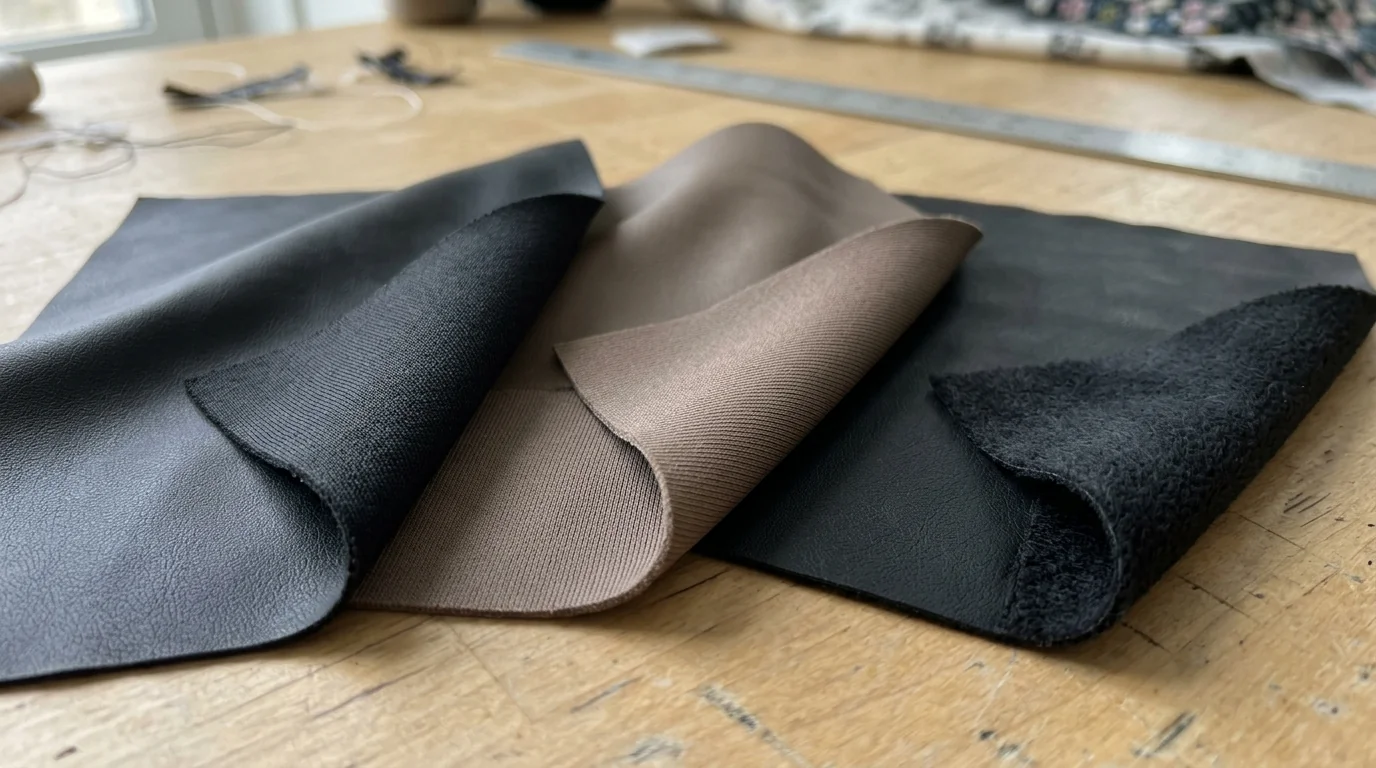
Assess stretch and recovery in the directions used by the pattern, with particular attention to the knee and seat. A material that stretches easily by hand can still retain unwanted growth after loading. Record the extension, hold time, recovery interval and any visible change to the coating before comparing candidates.
ASTM D3107 addresses woven stretch fabrics and is not a default method for knitted PU laminates. Have the laboratory confirm a procedure suitable for the coated construction and document any agreed deviations. Set purchase limits from the approved trouser and intended use, not from a universal recovery percentage.
Surface Finishes, Friction Control, and Acoustic Behavior
Surface feel, friction noise and appearance need separate approval because one finish adjustment can affect several properties. Compare the proposed grain and finish after sewing and movement, including inner-thigh contact and the interaction with the lining. If considering TPU-based materials, confirm the actual construction and performance rather than assuming the polymer name guarantees softness.
- Tactile slip: Evaluate dry and humid touch, skin contact and movement over the intended lining; a soft swatch does not establish breathability.
- Walking noise: Conduct a finished-trouser walking trial. A finish modification may reduce noise but must also be checked for rubbing transfer, seam handling and appearance.
- Gloss and grain: Approve a physical reference under specified lighting. If gloss is measured, record instrument geometry and the agreed range; matte and patent styles require different visual criteria.
Pre-Production Quality Check Matrix for Apparel Sourcing Teams
The inspection plan should distinguish a test method from a purchase acceptance criterion. Have the laboratory confirm suitability for the coated knit, and identify direction, conditioning and failure mode in each report. A passing flat-sheet test does not replace inspection of the finished trouser.
| Inspection item | Procedure to confirm | Project criterion | Production decision |
|---|---|---|---|
| Thickness consistency | Construction-appropriate thickness method | Agreed gauge, pressure, locations and tolerance | Compare usable-width and roll variation with the approved reference. |
| Stretch and recovery | Method suitable for the coated backing | Agreed load, hold and recovery intervals | Inspect residual growth and surface change after movement. |
| Seam behavior | Actual seam trial plus a suitable laboratory procedure | Approved thread, needle, seam and loading | Separate rupture from stitch-hole damage; ISO 13935-2 is not a generic coated-material needle-hole test. |
| Repeated flexing | Laboratory-confirmed coated-material method | Agreed conditioning, cycles and crack criterion | Do not import a leather flexometer target without confirming scope. |
| Rubbing transfer | Applicable rubbing procedure | Agreed dry/wet conditions and ratings | Assess both exposed face and relevant reverse contact surfaces. |
| Odor and chemical review | Separate odor assessment and relevant chemical analysis | Market- and buyer-specific scope | Low odor is not evidence of low chemical content or regulatory compliance. |
Sewing and Assembly Best Practices for Garment Factories
Set up sewing trials with the actual material, thread, lining and seam design. Compare needle point and size, stitch density, feed settings and presser-foot behavior instead of prescribing one setup for every PU laminate. Ask the sewing technician to inspect skipped stitches, coating marks and yarn damage before approving a production setting.
Repeat the trial where multiple plies meet and where the garment is most heavily loaded. Pull the seam in the intended direction and inspect both immediate damage and opening after movement. Record the approved combination so a material or thread substitution triggers a new trial rather than an undocumented machine adjustment.
Sourcing Custom Garment PU Leather with Danhon
Danhon can review an apparel brief against available PU artificial leather samples and specifications. Share the silhouette, intended stretch direction, surface reference and required backing behavior before discussing options. Availability of a specific finish, gauge or recovery result must be confirmed for the proposed material.
Retain a signed material reference and a sewn approval sample for production comparison. Include the test scope, allowed changes and approval responsibility in the purchase record. Use project-specific evidence before making durability, comfort or compliance claims for the finished trousers.
Frequently Asked Questions (FAQ)
How should a care label be approved for faux leather trousers?
Evaluate the finished garment, including coating, adhesive, lining and trims, using the proposed care process. Do not assume machine washing or dry cleaning is suitable solely because the material is described as PU.
What should happen if the cutting room notices roll shrink-back?
Pause cutting and compare dimensions after controlled unwinding and conditioning. Agree a relaxation procedure with the supplier using observed stability; a fixed waiting period does not suit every backing or storage history.
Can a trouser pattern be approved using a different lining?
Treat a lining change as an assembly change because friction, bulk and movement can differ. Repeat relevant fit and seam trials before transferring the original approval.
How should buyers handle inconsistent recovery results between laboratories?
First compare conditioning, direction, load, hold time and recovery interval. Re-test retained material under the same agreed procedure before concluding that the production lot has changed.
Request Material Swatches and Pre-Production Technical Support
Preparing a seasonal trouser or apparel collection requires verifying physical stretch recovery, thickness consistency, and surface hand feel on real sample yardage before bulk production. Request Faux Leather Pants Material Swatches & Color Cards from Danhon to review customized backing fabrics, thickness options, and pre-production testing specifications for your upcoming order.