
Quick Answer
PU leather should not be judged as “toxic” or “non-toxic” only from the material name. For B2B sourcing, the useful question is whether the specific material meets the chemical requirements for its final product, target market, and user group. Buyers should define the required substance restrictions, request suitable test evidence, and confirm that the tested sample matches the material approved for production.
The testing scope may differ between an adult handbag, a shoe upper, a children’s product, or packaging with frequent skin contact. European projects may require review against relevant REACH restrictions and other buyer requirements, while U.S. projects can involve federal product rules, state requirements, or retailer restricted-substance lists. A test report is useful only when its scope, sample identity, method, result, and market relevance are clear.
Is PU Leather Toxic? Start With the Chemical Question, Not the Label
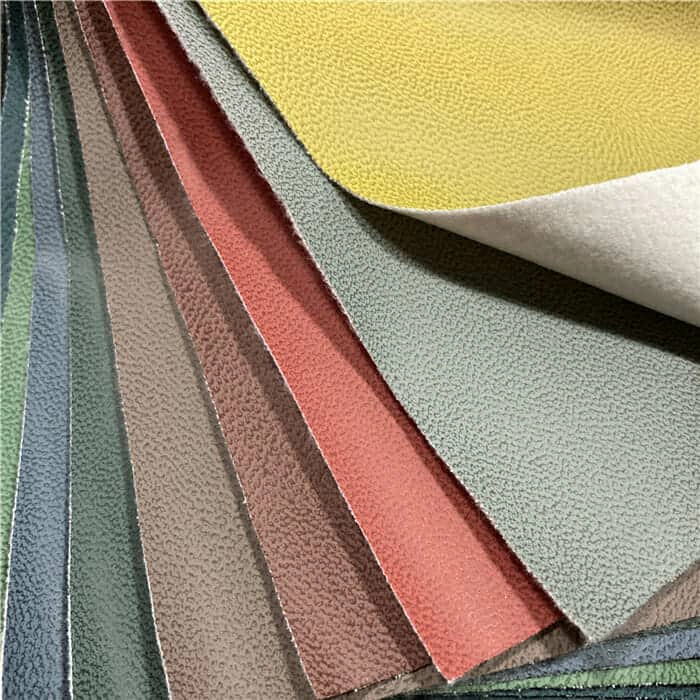
The phrase “is PU leather toxic” is too broad for a sourcing specification. PU leather is a layered material system that can include a polyurethane surface, coatings, pigments, additives, adhesives, and a textile backing. The finished chemical profile therefore depends on the actual formulation and production route, not simply on the words “PU leather.”
This distinction matters because two materials with a similar appearance may not have the same chemical test results. Color formulation, surface coating, backing fabric, printing, adhesive, and finishing steps can all change what should be reviewed. Buyers should convert a general safety concern into a defined list of substances, limits, test methods, and product-use conditions.
What Can Change the Chemical Profile of a PU Leather Material?
A buyer may approve one black PU leather sample and later assume that every color or finish is chemically identical. That assumption can be risky because pigments, coatings, printed layers, adhesives, and certain finishing chemicals may vary between versions. Even when the base construction is similar, the final test scope should match the actual production material and the buyer’s compliance program.
Waterborne PU, solvent-free PU, and dry-process PU describe aspects of formulation or manufacturing, but those labels do not automatically prove compliance with a target market. The practical approach is to treat process claims and chemical compliance as separate questions, then request evidence for the requirement that actually applies.
What European Buyers Should Check Before Approving PU Leather
For products sold in the European market, REACH is an important starting point for chemical review. Depending on the article and exposure scenario, buyers may need to consider applicable restrictions, Candidate List obligations, and their own brand restricted-substance requirements. The relevant scope should be confirmed for the finished article rather than copied from a generic leather testing package.
Azo dyes are one example of why application matters. REACH Annex XVII includes restrictions for certain azo colorants in textile and leather articles that may come into direct and prolonged contact with skin or the oral cavity. A handbag lining, glove, footwear component, or garment material can therefore require a different review from a decorative material with limited contact.
What U.S. Buyers Should Check Before Approving PU Leather
The United States does not have one universal “PU leather safety certificate” that covers every application. Requirements depend on the finished product, the user group, the chemicals involved, and the destination state or retailer program. Buyers should first identify whether the material will be used in an adult product, a children’s product, or another regulated category.
For children’s toys and child care articles, the U.S. Consumer Product Safety Commission applies specific phthalate restrictions to accessible components. California Proposition 65 is different because it is based on exposure to listed chemicals and possible warning obligations, not on whether a material simply contains the word PU. This is why a buyer should not ask only, “Is this material Prop 65 compliant?” without defining the product and exposure context.
Which PU Leather Chemical Tests Should Buyers Request?
There is no single test list that fits every PU leather order. The testing plan should be built from the target market, finished-product category, expected contact, buyer RSL, and any retailer or brand requirements. The table below shows a practical way to turn a general safety question into a test request.
| Market or Project Need | Possible Review Direction | Buyer Should Confirm |
|---|---|---|
| EU chemical review | Relevant REACH restrictions and Candidate List considerations | Final article, contact type, current requirement scope |
| Skin-contact textile or leather article | Restricted azo colorants where applicable | Material location and expected skin contact |
| Children’s product in the U.S. | Applicable CPSC chemical requirements, including phthalates where relevant | Age grading, accessible components, product category |
| California distribution | Proposition 65 exposure evaluation | Listed chemical, exposure level, warning assessment |
| Brand or retailer program | Buyer-specific restricted substances list | Exact RSL version and test method |
| Special project concern | Residual solvent, VOC, heavy metals, organotin, or other requested items | Whether the item is relevant to the material and application |
Physical performance tests should remain a separate approval track. Abrasion, peeling strength, tensile strength, flexing, and yellowing can help evaluate whether a material works in production, but they do not replace chemical testing. A material can perform well mechanically and still require separate chemical review for the destination market.
How to Read a PU Leather Test Report Without Overclaiming
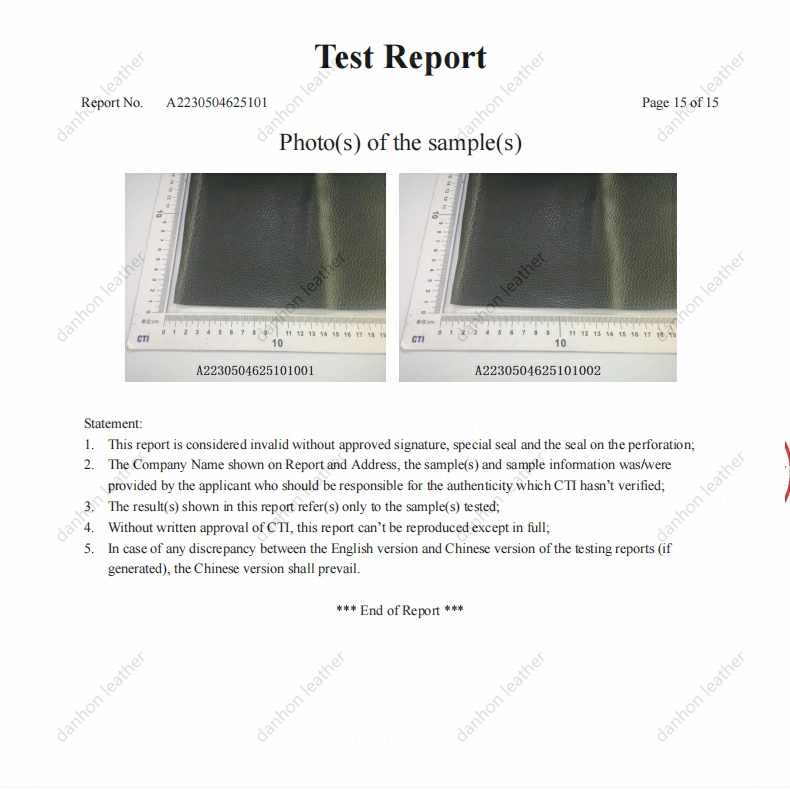
A useful report should identify the tested sample, test items, methods, limits or reporting criteria, results, laboratory information, and report date. Buyers should also check whether the tested sample represents the same color, coating, backing, and construction planned for bulk production. A report from a different material family or an old construction should not automatically be treated as proof for a new order.
Danhon’s current Certificate page shows examples of third-party testing information covering items such as phthalates, azo dyes, heavy metals, organotin compounds, residual solvents, and REACH-related screening. These documents are useful as examples of testing scope, but they should not be interpreted as proof that every Danhon material meets every listed requirement. Project-specific testing support should be discussed according to the target market, product use, and buyer requirements.

Common Compliance Mistakes That Create Sourcing Risk
One common mistake is asking a supplier for “non-toxic PU leather” without giving a standard, market, or restricted-substance list. The supplier may answer from a general material perspective while the buyer is thinking about a retailer-specific or legal requirement. Both sides may believe they agree, yet the actual approval criteria remain undefined.
Another mistake is treating one test report as a permanent certificate for all colors, finishes, and future production. Buyers should review whether changes in pigment, coating, backing, adhesive, or process affect the tested construction. The safer workflow is to connect the report to a clearly identified sample and keep the approved specification with the purchase documentation.
Put Testing Requirements Into the RFQ Before Sample Approval
Chemical requirements should be discussed before the buyer approves the final sample, not after production is complete. A useful RFQ should state the destination market, finished product, intended user group, contact condition, required standard or RSL, color and finish, and whether third-party testing is required. This gives the supplier a defined target and reduces the risk of testing the wrong material or using the wrong scope.
Buyers should also separate mandatory legal requirements from internal brand requirements. A retailer may request a broader chemical list than local law, while another project may need only a narrower set of tests. Clear separation helps the supplier prepare the right sample, select the right testing package, and avoid treating every chemical test as universally necessary.
Final Recommendation: Approve the Material Against the Target Market and Product
The practical answer to “is PU leather toxic” is that the material name alone cannot answer the question. Buyers should evaluate the specific PU leather construction against the chemical requirements of the final product, destination market, and buyer program. This turns a vague safety concern into a measurable approval process.
For a new sourcing project, confirm the material specification first, then define the chemical testing scope before bulk production. Keep the approved sample, test report, and production specification connected so that later changes can be reviewed properly. This approach is more reliable than relying on broad claims such as “safe,” “eco,” or “compliant” without defined evidence.
Frequently Asked Questions
Can an odor complaint be closed solely because a restricted-substance panel passed?
No; retain the affected material and packaging and review the actual complaint conditions. A limited chemical panel may not answer an odor question, while an odor assessment does not establish chemical compliance.
What should buyers do when a laboratory proposes testing a pooled color sample?
Ask how pooling affects detection limits and whether it could conceal a result for an individual color. Have the responsible reviewer approve the sampling rationale before interpreting a pooled result as coverage for every shade.
How should a purchase record handle a report that omits the analytical detection limit?
Request the relevant reporting limit and a clear explanation of any not-detected result. Keep the approval open if the missing information prevents comparison with the project requirement.
What if the supplier changes a pigment source between two otherwise identical orders?
Request a written change notice identifying the affected colors and lots. Review whether the existing evidence still represents those lots before extending the earlier approval.
Who should receive a chemical report when the importer and product brand are different companies?
Agree the responsible reviewers and document handover before shipment. Material records should reach the parties making the market decision rather than remaining only with the purchasing agent.
What if the report uses a different sample code from the purchase order?
Ask for a traceable explanation linking the tested specimen to the ordered construction and lot. Do not accept a verbal assurance if the identity cannot be verified from the supporting records.
Discuss PU Leather Testing Requirements Before Sample Approval
If you are sourcing PU leather for the U.S. or European market, prepare the product application, target market, color, finish, and required chemical standard before requesting final approval samples. Danhon can help buyers compare suitable PU leather constructions and discuss project-specific testing support without treating one report as universal proof. Contact Danhon for PU Leather Samples and Custom Material Support when you are ready to align material selection, sample approval, and testing requirements.