Quick Answer: Waterproof Is a Performance Requirement, Not a Material Name
Waterproof synthetic leather can matter when a bag, shoe or outdoor product is expected to face rain, wet surfaces or repeated moisture exposure. However, buyers should not assume that a material is waterproof simply because it has a PU coating or because a supplier uses the word “waterproof.” The required level of water protection should be defined according to the finished application and, when important, confirmed through a suitable test method.
A useful sourcing distinction is that the surface material, seams and complete finished product are different levels of evaluation. A coated synthetic leather may resist water penetration while the stitching, zipper, cut edges or construction still allow water to enter. For B2B buyers, the real question is therefore not only “Is this synthetic leather waterproof?” but “What level of water exposure must the finished product withstand?”
Waterproof, Water-Resistant and Water-Repellent Are Not the Same Buying Requirement
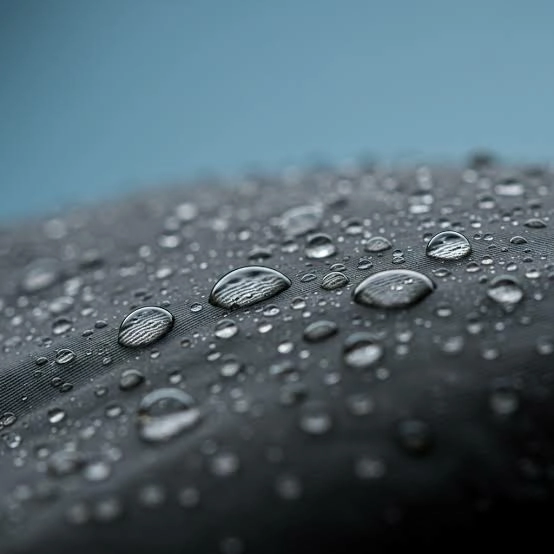
These terms are often used loosely in supplier conversations, which can create unnecessary confusion. Water-repellent normally describes a surface that causes droplets to bead or run off more easily, while water resistance generally describes some ability to delay or limit water penetration. Waterproof is a stronger claim and should be connected to clearly defined test conditions or acceptance criteria rather than appearance alone.
For coated fabrics, water penetration can be evaluated under controlled hydrostatic pressure. ISO 1420:2016 specifies methods for determining resistance of rubber- or plastics-coated fabrics to water penetration, while ASTM D3393 establishes a waterproofness criterion for coated fabrics based on hydrostatic resistance. These standards show why a buyer should ask what a supplier means by “waterproof” rather than treating the word as a universal material grade.
The practical rule is simple: describe the exposure first, then define the required performance. A fashion handbag that may occasionally meet light rain does not necessarily need the same material specification as an outdoor equipment pouch expected to remain outside in wet conditions.
When Water Resistance Actually Matters
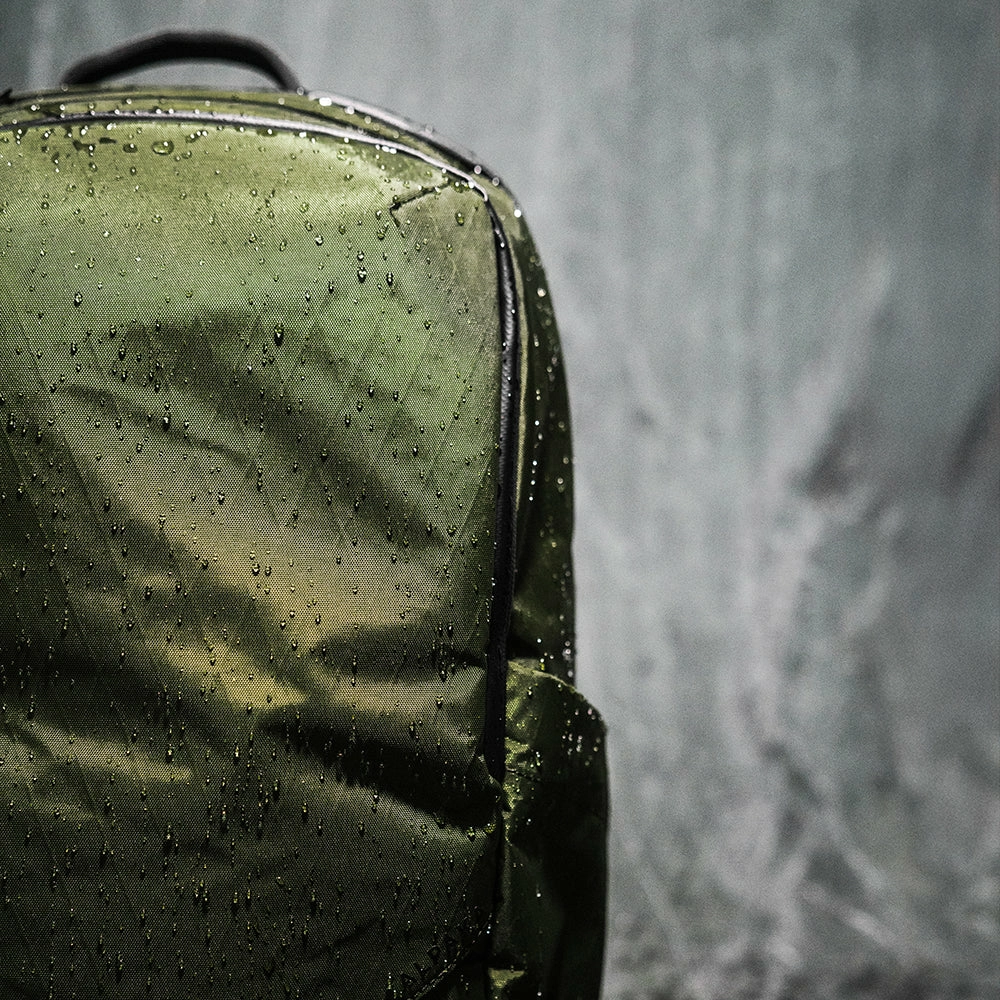
Water resistance becomes commercially important when moisture can affect product function, appearance, contents or customer expectations. This often happens with commuter bags, backpacks, travel accessories, footwear and selected outdoor-use products. However, adding a stronger performance requirement without a clear use case may increase development complexity without creating meaningful value for the finished product.
| Application | Typical Water Exposure | Material Priority | Finished-Product Risk | Buyer Check |
|---|---|---|---|---|
| Fashion handbag | Light rain or brief splashes | Moderate surface resistance may be sufficient | Stitch holes, open zipper, exposed edges | Splash and appearance check |
| Commuter backpack | Rain during daily transport | Greater resistance may be useful | Zippers, seams and panel joints | Test assembled prototype |
| Shoe upper | Wet ground, rain and repeated bending | Water resistance plus flexibility | Creasing area, seams, tongue construction | Flex under wet conditions |
| Outdoor pouch | Repeated moisture or exposed environment | Clearly defined resistance level | Closures, seams, stitching and abrasion | Application-specific test |
| Decorative outdoor component | Intermittent moisture | Depends on exposure duration | UV, hydrolysis and water may interact | Define full environment |
The table is a sourcing starting point, not a performance guarantee. “Outdoor” is especially broad because the term can describe anything from occasional patio use to prolonged exposure to rain, heat and humidity.
Waterproof Synthetic Leather for Bags Depends on More Than the Face Material
For waterproof synthetic leather for bags, buyers often focus first on the outer PU surface. That matters, but a bag is a system made from panels, thread, reinforcement, edge treatment, lining, zippers and other components. Water may enter through needle holes or closures even when the main panel material has good resistance to penetration.
This distinction matters when comparing a fashion handbag with a commuter backpack. A handbag may only need enough water resistance to prevent brief rain from immediately marking or wetting the material. A backpack marketed for wet-weather use may require a much more deliberate combination of material performance, seam design and closure construction.
In many bag projects, it is therefore better to define a realistic exposure condition instead of simply writing “100% waterproof” on the RFQ. Buyers can describe expected rain exposure, whether the contents must remain dry, whether the product will be wiped clean, and whether the bag will face repeated folding or abrasion.
Waterproof Synthetic Leather for Shoes Must Be Evaluated Under Movement
Waterproof synthetic leather for shoes has another complication: shoe uppers bend during wear. A flat material may resist water effectively in a static check, yet its behavior can change when it is repeatedly flexed around the vamp or other high-movement areas. Surface coating, backing stability and flex resistance therefore need to be considered together.
ISO 17702 addresses water resistance of footwear upper materials during flexing. That is an important sourcing principle because footwear performance cannot be judged only from a water droplet placed on a flat swatch.
Buyers should also separate upper-material performance from whole-shoe performance. The tongue construction, seams, sole attachment and other components can influence whether water eventually reaches the inside. A material passing an upper-material test does not automatically prove that the completed shoe is waterproof.
Outdoor Synthetic Leather Needs a Defined Exposure Scenario
The term outdoor synthetic leather is too broad to act as a complete specification. A material used on a travel accessory may face occasional rain, while a component used outdoors for long periods may face moisture, heat, sunlight, repeated cleaning and abrasion at the same time. A water-resistant surface alone does not confirm suitability for all of these conditions.
For this reason, buyers should describe duration and severity of exposure. Useful questions include whether the product is used indoors and outdoors, whether it will remain wet for long periods, whether water can pool on the surface, how often the material bends, and whether temperature or humidity is high. These details help determine whether water resistance is the main requirement or only one part of a wider performance specification.
Buyers also need to avoid assuming that stronger water resistance automatically means better material for every project. Changes in coating, backing or finish may also influence softness, flexibility, touch and processing behavior. The best solution is the one that reaches the required application performance without unnecessarily compromising other material priorities.
The Most Common Sourcing Mistake: Asking for “Waterproof PU” Without a Test Requirement
One common sourcing problem begins with a short request such as “We need waterproof PU material for outdoor bags.” The phrase sounds clear, but it does not tell the supplier how much water pressure or exposure the material must resist. It also does not define whether the requirement applies to the material alone or to the completed product.
A better request explains the product, use environment and acceptance requirement. If water penetration is a critical performance point, the buyer and supplier should agree on an appropriate test method, test conditions and acceptance criteria before bulk approval. The material name should not replace the performance specification.
Buyers should also be cautious when comparing quotations. Supplier A may interpret “waterproof” as a surface that sheds light rain, while Supplier B may understand it as a measurable hydrostatic-pressure requirement. The two quotations may therefore represent different constructions even when the written product description looks almost identical.
How Buyers Should Evaluate Water-Resistant Synthetic Leather Samples
A physical sample should be checked under conditions that resemble the final product as closely as practical. Looking at droplets on a flat swatch can be useful for a first observation, but it does not replace a defined performance test when water resistance is critical. Buyers should also fold, bend or stitch the sample when those actions represent the real application.
For bags, make a small panel or prototype section using the intended thread, lining, reinforcement and closure method. For shoe uppers, review the material around real bending areas rather than judging only a flat sheet. If the product will be used outdoors, consider the combined effect of moisture and repeated handling instead of evaluating water resistance in isolation.
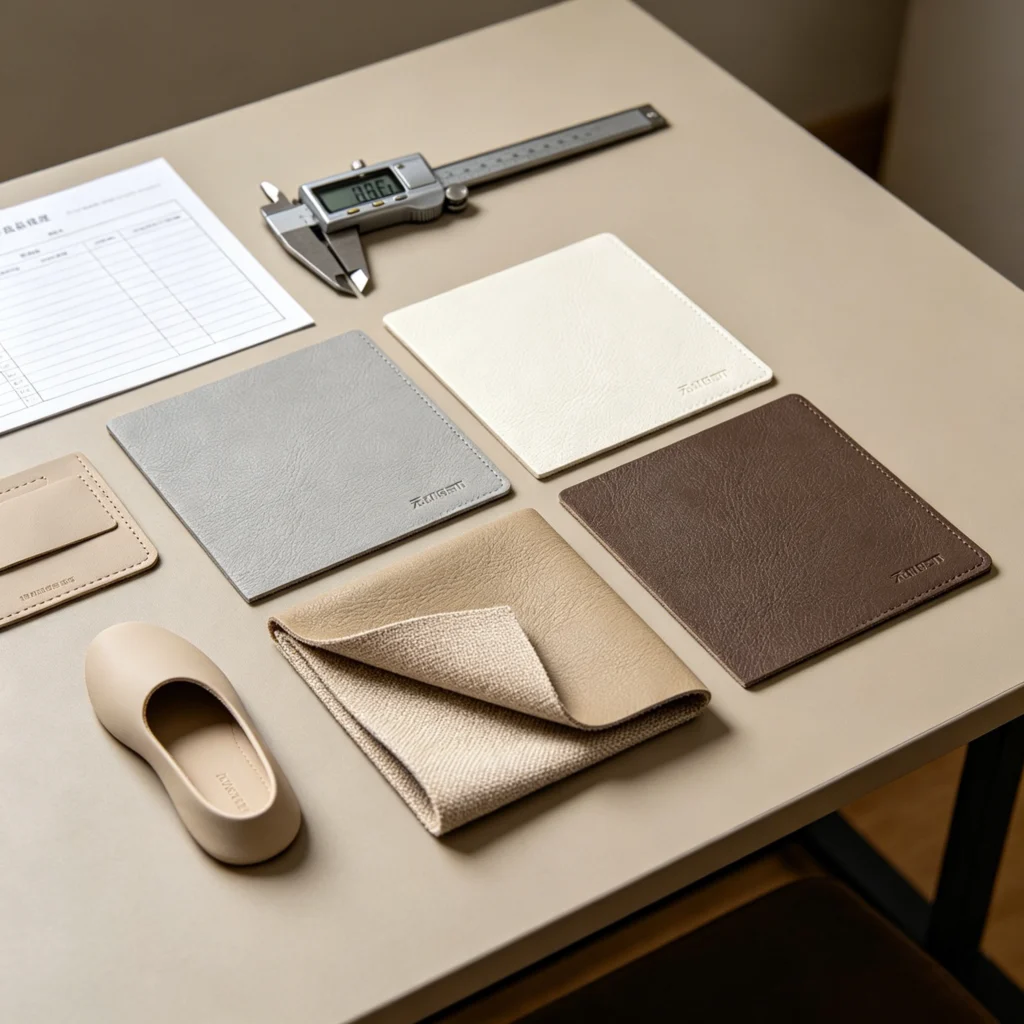
Another useful step is checking the reverse side and cut edge after exposure. A clean-looking face does not always reveal whether moisture has moved through the material construction. The approved sample should therefore represent the actual combination of surface, backing, thickness and finish that will be used in production.
What to Include When Requesting a PU Waterproof Material
Instead of sending only the words “PU waterproof material,” buyers can prepare a short application brief. This reduces interpretation gaps and makes sample comparison more meaningful.
- finished product type;
- location where the synthetic leather will be used;
- indoor, outdoor or mixed-use environment;
- expected rain, splash or prolonged moisture exposure;
- whether the contents or interior must remain dry;
- required thickness range;
- preferred texture and surface finish;
- flexibility or hand-feel direction;
- backing requirement if known;
- major seams, folds or bending areas;
- target market;
- required test method or buyer standard if one already exists;
- physical reference sample when available.
A photo can help communicate appearance, but it cannot define water penetration resistance. If waterproof performance is important, numerical or method-based requirements are more useful than subjective phrases such as “high waterproof” or “very waterproof.”
Material Selection Support for Water-Resistance Projects
For projects involving bags, shoe uppers or related applications, material development should balance water resistance with thickness, backing, flexibility, texture and surface finish. At Danhon, these requirements can be discussed together during sample selection rather than treating water resistance as a separate marketing label.
We usually recommend starting from the finished product and its real exposure conditions. Once the expected use is clear, buyers can compare existing PU material directions, request adjusted constructions when necessary and confirm performance through physical samples or project-specific testing.
Key Takeaways for Buyers
Waterproof synthetic leather should be treated as a performance specification, not as a universal material category. PU coating alone does not prove a specific level of waterproofness, and visible water beading is not enough to confirm how a material will perform under pressure, bending or prolonged exposure.
For bags, the material must be considered together with seams, closures and panel construction. For footwear, bending and whole-shoe design become important. For outdoor products, buyers should first define the actual exposure environment before deciding how much water resistance is necessary.
The strongest sourcing brief therefore does not simply ask, “Do you have waterproof synthetic leather?” It explains what the finished product must withstand and how that requirement will be verified.
Frequently Asked Questions About Waterproof Synthetic Leather
Should exposed cut holes be masked during a water-resistance assessment?
Agree whether the purpose is to evaluate the intact sheet or the finished perforated component. Document any masking so the result is not later presented as evidence for an unsealed production assembly.
What if material passes a flat water check but fails around a zipper installation?
Inspect zipper tape, seam paths and the adjacent bonded construction separately. Repeat the relevant exposure on the complete installation before specifying a change to the face coating.
What if a bag passes a rain trial when new but leaks after folding?
Review a relevant conditioning-and-water sequence on the assembled construction. Record whether leakage occurs through the material, seam or closure so the corrective action addresses the actual route.
How should buyers define the starting condition for a damp-material complaint?
Record whether the article began dry, pre-wetted or recently cleaned, together with the observed exposure. Reproduce that starting condition where appropriate instead of comparing unrelated dry and wet samples.
Can a laboratory water-resistance report support an unlimited waterproof warranty?
No; the report concerns its specimen, method and conditions. Any warranty or product claim needs a defined use scope and supporting evidence beyond an unqualified interpretation of that result.
Compare Water-Resistance Requirements Before Finalizing Your PU Leather
If your bag, footwear or outdoor-use project needs better protection from rain or moisture, share the finished application, expected exposure, thickness, texture, backing and flexibility requirements before selecting the material. Physical samples can then be compared against the real product use, and project-specific testing requirements can be discussed where necessary. Contact Danhon for PU Leather Samples and Custom Material Support to review suitable PU leather directions or custom material requirements before bulk confirmation.