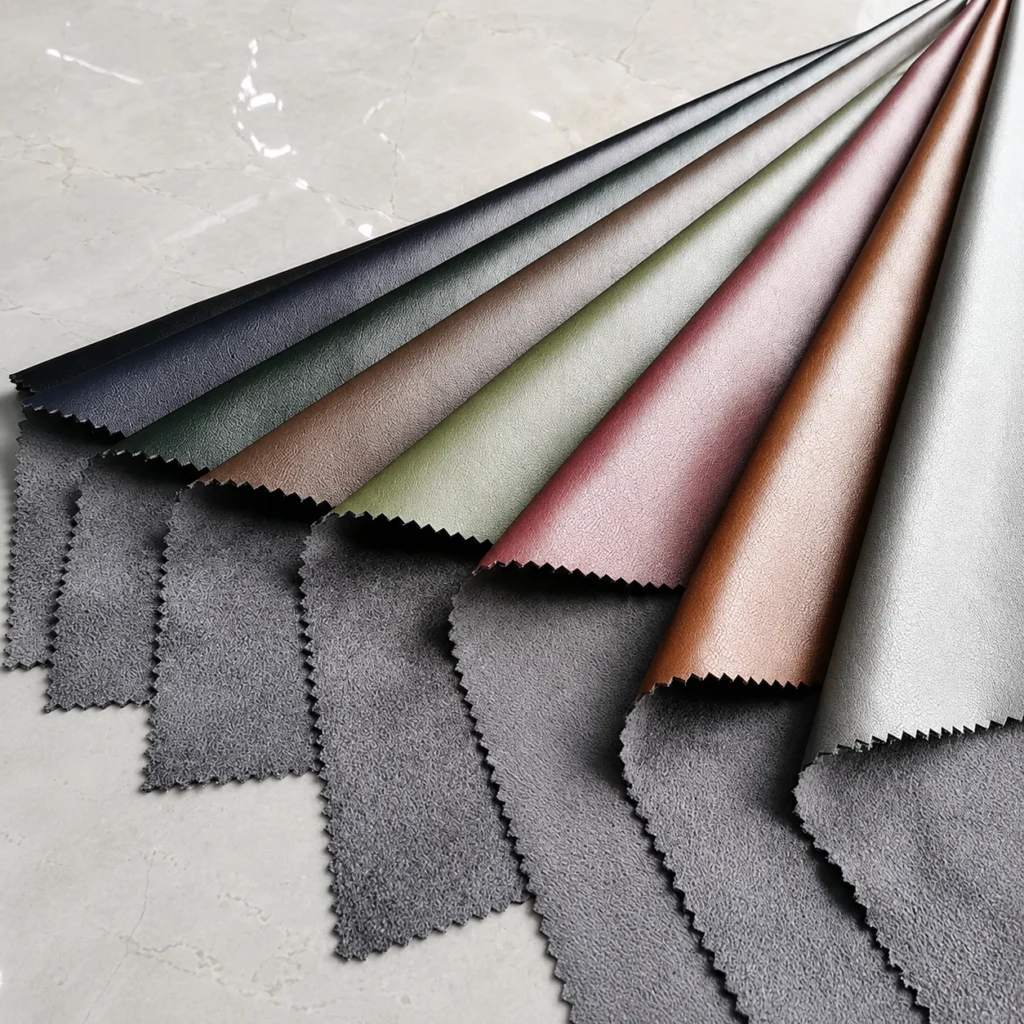
Quick Answer: Do Not Approve “Eco-Friendly” as a Material Specification
Eco-friendly synthetic leather is not one defined material grade. The phrase may refer to recycled content, bio-based inputs, a different coating system, reduced use of certain chemicals, longer product life, or another environmental improvement. Before a buyer or product brand uses the claim, the specific benefit should be identified and supported with evidence that relates to the actual material being purchased.
For sourcing teams, the safest question is therefore not simply, “Is this synthetic leather eco-friendly?” Ask what has changed, where the claimed benefit exists in the material, how it is measured, and which document proves it. A greener faux leather claim becomes meaningful only when the broad wording can be translated into a specific and verifiable material attribute.

“Eco-Friendly” Is a Claim, Not a Synthetic Leather Grade
Synthetic leather is already a broad material category. Depending on the product, suppliers may use PU, PVC, microfiber constructions or other systems, and materials within the same category can have different coatings, backing fabrics and formulations. Adding the word “eco-friendly” does not explain those differences.
This is where many sourcing discussions become unclear. One supplier may use “eco-friendly” because a material contains some recycled content, while another may be referring to a waterborne coating direction or a particular restricted-substance test. Those are different attributes, and none should automatically be treated as proof that the complete material is environmentally preferable overall.
The same rule applies to sustainable synthetic leather and terms such as low impact leather alternative. Buyers should treat these expressions as starting points for questions, not as final purchasing specifications. The environmental description should become more specific as the project moves from material discovery to sample approval.
First Define What Environmental Benefit You Actually Mean
Before requesting documentation, buyers should decide which environmental attribute matters to the project. A brand asking for “more sustainable synthetic leather” may actually be looking for recycled content, lower fossil-based input, a different coating technology, chemical management requirements, or evidence supporting a specific consumer-facing statement. These requirements lead to different supplier discussions.
Several terms are especially easy to mix together. Recycled means that a defined part of the material contains qualifying recovered input, while bio-based refers to material derived partly from biological resources. Waterborne normally describes a coating or formulation direction, while biodegradable concerns breakdown under defined conditions; none of these terms automatically proves the others.
This distinction also prevents an important sourcing mistake. A buyer may find one positive attribute and then expand it into a broad environmental conclusion about the whole material. A more defensible approach is to communicate only the specific benefit that can actually be supported.
Match Each Claim to the Evidence That Can Support It
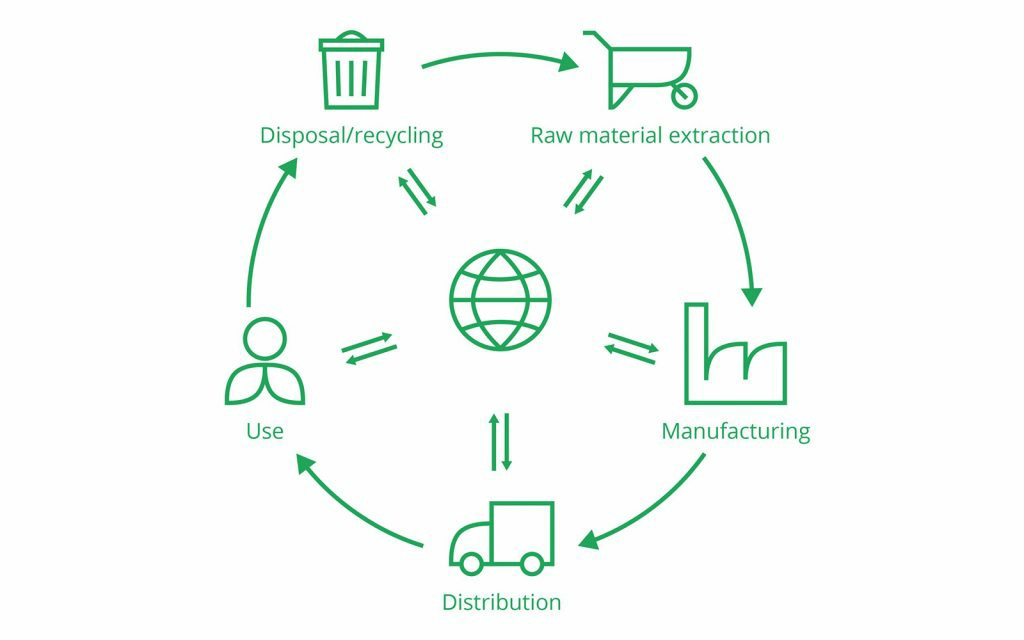
Different environmental statements need different supporting information. A chemical test report, recycled-content certificate and supplier declaration do not answer the same question. Buyers should therefore begin with the claim and work backward to the evidence rather than collecting documents first and deciding later what they might prove.
| Proposed Claim | What the Buyer Should Verify | Useful Evidence | What It Does Not Automatically Prove |
|---|---|---|---|
| Contains recycled material | Percentage, material layer and recycled source | Scope certificate, transaction documentation, material specification or other applicable chain-of-custody records | That the entire synthetic leather is recycled or environmentally superior overall |
| Contains bio-based material | Bio-based component, percentage and measurement basis | Material declaration and appropriate analytical or certification evidence | Biodegradability, recyclability or lower total environmental impact |
| Uses a different coating system | Which layer or production stage uses it | Technical specification and relevant supplier/process documentation | That the complete material is sustainable |
| Meets a chemical requirement | Exact substance list, test method and tested material | Applicable laboratory report | Recycled content, lower carbon impact or general eco-friendliness |
| Has a lower environmental impact | Baseline, impact category, system boundary and comparison method | Appropriate comparative environmental assessment or other substantiation | Better performance in every environmental category |
A useful document should answer a defined question. If the claim concerns recycled content, the buyer needs evidence related to recycled content rather than an unrelated chemical test. If the claim concerns lower environmental impact, a statement about one formulation change may be too narrow to support an overall comparison.
Check Exactly What Part of the Material the Claim Covers
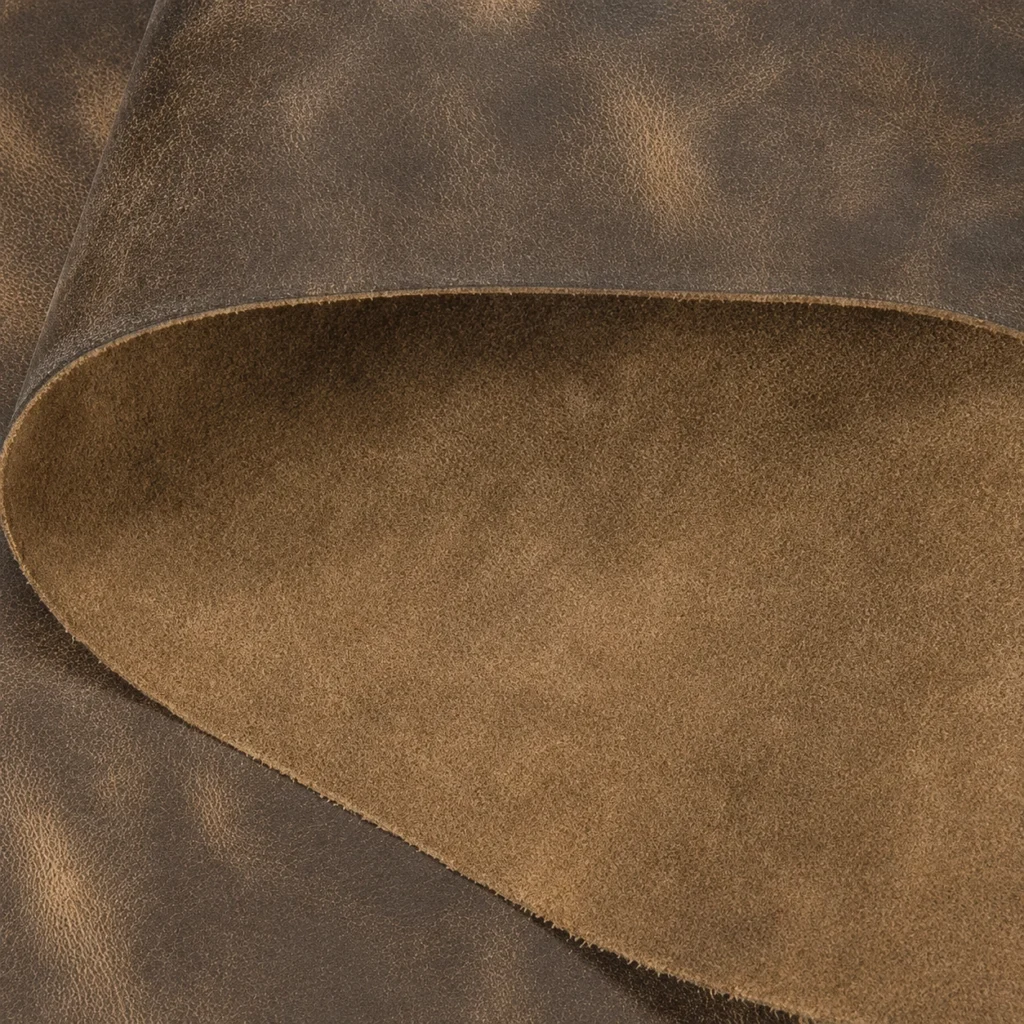
Synthetic leather is normally a material construction rather than one uniform substance. A PU artificial leather, for example, may include surface layers and a textile backing, with the exact construction varying by product. This makes the scope of an environmental claim especially important.
Suppose a material is described as containing recycled content. The recycled input could be in the textile backing, one polymer component, or another part of the construction. Buyers should ask whether the stated percentage applies to that component only or to the finished synthetic leather by total weight.
This detail matters when product brands prepare consumer-facing language. “Backing fabric contains recycled polyester” communicates a much narrower claim than “this material is made from recycled synthetic leather.” The first statement may be supported by evidence about the backing, while the second could imply something much broader.
Traceability Matters More Than a Good-Looking Certificate
A certificate can be useful, but buyers should first confirm what organization, facility, process, material or transaction it actually covers. The supplier name appearing on a document does not automatically mean every material offered by that supplier falls within the same scope. Dates, certificate status, material categories and chain-of-custody requirements also matter.
Recycled-content programs illustrate this clearly. Under Textile Exchange’s Global Recycled Standard, claimed recycled material is managed through chain-of-custody requirements, and transaction documentation is used to follow qualifying material through relevant supply-chain stages. A buyer relying on a specific certification claim should therefore verify the applicable scope and transaction evidence instead of keeping only a screenshot of a certificate.
One common purchasing mistake is receiving a sustainability document during supplier qualification and treating it as permanent evidence for every later order. A stronger process links the environmental documentation to the approved material reference, supplier, relevant construction and purchase records. This makes later brand review and internal approval much easier.
U.S. and European Buyers Need to Be Careful With Broad Green Claims
For the U.S. market, the Federal Trade Commission’s Green Guides advise marketers not to make broad, unqualified environmental benefit claims such as “green” or “eco-friendly.” The FTC explains that such broad claims are difficult to substantiate and recommends using clear, specific qualifications when an environmental benefit can actually be supported. This is directly relevant when a product brand wants to turn a supplier description into marketing language.
European requirements are also becoming stricter. Directive (EU) 2024/825 identifies generic claims such as “environmentally friendly,” “eco-friendly,” “green,” “biodegradable” and “biobased” in its treatment of environmental marketing, and Member States were required to apply the implementing measures from September 27, 2026; check the applicable national provisions. The Directive also addresses situations where an environmental claim about one limited aspect creates an impression about the entire product.
For B2B buyers, these rules create a practical sourcing lesson even before marketing teams become involved. Do not request only an “eco material” and expect the supplier’s terminology to be enough for a later product claim. Define the exact attribute and the evidence requirement while the material is still being sourced.
Verify the Exact Synthetic Leather You Intend to Buy
Environmental documentation should be connected to the actual material under consideration. A report prepared for one construction, color, backing or formulation should not automatically be assumed to cover another product simply because both are sold under a similar commercial name. Buyers should record the supplier’s material code or other reference that links the approved swatch with its documentation.
Physical performance and environmental claims should also be approved separately. A synthetic leather may have documentation supporting one environmental attribute but still fail to meet the required hand feel, flexibility, backing stability, surface appearance or manufacturing behavior for the final product. Conversely, an excellent production sample does not prove a sustainability claim.
This separation is particularly important for bags, shoes and garments. A product brand still needs a material that works through its real cutting, stitching, folding, forming or wearing conditions. Environmental direction should add another layer to material approval, not replace normal performance evaluation.
Put the Environmental Requirement Into the RFQ Before Sampling
A vague sustainability request often creates unnecessary sampling rounds. Instead of writing “need eco-friendly synthetic leather,” the RFQ should state the environmental attribute the buyer wants, the target market and any documentation that will be required before approval. If the intended consumer-facing claim is already known, that wording should also be shared for review.
For example, a buyer seeking recycled content should explain whether there is a required minimum percentage and whether the percentage should refer to a particular material component or the whole construction. If a certification scheme is required, it should be identified before sample development. If the goal is simply to explore a lower-impact material direction, the buyer can say that clearly without prematurely promising a specific environmental claim.
In our material selection experience, this is much more useful than adding “eco-friendly” to a color, texture and thickness request. The supplier can then evaluate which material direction and documentation are actually available. It also reduces the risk of developing an attractive sample that later fails the brand’s environmental approval process.
A Practical Verification Workflow for Material Buyers
A reliable process starts by converting the environmental idea into a measurable requirement. Buyers can define the exact claim, identify which part of the synthetic leather it covers, request supporting evidence, and confirm that the evidence matches the specific material under review. Market-facing wording should only be finalized after these points are clear.
The next step is to keep environmental approval connected with the normal material approval process. Compare physical samples for color, texture, thickness, backing and hand feel while reviewing the associated documentation separately. When the material changes during development, check whether the environmental evidence needs to be updated as well.
At Danhon, discussions around a more sustainable material direction can begin with the final application and the specific requirement instead of a broad “eco-friendly” label. Buyers can share the target product, material reference, environmental objective, target market and required evidence together with the normal PU leather specification. Final claims should still depend on the exact approved material and the documentation applicable to that project.
Key Takeaways
- “Eco-friendly synthetic leather” should be treated as a claim that needs definition, not as a standard material grade.
- Recycled, bio-based, waterborne, biodegradable, vegan and restricted-substance claims describe different issues and should not be used interchangeably.
- Always ask what part of the material the environmental attribute covers and how any percentage is calculated.
- A certificate is useful only when its scope relates to the supplier, material, process or transaction being claimed.
- Chemical test reports do not automatically prove recycled content, lower carbon impact or overall sustainability.
- For U.S. and European markets, broad environmental marketing language deserves particular caution.
- Put environmental requirements into the RFQ before sample development rather than trying to justify a claim after material approval.
- Keep the approved physical material, material code and supporting documentation connected in the project record.
Frequently Asked Questions
What if a verified environmental statement applies only to one production site?
Keep the site boundary visible in the approval record and confirm where the ordered material is produced. Do not extend site-specific evidence to other facilities without support.
Can a favorable comparison for one thickness support the entire material series?
Check whether the other constructions fall within the assessment scope. Keep excluded gauges or backings outside the claim until the evidence supports their inclusion.
How should buyers handle a recycled-content certificate for a different company or material?
Check whether a valid chain of custody and product link actually cover the supplied material. Hold the claim if that connection cannot be demonstrated rather than treating the document as transferable.
What should a brand do if a supplier withdraws evidence after packaging is approved?
Pause further use of the affected wording and ask the responsible reviewer to assess existing stock. Record the decision and replacement wording rather than leaving an unsupported statement in the artwork library.
How should a brand handle an environmental badge on a distributor image?
Confirm the badge owner, usage permission and the exact material coverage before reusing the image. Remove unsupported badge artwork from the proposed asset without assuming the underlying material is necessarily noncompliant.
Can the same environmental wording be used in every sales market?
Review target-market consumer and advertising requirements before release. Keep approved wording and evidence versioned by market where their scope or legal treatment differs.
Verify the Material Before You Verify the Marketing Message
If your project requires a recycled-content direction, alternative PU construction or another environmental requirement, define the claim before selecting the final material. Share the product application, target market, expected environmental attribute and required documentation together with your color, texture, thickness, backing and hand-feel requirements.
Contact Danhon for PU Leather Samples and Custom Material Support to discuss suitable material directions and the documentation that should be reviewed for your specific project.