Quick Answer
PU leather usually works better for products that need a softer hand feel, greater flexibility, a finer surface appearance, or more natural movement. It is commonly considered for handbags, wallets, shoe uppers, garments, gloves, and decorative packaging.
PVC leather may be more practical when the project prioritizes lower material cost, a firmer structure, a thicker coated surface, or easy-clean performance. However, neither material is automatically better. The right choice depends on the complete construction, including thickness, backing fabric, coating, finish, production method, and required testing.
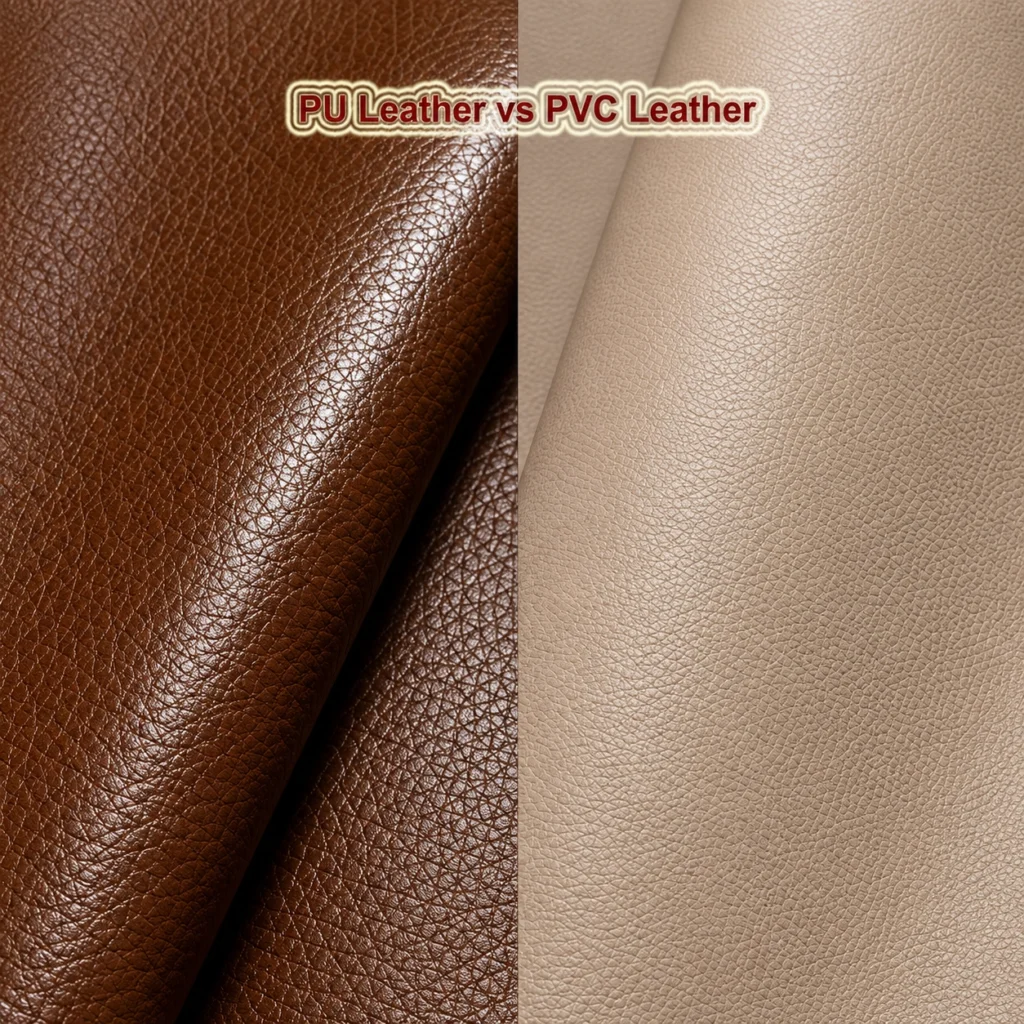
PU Leather vs PVC Leather at a Glance
| Buyer Factor | PU Leather | PVC Leather | Main Buyer Consideration |
|---|---|---|---|
| Coating type | Polyurethane-based coating | Polyvinyl chloride-based coating | The complete formulation and backing still need confirmation |
| Typical hand feel | Often softer and more flexible | Often firmer or more structured | Thickness and backing can change the result |
| Surface appearance | Often selected for finer or more natural-looking finishes | Can provide strong color, gloss, and coated surface effects | Review actual grain, gloss, and embossing samples |
| Weight and structure | Can support soft or semi-structured products | Often considered when a heavier or firmer feel is acceptable | Do not compare materials at different thicknesses |
| Flexing applications | Frequently considered for shoe uppers and soft leather goods | Suitability depends on formulation and component location | Test the material after repeated bending |
| Moisture and cleaning | Depends on the surface coating and finish | Often selected for coated, easy-clean surfaces | Confirm cleaning method and surface stability |
| Vapor transmission | Depends on coating porosity and material structure | Depends on coating porosity and material structure | Neither material name alone proves breathability |
| Price direction | May cost more for comparable basic constructions | Often considered for cost-sensitive projects | Compare equivalent thickness, backing, finish, and performance |
| Compliance review | Exact formulation and finished product still require review | Plasticizer and restricted-substance information may need closer attention | Request project-specific documentation and testing |
| Common application direction | Bags, shoes, garments, gloves, and packaging | Structured goods, coated accessories, upholstery, and cost-sensitive products | Final suitability must be confirmed through samples |
The Main Difference Is the Complete Coating Structure
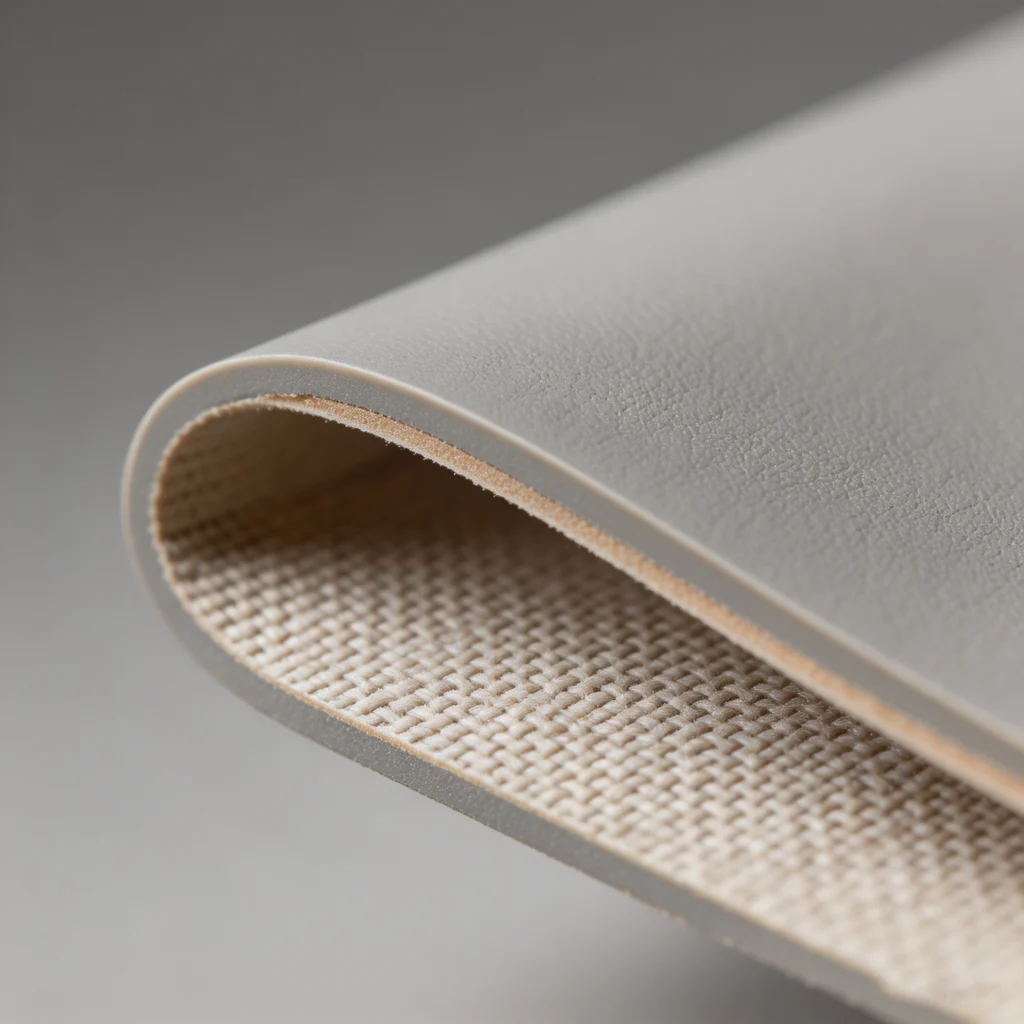
The difference between PU leather and PVC leather begins with the surface polymer. PU leather uses a polyurethane-based coating, while PVC leather uses a polyvinyl chloride-based coating. Both are normally built on a textile or nonwoven base.
However, the polymer name does not describe the complete material. Two PU leathers can have different softness, thickness, backing strength, coating weight, and surface durability. The same is true for two PVC leathers.
Flexible PVC formulations may use plasticizers to adjust softness and processing behavior. The exact plasticizer system varies, so buyers should not assume that every PVC material uses the same chemistry. Material declarations and test reports should relate to the actual product being ordered.
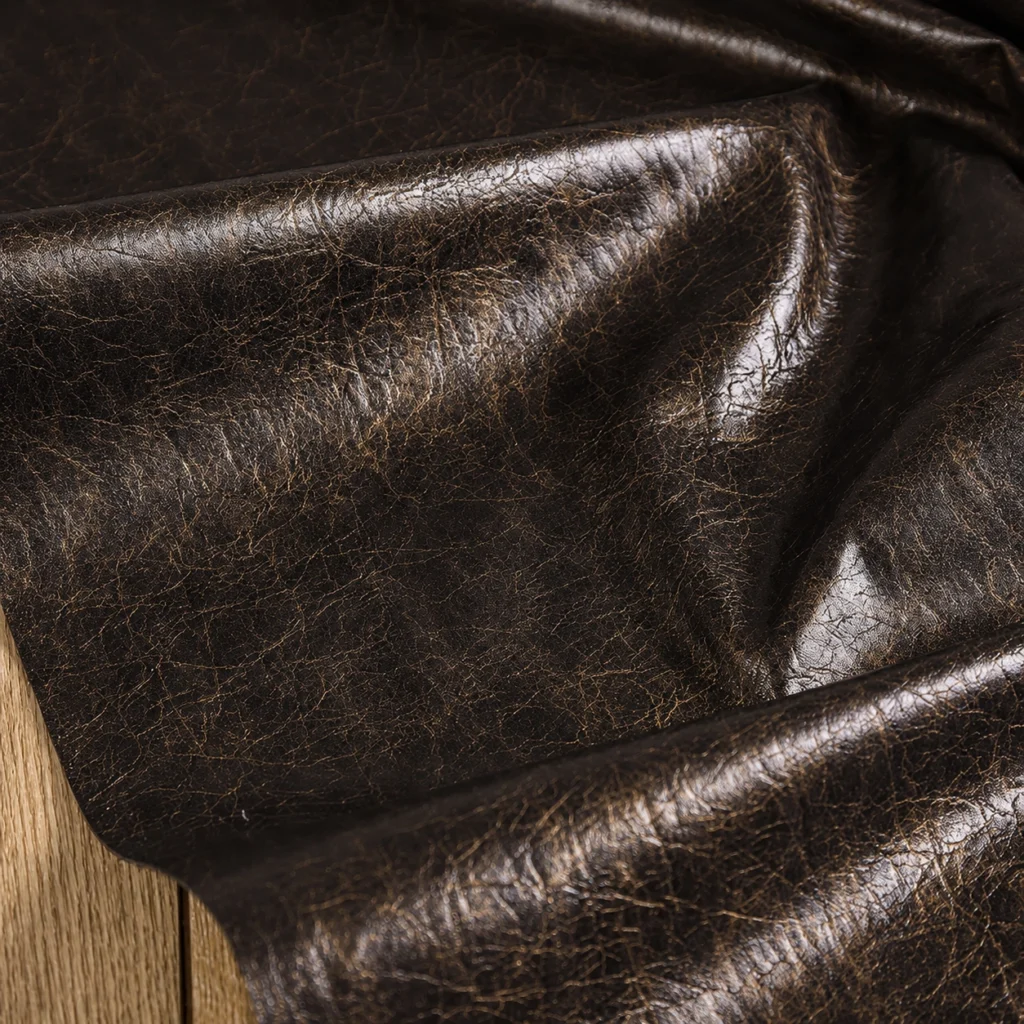
PU and PVC surfaces can both be colored, printed, embossed, and finished in matte or glossy directions. Therefore, a surface photograph alone may not reveal which material will work better in production.
How Hand Feel, Structure, and Appearance Differ
PU leather is often selected when buyers want a softer touch, easier folding, or a surface that moves more naturally with the product. This direction is useful for soft handbags, shoe uppers, garments, gloves, and small leather goods.
PVC leather is often considered when a firmer, thicker, or more heavily coated feel is acceptable. It can be useful for structured products, easy-clean surfaces, and projects where basic material cost is a major concern.
- Softness: PU often provides a softer direction, but backing and thickness remain important.
- Structure: PVC may feel firmer, although structured PU can also be developed with a stronger backing.
- Surface detail: PU is often chosen for fine grains and controlled hand feel. PVC can create bold gloss, color, and embossed effects.
- Weight: A thick PVC construction may feel heavier, but weight must be compared at equal specifications.
- Vapor transmission: This depends on coating chemistry, porosity, base fabric, and construction rather than the material name alone.
Research on polyurethane synthetic leather shows that vapor transmission depends on coating chemistry, porous structure, and base fabric.
Buyer warning: Do not approve a material only because the supplier calls it PU or PVC. Review the complete specification and physical sample.
PU Leather vs PVC Leather for Bags
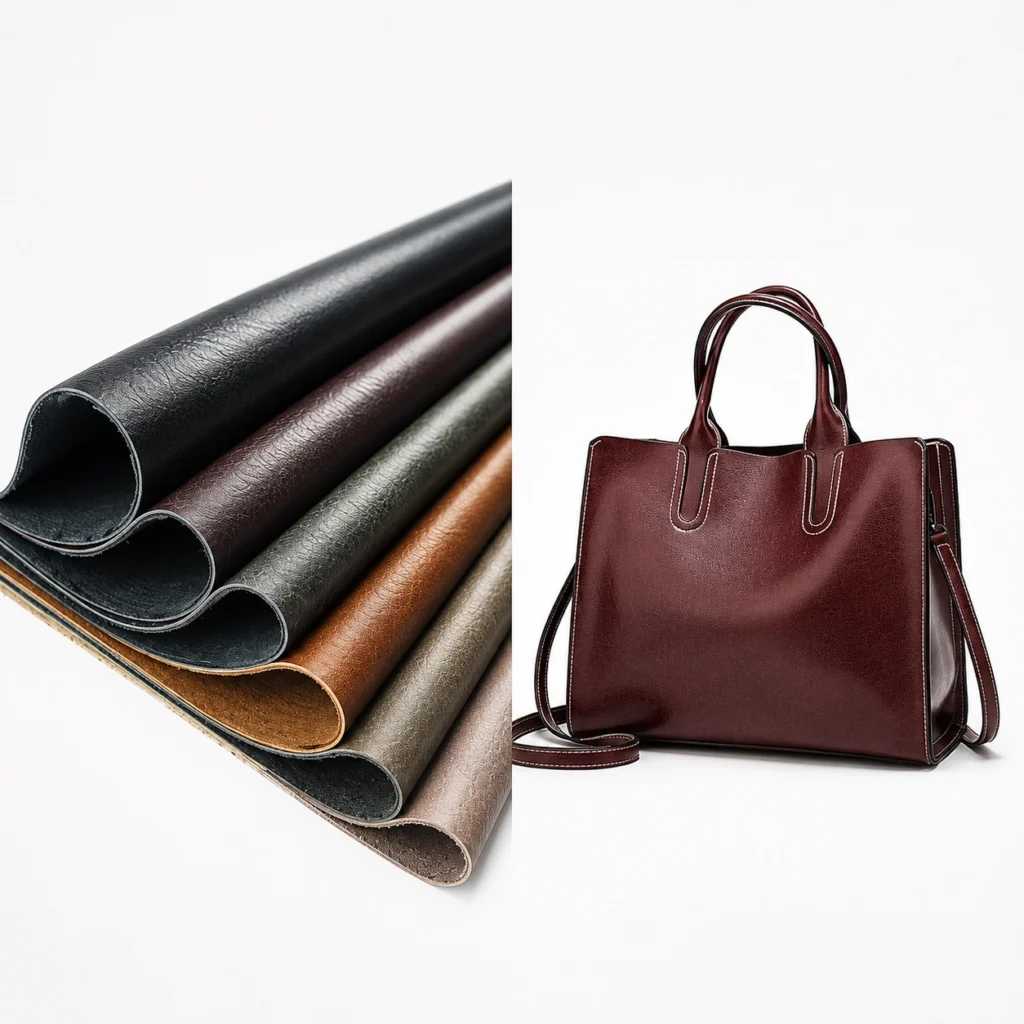
For many handbag and wallet projects, PU leather is the more common starting point. It can provide a flexible hand feel, controlled grain, clean folding, and a refined surface direction.
Buyers can review application-focused PU leather for bags when comparing colors, textures, thicknesses, and backing options for handbags, backpacks, wallets, and small leather goods.
PVC leather may still be suitable for promotional bags, rigid cases, easy-clean products, or cost-sensitive collections. The decision should depend on the intended structure rather than the product name alone.
One common mistake is choosing PVC only because the bag must hold its shape. Structure can also come from the backing fabric, reinforcement board, foam, lining, and internal construction. A suitable PU material with stronger support may work better than a soft PVC material.
For bag development, compare:
- surface appearance on a large panel;
- folding and edge-wrapping behavior;
- stitching around handles and corners;
- backing strength and shape support;
- color beside lining, thread, hardware, and edge paint;
- surface behavior after rubbing and repeated handling.
PU Leather vs PVC Leather for Shoes
PU leather is often considered for shoe uppers because many constructions can balance flexibility, surface appearance, and backing support. It is commonly used for casual shoes, fashion shoes, boots, sandals, and decorative upper panels.
Buyers sourcing footwear materials can compare different directions through the PU leather for shoes category.
PVC leather may be considered for cost-sensitive footwear, decorative sections, or components that experience less repeated flexing. However, its suitability cannot be judged from price or thickness alone.
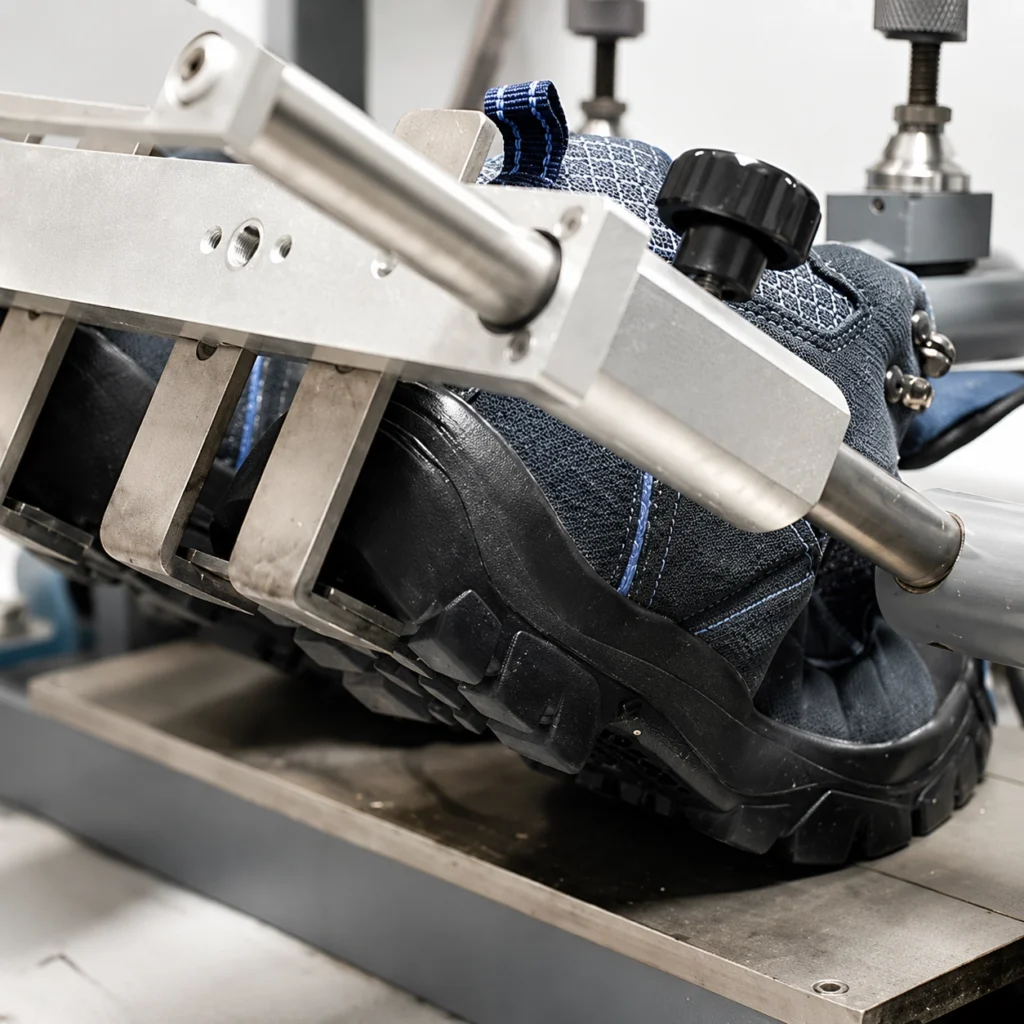
A shoe-upper sample should be evaluated after bending, forming, stitching, and lasting. The supplier may also need to discuss flexing, abrasion, coating adhesion, rubbing, hydrolysis-related performance, and low-temperature behavior according to the market and shoe design.
A flat swatch can look suitable while failing to match the curved toe, flex line, or stitched edge of the final shoe. This is why footwear materials should be checked in a trial upper or relevant component whenever possible.
Thickness, Backing, and Surface Finish Can Change the Result
The PU versus PVC decision becomes unreliable when the samples use different constructions. A 0.7mm soft PU material should not be compared directly with a 1.2mm structured PVC material.
Buyers can use the PU leather thickness guide to understand how thickness affects softness, support, edge appearance, and production handling.
- Thickness: More thickness may increase surface presence and structure, but it can reduce softness.
- Backing fabric: A stronger backing can improve stability, while a softer backing can improve drape.
- Embossing: Deep grain creates stronger visual depth, but it may affect small cutting pieces and fine decoration.
- Surface finish: Matte, satin, and glossy finishes change reflection, color appearance, and visible marking.
- Coating construction: Surface durability and flexibility depend on the full coating system, not only the polymer family.
The PU leather texture guide provides additional guidance on grain scale, embossing depth, and surface-finish selection.
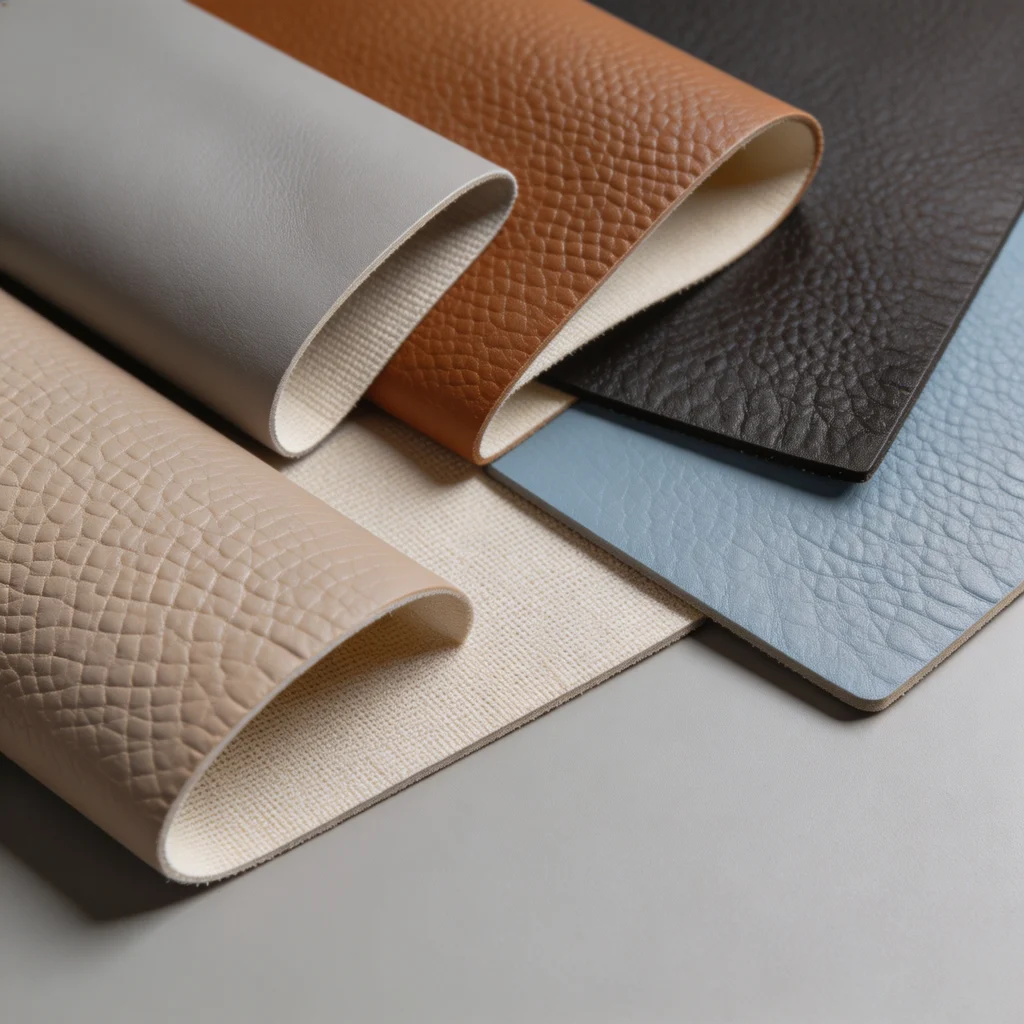
Color should also be approved on the final grain and finish. A color code selected from a small card may look different on a deeper embossing or glossier coating. Review the PU leather color card guide before approving a final sample.
Compare Total Cost, Not Only the Material Price
PVC leather is often considered a lower-cost option, but a valid quotation comparison must use equivalent specifications. A cheaper price may reflect a different thickness, backing, coating weight, width, finish, or performance level.
Hidden costs may appear when the material creates:
- higher cutting waste;
- more difficult folding or stitching;
- surface damage during production;
- unexpected color or gloss differences;
- sample revisions;
- finished-product rejection;
- additional chemical or performance testing.
PU leather is not automatically higher quality. PVC leather is not automatically unsuitable. The better commercial choice is the material that meets the product specification with acceptable production risk and cost.
Testing and Compliance for the United States and Europe
Neither “PU leather” nor “PVC leather” is a compliance statement. Testing should be based on the exact material, finished product, target market, age group, and intended use.
For European projects, buyers may need to review relevant REACH restricted-substance requirements. The European Chemicals Agency provides information about regulated phthalates and their uses.
For products sold in the United States, especially children’s products, buyers should identify which CPSC rules apply to the finished product. The CPSC publishes specific phthalates guidance for manufacturers and importers.
Flexible PVC materials may require close review of plasticizer and phthalate information. However, buyers should not assume that every PVC formulation contains the same substances. PU formulations, pigments, coatings, adhesives, and backing materials also require project-specific chemical review.
Performance must also be checked separately. For example, ASTM D3389 describes an abrasion test direction for coated fabrics. The applicable method and acceptance criteria should be agreed according to the product.
Danhon publishes examples of third-party material test information. These examples should not be treated as proof that every material meets every market requirement. The applicable report should be confirmed for the selected material and project.
A Practical Buyer Decision Checklist
Before choosing between PU leather and PVC leather, send the supplier the following information:
- finished product and material location;
- target market and product user group;
- preferred thickness or acceptable range;
- required softness, firmness, or structure;
- surface grain, embossing, and gloss direction;
- backing fabric or support requirement;
- color reference or physical standard;
- cutting, stitching, folding, lamination, or forming method;
- estimated quantity and material usage;
- required chemical and physical tests.
Request comparable PU and PVC samples with similar thickness, backing, and finish. Then evaluate them under the same conditions.
How Danhon Supports Material Selection
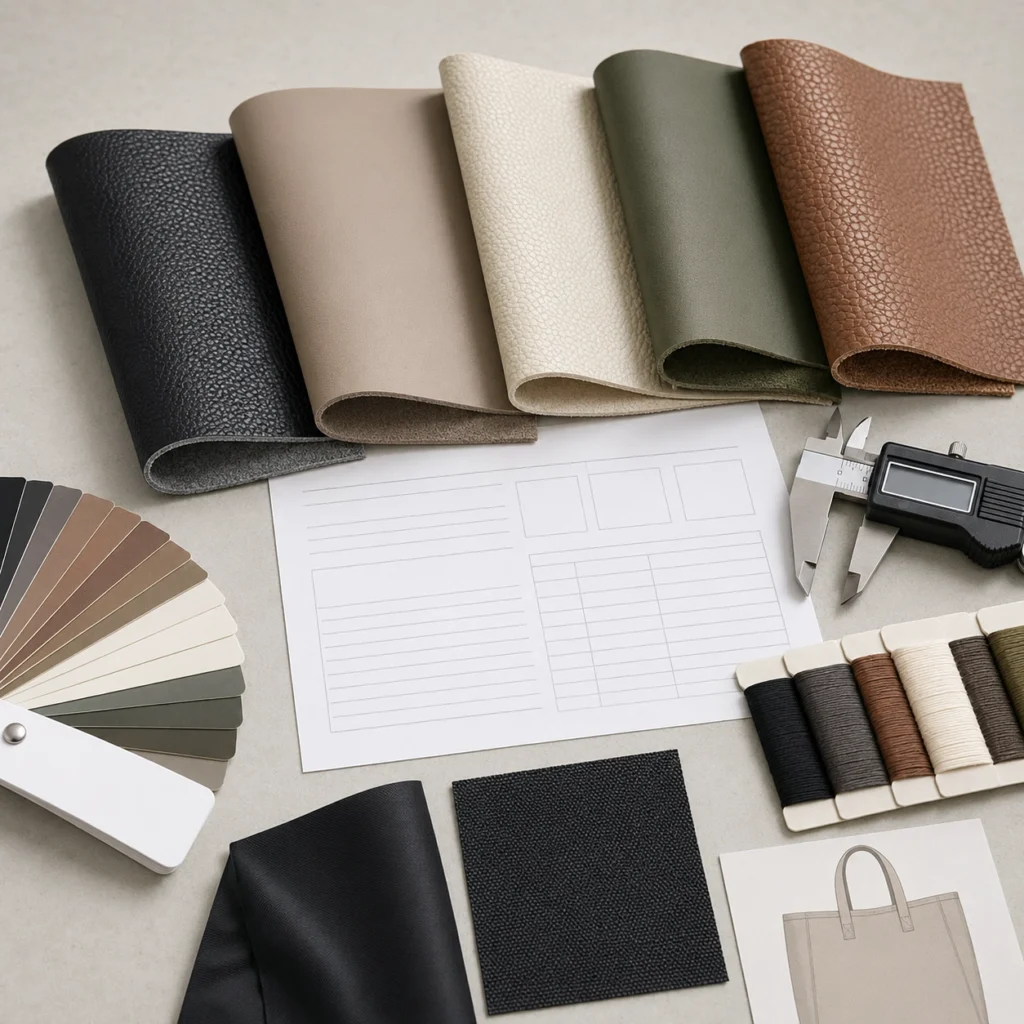
Danhon focuses on PU artificial leather for shoes, bags, garments, gloves, jewelry boxes, and packaging. Buyers can compare color, texture, thickness, backing fabric, hand feel, embossing, and surface finish according to the final application.
For a useful comparison, provide a finished-product photo, physical material reference, target thickness, expected hand feel, quantity, and market requirements. Physical samples should be checked before bulk production.
Key Takeaways
- PU leather often works better when softness, flexibility, and a refined surface are priorities.
- PVC leather can be practical for cost-sensitive, structured, or heavily coated products.
- The polymer name does not prove performance, quality, breathability, or compliance.
- Thickness, backing, coating, embossing, and finish can change the result significantly.
- Bag and shoe materials should be tested under real production conditions.
- Compare equivalent physical samples instead of relying only on photos or price.
Frequently Asked Questions
Can an Existing PVC Bag Design Be Changed Directly to PU Leather?
Not always. PU leather may fold, stretch, sew, or hold structure differently. The pattern, reinforcement, edge construction, and lining may need a trial before the material is changed.
Does PVC Leather Always Contain Restricted Phthalates?
No. PVC formulations and plasticizer systems vary. Buyers should request current material declarations or test reports instead of judging compliance from the material name.
Can PU and PVC Leather Have the Same Color and Texture?
They can be developed in similar directions, but the final appearance may not be identical. Coating chemistry, gloss, embossing, and light reflection can change how the color and grain appear.
Which Material Is Easier to Emboss or Print?
Both materials can support embossing and printing, depending on their coating and production process. A trial should confirm pattern definition, adhesion, color, and surface stability.
What Should Buyers Include When Requesting a PU Versus PVC Comparison?
Provide the product application, thickness, backing, hand feel, texture, color, finish, quantity, target market, and testing needs. Ask for samples with comparable specifications.
Compare PU Leather Samples for Your Product
Choosing between PU and PVC requires more than comparing two material names. Share your product application, target thickness, texture, color, backing, hand feel, and market requirements so suitable PU leather directions can be evaluated through physical samples.
Contact Danhon for PU Leather Samples and Custom Material Support