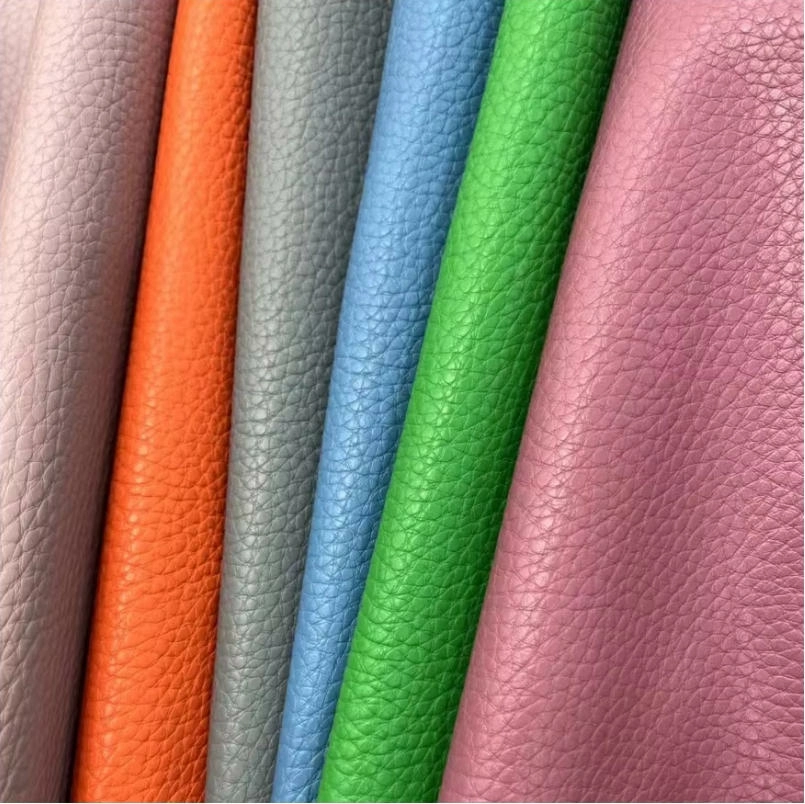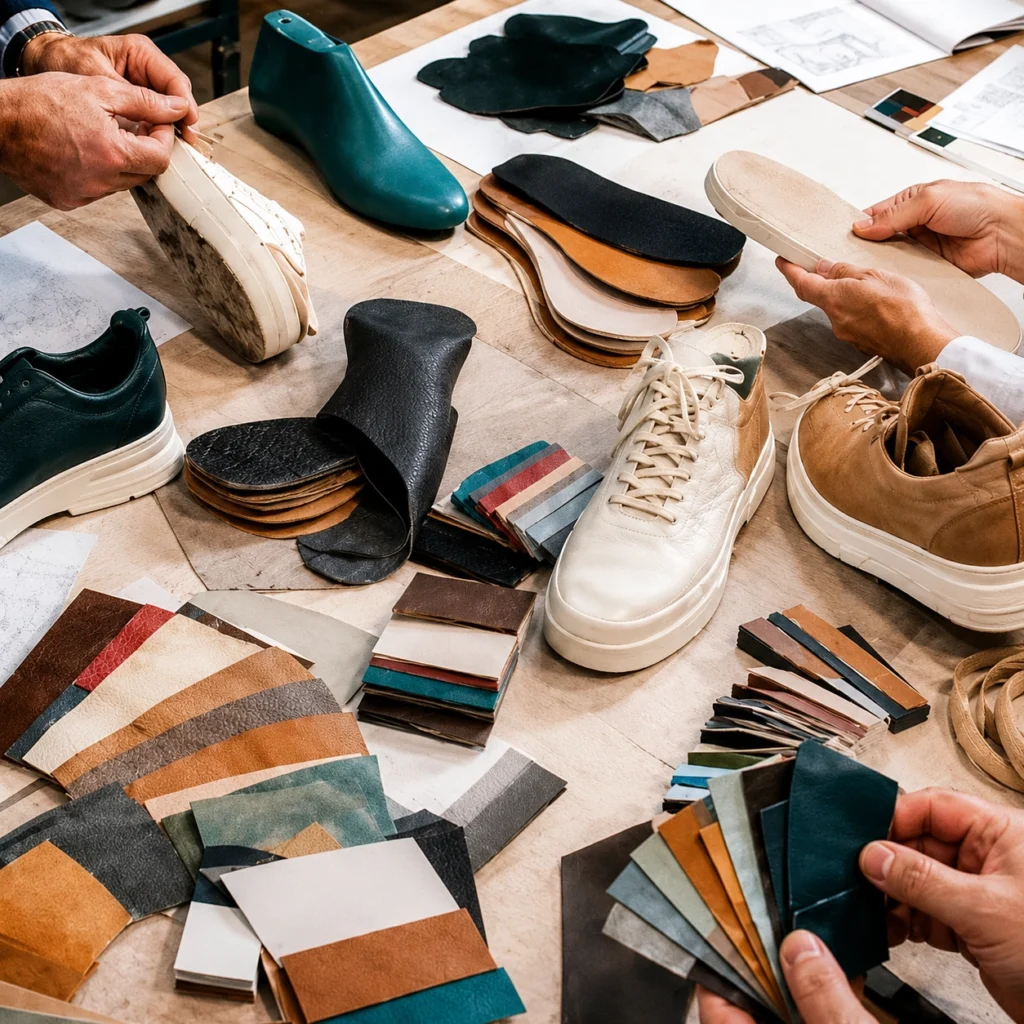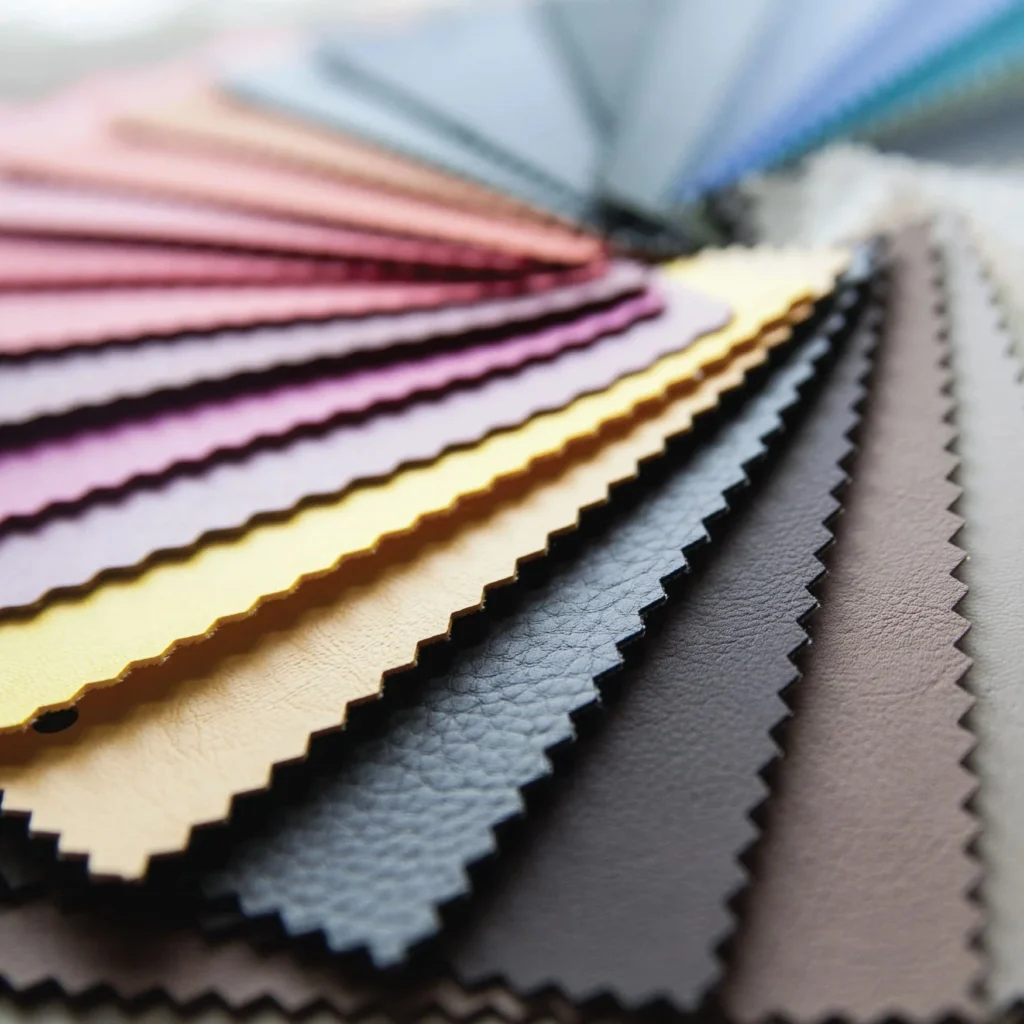
Quick Answer: What PU Leather Thickness Should Buyers Choose?
Quick answer: For most B2B sourcing projects, PU leather thickness should be selected according to the final application, not by thickness number alone. Around 0.7mm–0.8mm is often used when flexibility and softness are important. Around 0.8mm–1.0mm is commonly considered for bags and shoe upper applications that need a balance of structure and flexibility. Around 1.0mm–1.3mm may work better for more structured products, but it should always be checked by physical sample.
PU leather thickness affects hand feel, flexibility, cutting, stitching, folding, surface appearance and final product structure. A thicker material is not automatically better. In many PU leather projects, the right choice depends on the surface layer, backing fabric, embossing depth and how the finished product will be used.
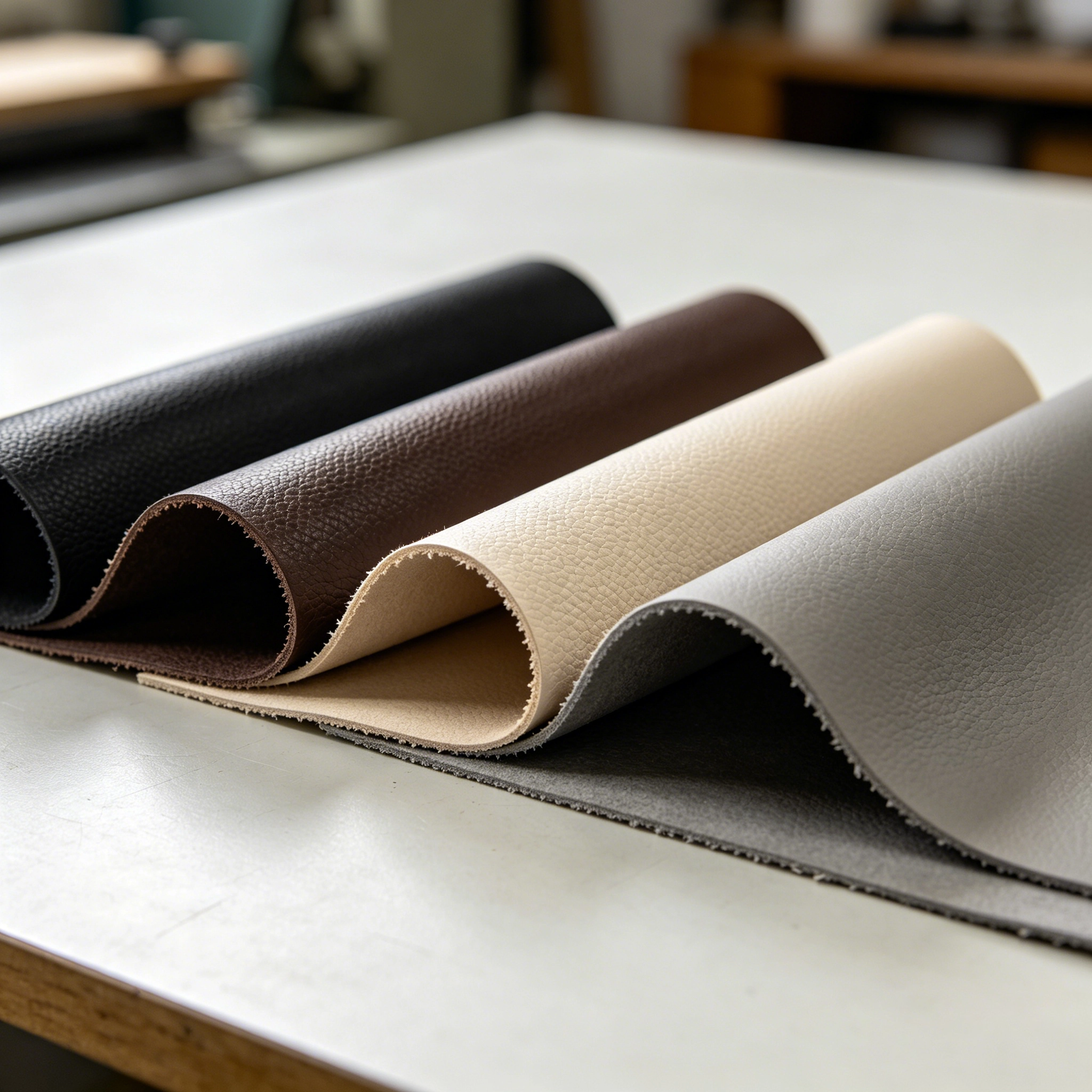
PU Leather Thickness Range by Application
The table below gives a practical starting point for buyers comparing PU leather thickness by application. It should not replace sample testing, but it can help narrow the first material selection before reviewing PU leather materials by color, texture, backing and application.
| Thickness Range | Common Application Direction | Typical Material Feel | Buyer Checkpoint |
|---|---|---|---|
| 0.7mm–0.8mm | Garments, gloves, soft packaging, flexible decorative covering | Softer, lighter, easier to bend | Check drape, backing softness and surface stability after folding |
| 0.8mm PU leather | Soft bags, small bags, shoe uppers, jewelry boxes and packaging | Balanced softness and moderate body | Check whether the finished product needs more structure or more flexibility |
| 0.9mm–1.0mm PU leather | Bags, footwear uppers, wallets, structured packaging covers | More stable, still workable for cutting and stitching | Check folding lines, edge thickness and production handling |
| 1.1mm–1.3mm PU leather | Structured bags, thicker shoe materials, rigid box covering, reinforced decorative parts | Stronger body, less soft, more noticeable thickness | Check flexibility, sewing feasibility and whether the material feels too stiff |
This range is only a practical reference. The same 1.0mm PU leather can feel soft or firm depending on backing fabric, coating structure and surface finish.
Is Thicker PU Leather Better? Not Always
One common buyer misunderstanding is assuming that thicker PU leather means better quality. This is not always true. Thicker material may give more structure, but it can also reduce softness, increase folding resistance and make sewing more difficult in some designs.
For example, a structured handbag may benefit from 1.0mm or 1.2mm PU leather if the design needs shape support. However, a soft pouch, flexible shoe upper or garment panel may look and feel better with a thinner material. If the product needs bending, wrapping or close stitching, excessive thickness may create production problems.
The better question is not “is thicker PU leather better?” The better question is: does this thickness match the final product structure, hand feel and processing method?
PU Leather Thickness for Bags
PU leather thickness for bags usually depends on the bag type. Soft handbags, tote bags and casual bags often need a balance between flexibility and structure. In many bag projects, 0.8mm to 1.0mm PU leather is a practical starting range.
For structured bags, buyers may compare suitable options from PU leather for bags, especially when the material needs to hold shape. However, the backing fabric still matters. A thinner PU leather with a stronger backing may sometimes perform better than a thicker material with weak support.
For bags, buyers should check:
- whether the material can support the bag shape
- whether the surface texture remains stable after bending
- whether the edges become too bulky after folding
- whether the backing fabric works with lining, reinforcement and stitching
- whether the selected color looks consistent on the chosen texture
What thickness of PU leather is best for bags? In most cases, there is no single answer. 0.8mm PU leather may work well for softer bag styles, while 1.0mm PU leather or 1.3mm PU leather may be considered for more structured designs.
PU Leather Thickness for Shoes
PU leather thickness for shoes is usually selected according to the shoe part and construction. Shoe uppers need flexibility, surface stability and enough body to support the design. If the material is too thin, it may not provide enough structure. If it is too thick, it may affect bending comfort and stitching.
What thickness of PU leather is used for shoes? For many shoe upper applications, buyers often compare PU leather for shoes around 0.8mm to 1.0mm first. Some shoe designs may need thinner or thicker options depending on the finished product.
For footwear projects, buyers should pay attention to:
- flexibility during repeated bending
- surface appearance after shaping
- backing strength and stability
- cutting performance for upper patterns
- color matching across panels and batches
Thickness alone cannot decide shoe material suitability. The surface finish, backing fabric and hand feel should be reviewed together before confirming bulk production.
When Thin PU Leather Works Better
Thin PU leather is not a lower-value choice when the application requires softness. Garments, gloves and some packaging projects often need a lighter material that bends easily and feels comfortable in use.
For garments, the material should usually have better drape and movement. For gloves, flexibility and hand feel may be more important than structure. For jewelry boxes and packaging, thin PU leather can work well when the material is laminated or wrapped onto a stable base.
This is why buyers should not judge PU leather thickness without considering the final product. A thin material may be the correct choice when the design already has internal support or when the surface only needs to provide appearance and touch.
Why Backing Fabric Can Change the Thickness Decision
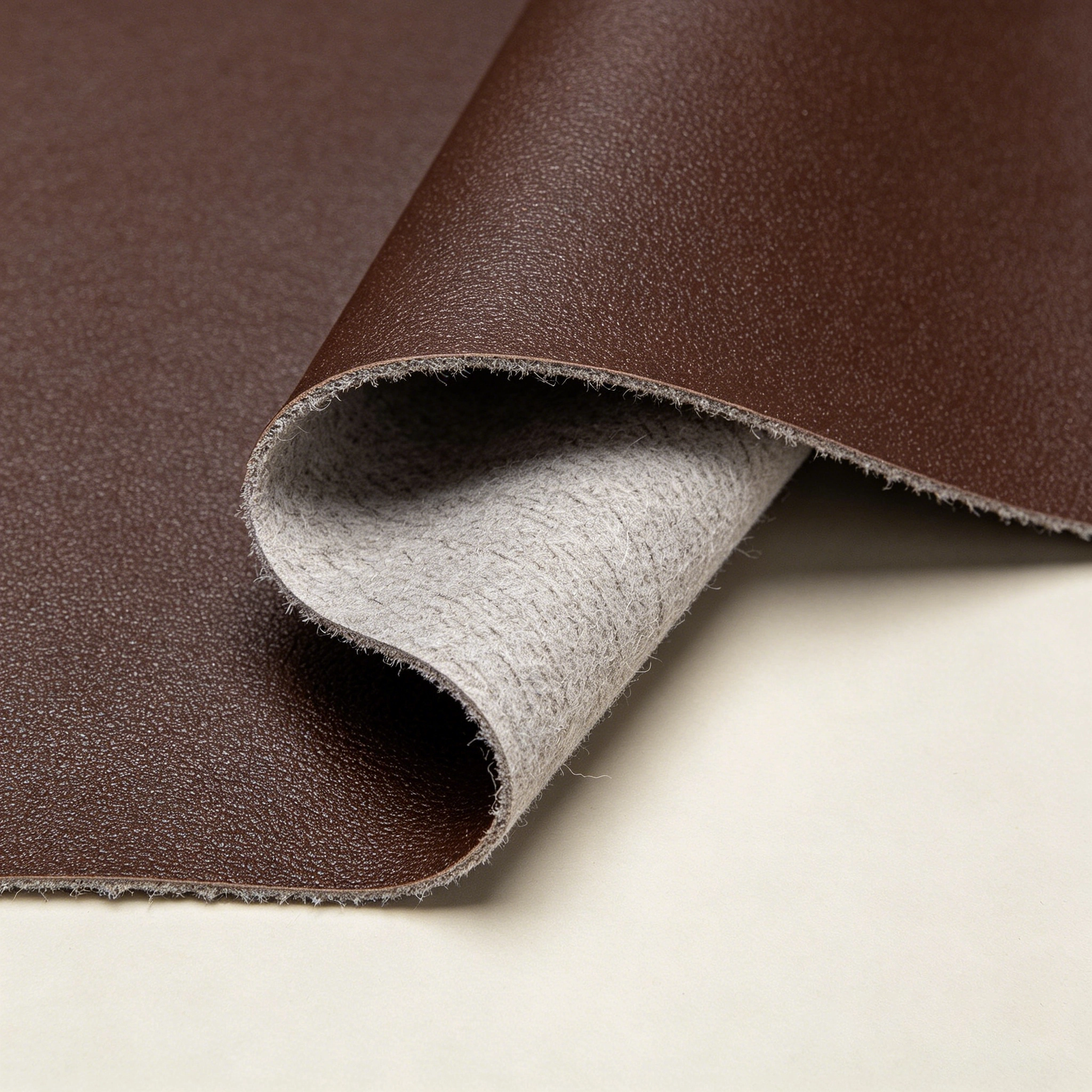
PU leather is not only a surface layer. The backing fabric plays an important role in strength, softness, stretch, structure and production handling. Two materials with the same measured thickness may behave very differently if the backing fabric is different.
A stronger backing may improve stability, but it may also make the material feel firmer. A softer backing may improve flexibility, but it may not support a structured bag or shoe upper as well. Deep embossing can also change how thick and firm the material feels in the hand.
In our material selection experience, buyers often focus on surface texture first. However, backing fabric and thickness usually decide whether the PU leather works smoothly in production.
Common Buyer Mistakes When Choosing PU Leather Thickness
Many sourcing problems start from unclear thickness expectations. A buyer may send a finished bag photo and ask for the same material, but the supplier still needs more details before recommending a suitable PU leather.
Common mistakes include:
- choosing thickness only by number without checking hand feel
- assuming all 1.0mm PU leather materials feel the same
- ignoring backing fabric when comparing samples
- selecting a thick material for a design that needs soft folding
- using only color card photos instead of physical samples
- not testing how the material behaves after cutting, folding or stitching
These mistakes can lead to sample revisions, unsuitable hand feel, bulky edges or mismatched product appearance. Clear specifications help reduce unnecessary back-and-forth during sample development.
How to Confirm Thickness Before Bulk Production
Before confirming bulk PU leather, buyers should compare physical samples under real application conditions. A material that looks correct on a swatch may behave differently after being folded, sewn, laminated or shaped.
A practical confirmation process can include:
- checking the measured thickness range
- comparing several thickness options side by side
- reviewing backing fabric and hand feel
- testing bending, folding and edge handling
- checking surface texture under different lighting
- confirming color against a physical color card or approved sample
For coated and textile-backed materials, the ISO 2286-3 thickness method for rubber- or plastics-coated fabrics shows why measurement method and pressure can affect thickness reading. Buyers should keep the same measurement approach when comparing samples from different suppliers.
Danhon Support for Application-Based PU Leather Selection
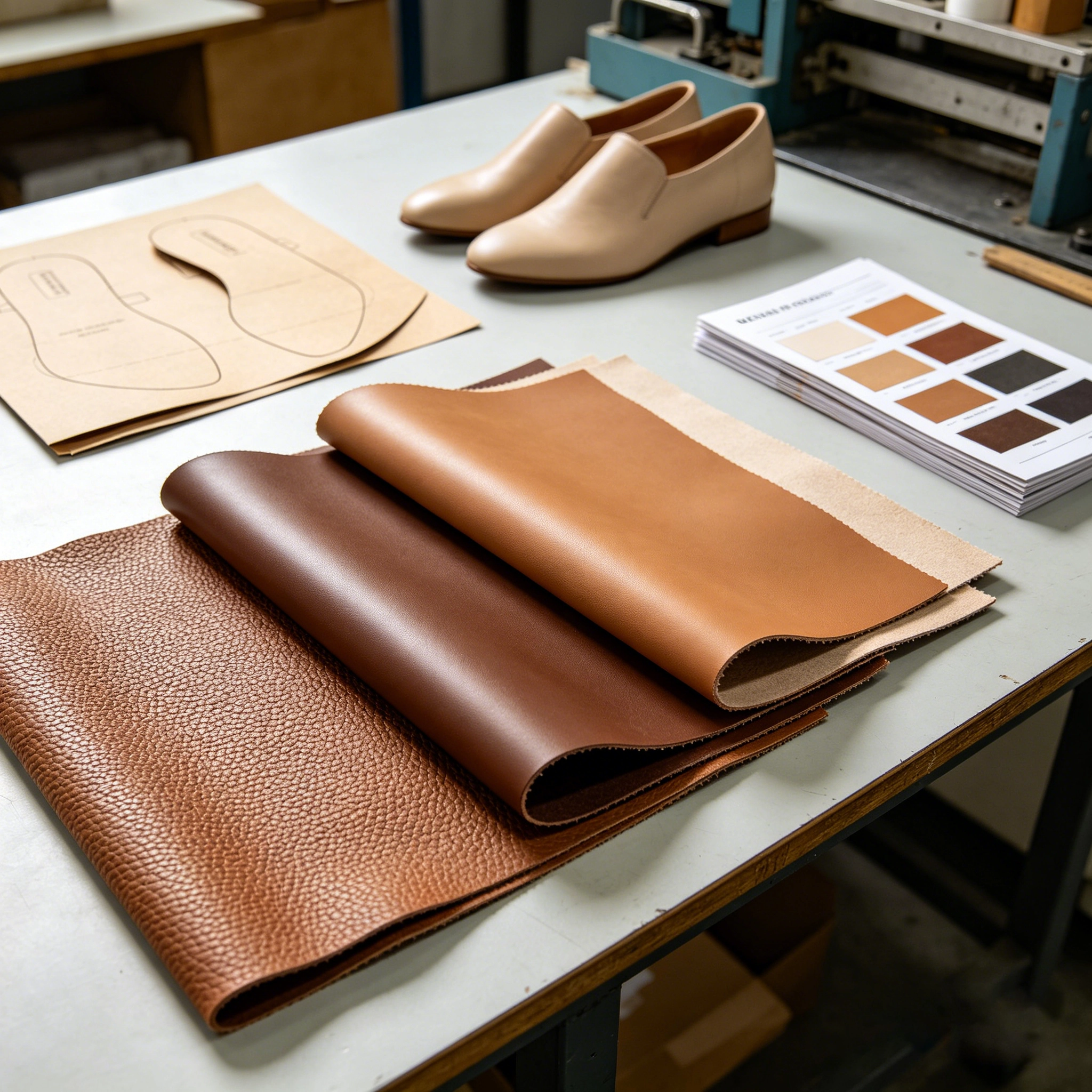
Danhon supports PU artificial leather options for shoes, bags, garments, gloves, jewelry boxes and packaging. For custom projects, buyers can compare thickness, texture, color, backing fabric and hand feel before confirming the final material direction.
If you are not sure how to choose PU leather thickness, it is better to start with the finished product application. A bag project, shoe upper project and packaging project may all use PU leather, but the thickness logic can be very different.
At Danhon, we usually recommend confirming PU leather through physical samples and color cards before bulk production, especially when the project involves custom color, custom texture or specific hand feel requirements.
FAQ
What thickness of PU leather is best for bags?
For many bag projects, 0.8mm to 1.0mm PU leather is a practical starting range. Softer bags may use around 0.8mm, while more structured bags may consider 1.0mm to 1.3mm depending on design and backing fabric.
What thickness of PU leather is used for shoes?
For many shoe upper applications, buyers often compare PU leather around 0.8mm to 1.0mm first. The final choice depends on shoe construction, flexibility needs, backing strength and surface finish.
Is thicker PU leather better?
Not always. Thicker PU leather may provide more structure, but it can reduce softness and flexibility. The right thickness depends on the final application, production method and desired hand feel.
How do I choose PU leather thickness?
Start from the finished product. Check whether the product needs softness, structure, folding, stitching, lamination or shape support. Then compare physical samples with different thicknesses before confirming bulk production.
Is 0.8mm PU leather suitable for bags?
0.8mm PU leather can be suitable for soft bags, casual bags and some small bag designs. For structured bags, buyers may need to compare it with 1.0mm or thicker options.
Is 1.0mm PU leather suitable for shoes?
1.0mm PU leather can be considered for some shoe upper applications, but it should be checked for flexibility, bending behavior, cutting performance and backing strength.
Can PU leather thickness be customized?
PU leather thickness can often be discussed as part of custom material development, together with color, texture, backing fabric and hand feel. Final feasibility depends on the material structure and project requirements.
Should I confirm PU leather by color card or physical sample?
Color cards are useful for narrowing color direction, but physical samples are more reliable for confirming thickness, texture, backing, hand feel and real application suitability.
Conclusion
PU leather thickness should be selected by application, not by number alone. For bags and shoes, 0.8mm to 1.0mm is often a practical comparison range. For softer applications, thinner materials may work better. For structured products, thicker materials may be considered, but only after checking flexibility, backing fabric and production handling.
The safest approach is to compare physical samples before bulk production. Thickness, texture, backing fabric, color and hand feel should be reviewed together, because these details decide whether the material can truly match the finished product.
Request PU Leather Samples or Color Cards
If you are selecting PU leather for bags, shoes, garments, gloves, jewelry boxes or packaging projects, you can contact Danhon to compare thickness, texture, color and backing options. Physical samples and color cards can help confirm the right material before bulk production.