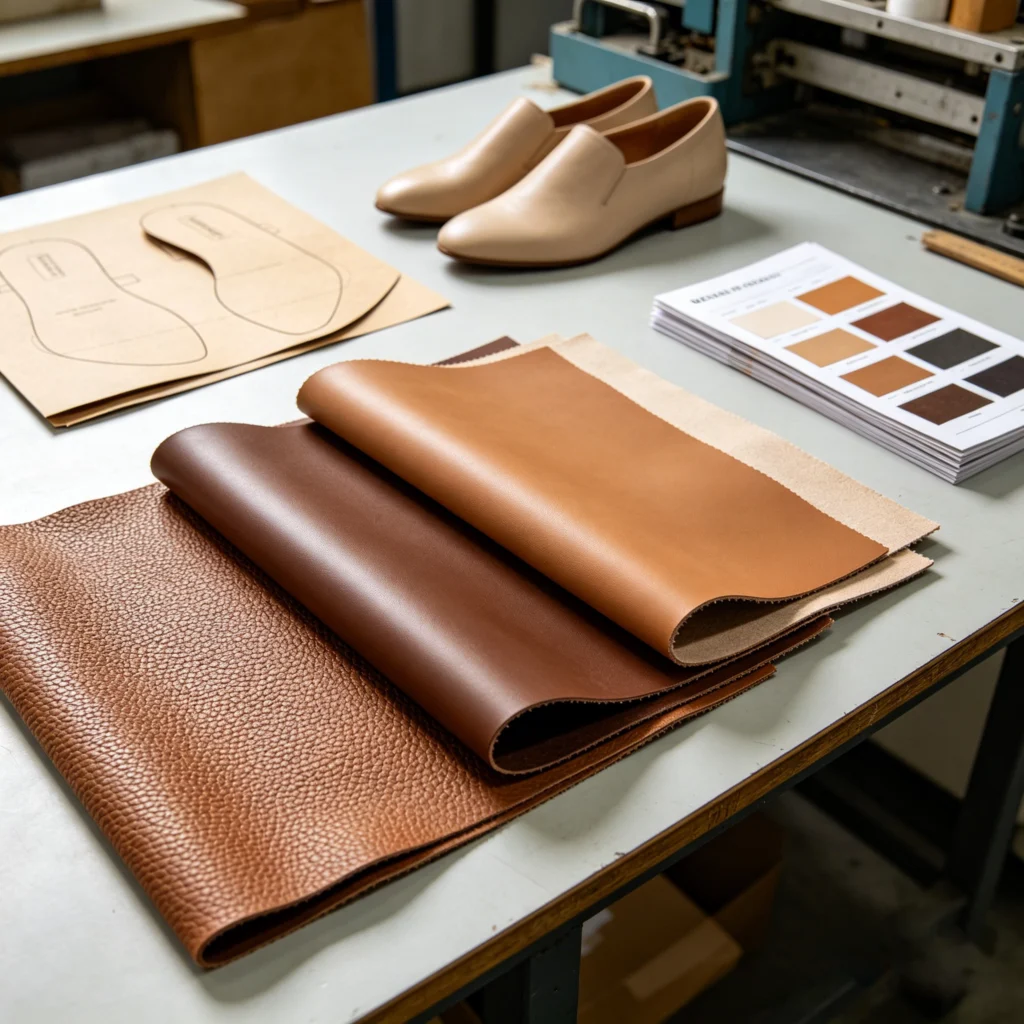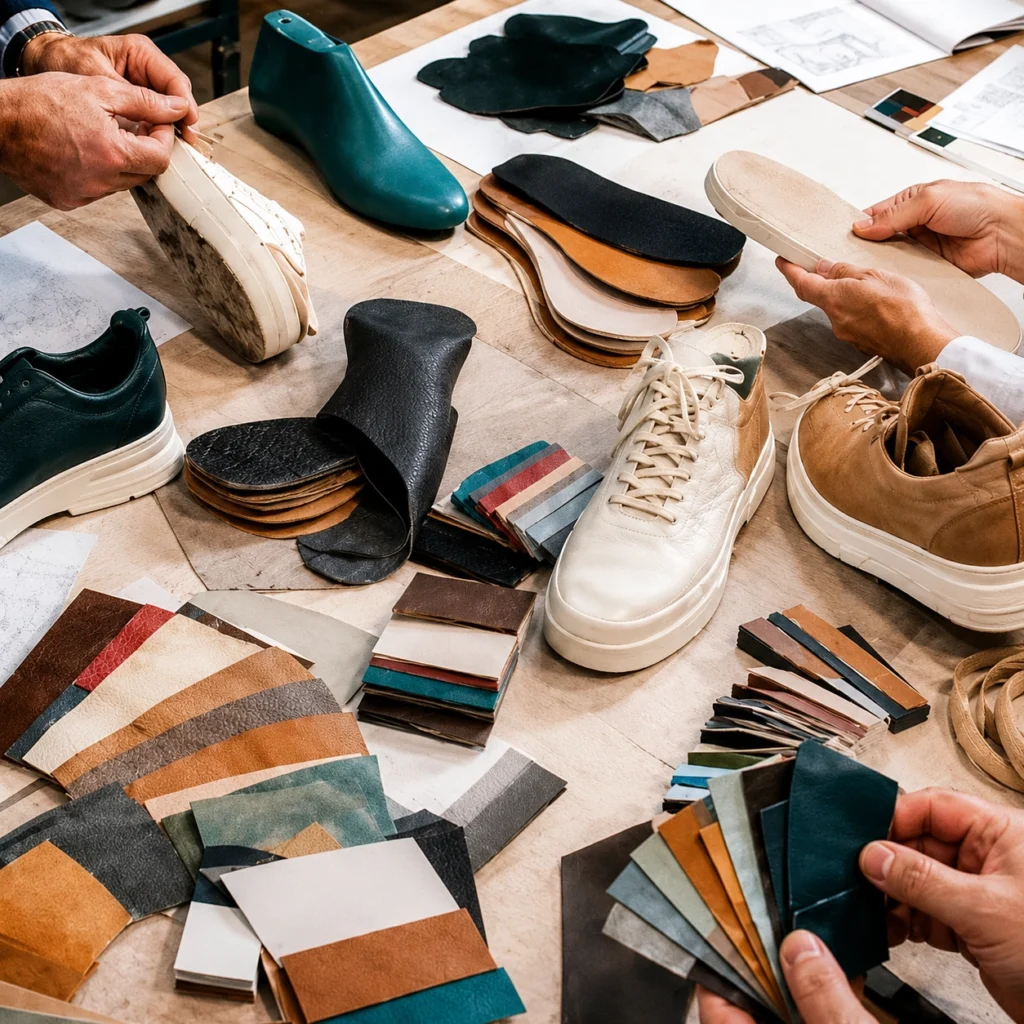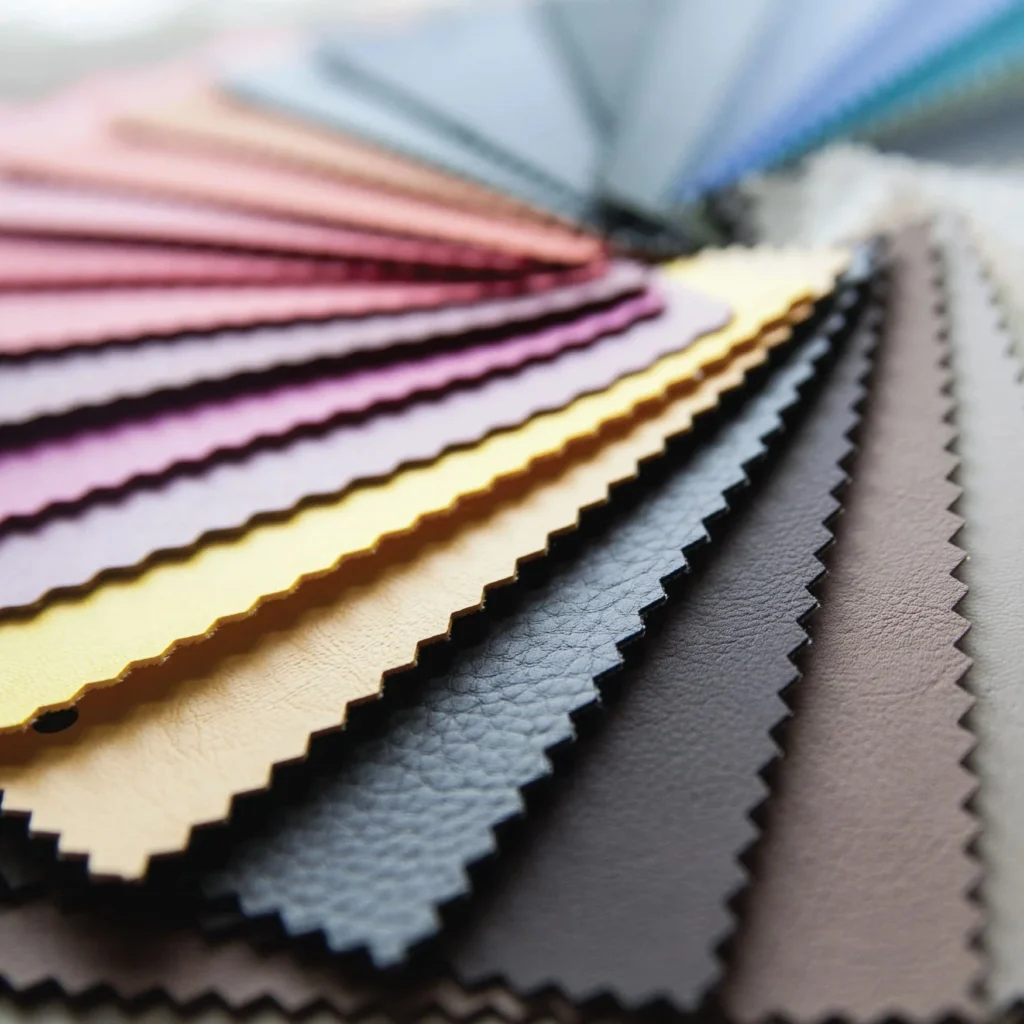
Quick Answer: What Determines PU Leather Texture?
PU leather texture is created by three related elements: the grain pattern, the depth and scale of the embossing, and the final surface finish. Together, these elements determine how the material looks, feels and reflects light. They also influence whether the material visually suits bags, shoes, garments, gloves or packaging.
For B2B sourcing, texture should not be selected from appearance alone. A deep pebbled grain may create stronger visual depth, but it may also change how the material looks around small cut pieces and curved areas. A smooth PU leather surface can appear clean and modern, while marks or unevenness may be easier to notice.
The right choice depends on the finished product, material thickness, backing fabric, hand feel and physical sample. Buyers can first review Danhon’s PU artificial leather products to compare different surface patterns, colors and application directions.
PU Leather Texture Has Three Main Components
Buyers often use the word “texture” to describe the entire surface. In practice, the final appearance usually comes from a combination of three different decisions.
1. Grain Pattern
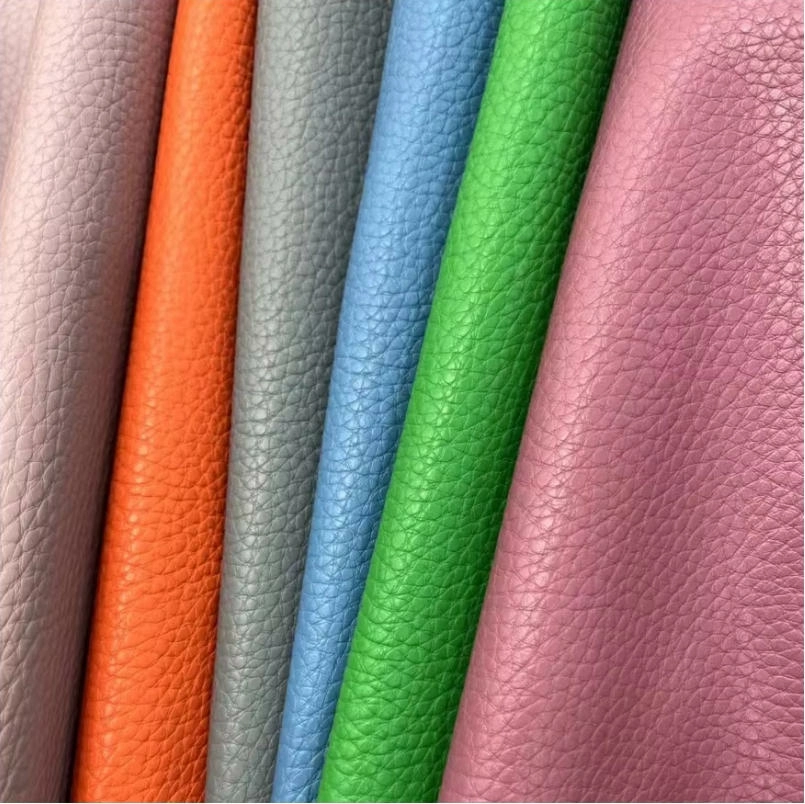
The grain pattern is the visible design on the PU leather surface. It may be almost flat, finely textured, irregular, rounded, pebbled or based on a custom geometric pattern.
Grain names are useful for communication, but they are not always standardized between suppliers. One supplier’s litchi grain may be finer or deeper than another supplier’s version. Buyers should therefore compare actual swatches rather than rely only on the grain name.
2. Embossing Depth and Scale
Embossing creates a raised and recessed pattern on the coated surface. The same general pattern can be produced with different depths and pattern sizes.
Depth controls how strongly the grain can be seen and felt. Scale describes the size of each grain unit. A large-scale grain may work well on a large handbag panel but appear oversized on a small wallet, shoe detail or jewelry box.
3. Surface Finish
The PU leather surface finish controls gloss, reflection and the way color is visually expressed. Common directions include matte, semi-matte, satin and glossy finishes.
A surface finish does not replace the grain pattern. It modifies how the pattern is seen. The same embossed PU leather may look understated with a matte finish and more decorative with a higher-gloss finish.
| Texture Element | What It Controls | What Buyers Should Check |
|---|---|---|
| Grain pattern | The shape and visual character of the surface | Pattern style, repeat and suitability for the product design |
| Embossing depth | How raised, recessed and tactile the pattern appears | Whether the depth still looks balanced after cutting, stitching or forming |
| Pattern scale | The relative size of each grain unit | Whether the grain matches the size of the finished product |
| Surface finish | Gloss, reflection and visual color expression | Lighting appearance, surface marks and the desired product style |
| Backing and thickness | Structure, softness, drape and handling | Whether the complete material construction suits production |
How Common PU Leather Textures Differ
There is no single PU leather grain that works for every product. The following comparison shows the general visual direction of several commonly requested textures.
| PU Leather Texture | Visual Effect | Typical Hand-Feel Direction | Common Applications | Buyer Consideration |
|---|---|---|---|---|
| Smooth PU leather | Clean, flat and uniform | May feel sleek, soft or firm depending on the complete construction | Fashion bags, garments, box covering and decorative panels | Scratches, pressure marks or surface unevenness may be more noticeable |
| Fine grain PU leather | Subtle and controlled surface detail | Often selected when a softer visual effect is required | Soft bags, garments, gloves and small accessories | The grain may appear weaker after stretching or forming |
| Litchi grain PU leather | Irregular rounded grain with visible surface depth | Usually more tactile than a smooth or fine-grain surface | Handbags, wallets, footwear details and accessories | Grain size should be matched to the size of the product |
| Pebbled PU leather | Rounded, repeated and more pronounced grain | Can create a more substantial visual impression | Structured bags, luggage panels and casual footwear | Very deep grain may affect fine cutting, printing or detailed decoration |
| Custom embossed PU leather | Geometric, decorative or project-specific pattern | Depends on pattern depth, coating and base material | Brand collections, footwear panels, bags and packaging | Pattern repeat, alignment and sample approval require careful confirmation |
These descriptions are general directions rather than fixed performance categories. A fine-grain material can still be firm, while a pebbled material can be developed with a softer hand feel. Thickness, coating structure and backing fabric must be considered together.
How Embossing Depth Changes the Finished Product
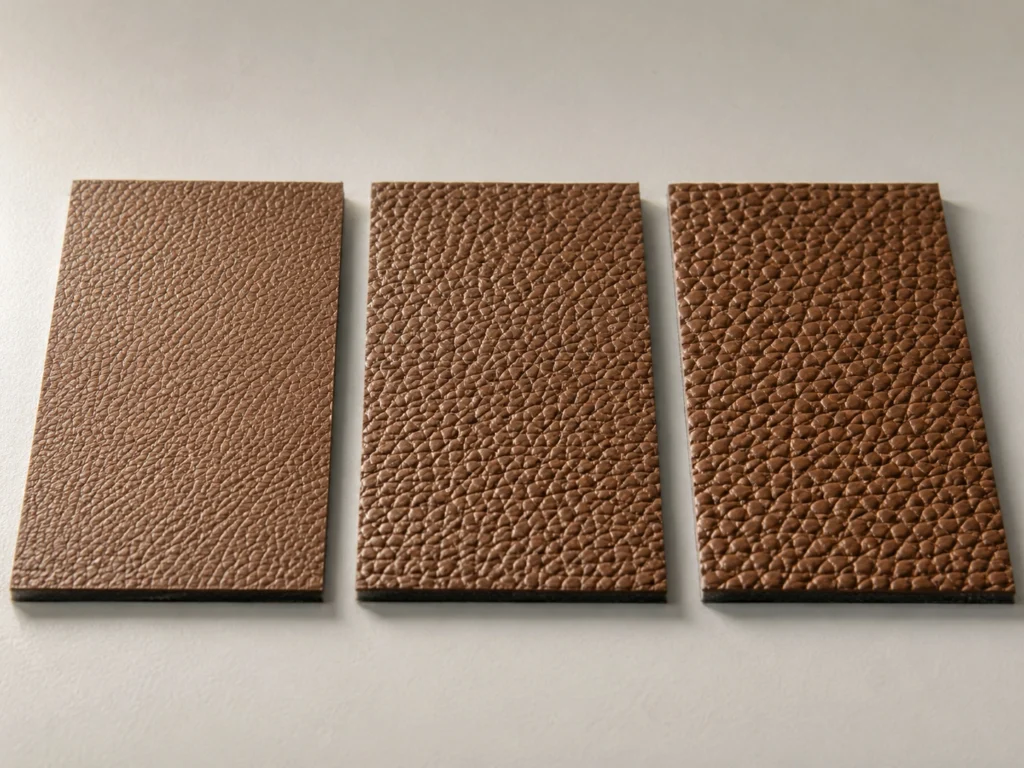
Deeper embossing usually makes the surface pattern more visible from a distance. It may help create stronger contrast between raised and recessed areas, especially under side lighting.
However, deeper embossing is not automatically better. Buyers should consider how the material will be cut, folded, stitched, laminated or shaped.
- For large bag panels: medium or deep grain may create clear visual depth.
- For small wallets or accessories: a smaller pattern scale may look more balanced.
- For curved shoe areas: the grain should be checked after bending and forming.
- For printed or embroidered decoration: a very uneven surface may make fine details harder to position consistently.
- For box covering: excessively deep grain may affect edge wrapping or adhesive contact, depending on the construction.
One common sourcing problem occurs when a buyer sends only a finished product photo and requests the “same texture.” The image may not show the grain depth, scale or surface gloss accurately.
A close-up photograph, physical swatch or approved reference material usually provides a clearer direction. Buyers should also provide the intended application, expected thickness, backing direction and hand-feel requirements before requesting a matching sample.
Why Surface Finish Changes the Same Grain
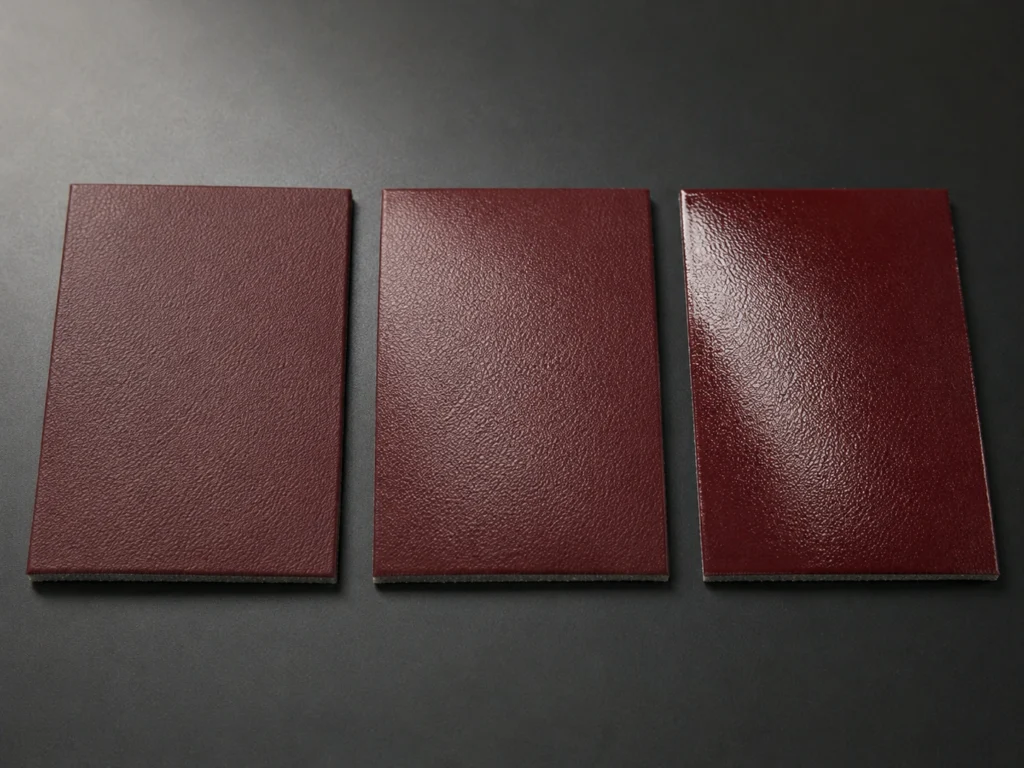
Two PU leather samples can use a similar embossing pattern but still look noticeably different because of the surface finish.
Matte Finish
A matte finish reduces strong surface reflection and can make the grain appear more understated. It is often considered for products that require a quieter or more natural-looking surface.
However, a matte appearance does not automatically indicate greater scratch resistance or better durability. These properties depend on the coating system and should be evaluated separately.
Semi-Matte or Satin Finish
A semi-matte or satin direction provides controlled reflection without producing a highly glossy appearance. It can make the grain easier to see while maintaining a balanced commercial look.
This finish direction is often considered when buyers want more surface depth than a fully matte material but do not want a highly reflective effect.
Glossy Finish
A glossy finish reflects more light and can create a more decorative surface. However, creases, fingerprints or small surface variations may also become more visible, depending on the coating and final application.
Color should always be evaluated together with the finish. A dark color with a matte surface may appear visually deeper, while the same color with higher gloss may look brighter under direct lighting.
How to Choose PU Leather Texture by Application
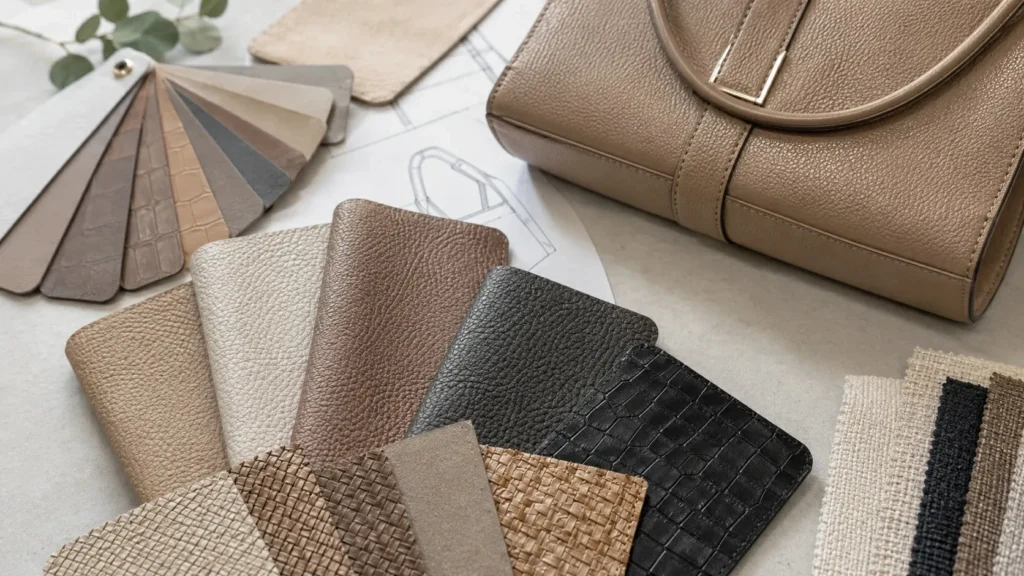
PU Leather Texture for Bags
The best PU leather texture for bags depends on the size, structure and style of the finished product.
Litchi grain PU leather and pebbled PU leather are often considered for handbags because they provide visible surface character. Smooth PU leather may work better for minimalist designs, soft fashion bags or products requiring a clean decorative surface.
For structured bags, buyers should not choose texture before confirming material support. Thickness and backing fabric often have a greater effect on shape retention than the surface grain itself.
Buyers developing handbags, backpacks, wallets or small leather goods can review application-focused options in the PU Leather for Bags category.
PU Leather Texture for Shoes
For shoe upper applications, texture must be reviewed together with flexibility, coating stability and the movement of the upper during use.
A grain that looks suitable on a flat swatch may change around the toe box or flexing area. Buyers should evaluate whether the pattern becomes too stretched, flattened or visually uneven after forming.
Deep grain does not prove that a material has better flexing or abrasion performance. Those properties depend on the full material construction and should be evaluated according to the footwear project.
Materials intended for footwear can be compared through Danhon’s PU Leather for Shoes category, where buyers can review different textures, thicknesses and surface directions for shoe-related applications.
PU Leather Texture for Garments
Garments usually require more attention to softness, drape and repeated movement. Smooth or fine-grain surfaces are often considered because they can support a lighter and more flexible visual effect.
The backing fabric and total thickness remain important. A suitable surface pattern cannot compensate for a material that is too stiff for the intended jacket, panel, trim or apparel design.
For apparel projects, buyers can explore softer and more flexible options under PU Leather for Garments.
PU Leather Texture for Gloves
Glove applications normally require a balance between softness, flexibility, backing strength and surface grip. Fine grain, subtle wrinkle and matte surface directions may be considered depending on the glove design.
The material should be checked after repeated bending and should be evaluated according to the intended glove construction. Texture alone cannot confirm whether the material will provide the required movement or surface performance.
Application-specific materials can be reviewed in the PU Leather for Gloves category.
PU Leather Texture for Jewelry Boxes and Packaging
Jewelry boxes and packaging often use smooth, fine-grain or delicately embossed PU leather. These textures can support clean edges, decorative presentation and controlled visual detail.
Buyers should also check backing stability, lamination behavior, adhesive compatibility and color consistency. The material should be tested on the actual board, foam or packaging structure before bulk production.
Buyers sourcing box-covering materials can review PU Leather for Jewelry Boxes & Packaging for relevant surface and application options.
Texture Is Visual, but Performance Still Needs Testing
Texture describes the surface appearance and touch. It does not independently confirm abrasion resistance, color fastness, hydrolysis performance, flex resistance or coating adhesion.
When abrasion matters, buyers should agree on the relevant test method and acceptance criteria rather than estimate performance from the grain depth. The principles covered by ISO 5470-2 for coated-fabric abrasion testing may provide a useful technical reference when an appropriate abrasion assessment is required.
A heavily embossed material is not automatically more abrasion-resistant than smooth PU leather. Abrasion performance depends on the complete surface coating, material construction and testing conditions.
Color transfer or rubbing performance may also need to be checked when dark or strongly colored material will contact light fabric, lining or clothing. ISO 105-X12 color fastness to rubbing provides a recognized reference for evaluating dry and wet rubbing behavior on textile materials.
For footwear projects, flexing, coating adhesion, thickness, rubbing and hydrolysis-related evaluation may be relevant depending on the intended market, product construction and expected conditions of use.
The SATRA testing references for synthetic uppers and coated textiles include several test directions associated with footwear upper materials.
Where hydrolysis is a specific project concern, SATRA TM344 for polyurethane materials may provide an additional technical reference for accelerated conditioning and subsequent material evaluation.
Passing one test does not mean that the material is suitable for every application. Final requirements should be defined according to the finished product and confirmed through project-specific testing when necessary.
Common Mistakes When Selecting PU Leather Texture
- Choosing from an online photo only: lighting and image processing can change grain depth, gloss and color.
- Using only a grain name: terms such as litchi grain or pebbled grain may describe different scales across suppliers.
- Ignoring thickness and backing: the surface may look correct while the complete material feels too soft or too stiff.
- Assuming deeper grain means better durability: visual depth and physical performance are separate considerations.
- Approving color without confirming the finish: matte and glossy surfaces can make the same color appear different.
- Skipping an application test: a flat swatch may behave differently after stitching, bending, wrapping or lamination.
- Requesting too many changes at once: changing color, grain, thickness, backing and hand feel simultaneously can make sample comparison less clear.
- Ignoring product scale: a grain that looks balanced on a large bag panel may appear oversized on a small accessory.
- Assuming texture names are standardized: suppliers may use the same grain name for visually different patterns.
What to Check on a Physical Texture Sample
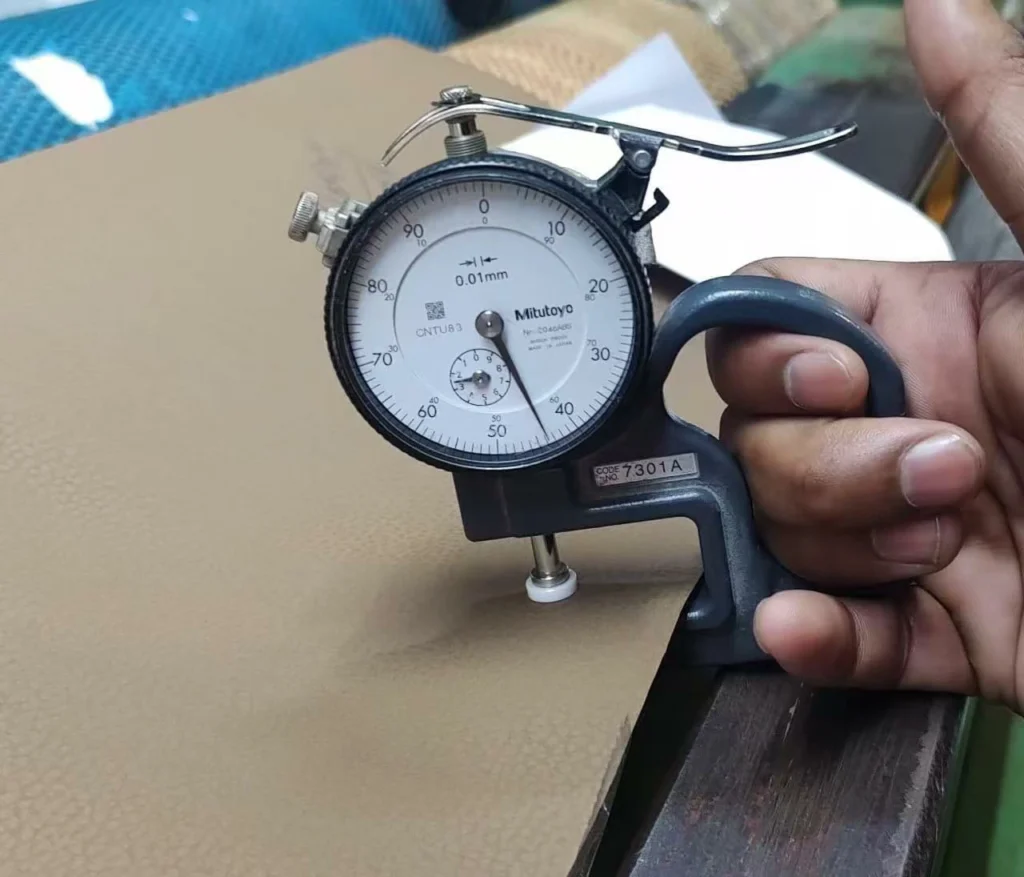
Physical samples help buyers compare details that may not be visible in a digital color card or website photograph.
- Review the sample under both natural and controlled indoor lighting.
- Check the grain from close range and normal viewing distance.
- Compare pattern depth, scale and repeat consistency.
- Bend, fold or curve the sample according to the final application.
- Check whether the grain stretches, flattens or changes around curved areas.
- Compare the front surface with the backing fabric and total thickness.
- Evaluate whether the hand feel suits the required structure or softness.
- Carry out cutting, stitching, printing, lamination or wrapping trials where relevant.
- Confirm color and surface gloss on the final selected texture.
- Record the approved sample code and retain a reference sample for bulk comparison.
Color cards are useful for narrowing down possible directions. However, the final color, texture and surface finish should normally be confirmed on a physical material sample before bulk production.
When possible, the buyer should also evaluate the PU leather together with the actual lining, reinforcement, foam, board or other supporting material used in the finished product.
How to Communicate a PU Leather Texture Requirement
A clear specification can reduce unnecessary sample revisions. Instead of asking only for “black pebbled PU leather,” buyers should provide as much practical information as possible.
A useful material request may include:
- Finished product application
- Reference image or physical material sample
- Preferred grain pattern
- Approximate grain scale
- Preferred embossing depth
- Matte, semi-matte, satin or glossy finish direction
- Target color or color reference
- Required material thickness
- Backing fabric direction
- Soft, medium or firm hand feel
- Required cutting, stitching, forming or lamination process
- Target performance or testing requirements
If a buyer only provides a finished bag or shoe photo, the supplier may need additional close-up images and material specifications before recommending a suitable texture.
Custom PU Leather Texture Support
For custom projects, texture selection should be treated as part of the complete material specification rather than as an isolated surface decision.
At Danhon, we usually recommend comparing two or three relevant textures in a similar color and thickness. This makes it easier to identify whether the main difference comes from the grain, finish or complete material construction.
Danhon focuses on dry-process PU artificial leather for applications including bags, shoes, garments, gloves, jewelry boxes and packaging. Common material options are available around 0.7 mm to 1.3 mm in thickness, with a common width of approximately 54 inches depending on the product.
Custom material discussions can include:
- Color direction
- Grain pattern
- Embossing depth
- Pattern scale
- Material thickness
- Backing fabric
- Hand feel
- Matte, semi-matte or other suitable surface finish directions
- Application matching
Highly customized embossing or color development may require additional sample comparison and approval. Buyers should provide product images, texture close-ups, intended application, thickness range, hand-feel direction and color references whenever possible.
More information about available materials and the sample-development process can be found on the Danhon PU artificial leather website.
Final Recommendation
The best PU leather texture is not simply the most decorative or the deepest embossed option. It is the texture that matches the product size, design style, material construction and production process.
For bags, buyers should consider structure and grain scale. For shoes, the material should be reviewed after bending and forming. For garments and gloves, softness and backing are especially important. For jewelry boxes and packaging, surface consistency and lamination behavior deserve more attention.
When comparing smooth vs grain PU leather, avoid making the decision from appearance alone. Confirm texture, thickness, backing fabric, hand feel, surface finish and application performance as one complete material system.
Request PU Leather Texture Samples
If you are selecting PU leather for bags, shoes, garments, gloves or packaging, Danhon can help you compare suitable texture, color, thickness, backing and surface finish options.
Physical samples and color cards can help your team confirm the material direction before custom development or bulk production. Visit Contact Danhon to share your application, reference images and material specifications.
Frequently Asked Questions
What is embossed PU leather?
Embossed PU leather is PU artificial leather with a surface pattern created through an embossing process. The pattern may imitate a natural-looking grain or use a geometric, decorative or custom design.
The final appearance also depends on embossing depth, pattern scale, material color and surface finish. Two materials described as embossed PU leather may therefore look and feel very different.
How do I choose PU leather texture?
Start with the finished product and decide whether it requires a smooth, subtle, visible or deep grain. Then compare texture scale, thickness, backing fabric, hand feel and surface gloss.
The final choice should be confirmed with a physical sample under conditions that reflect the actual cutting, stitching, forming, bending or lamination process.
What is the difference between smooth and grain PU leather?
Smooth PU leather has little visible surface grain and normally creates a cleaner appearance. Grain PU leather has an embossed pattern that adds visual and tactile depth.
Neither option is automatically more durable. Performance depends on the coating system, backing fabric, material thickness and complete construction.
What is the best PU leather texture for bags?
Litchi, pebbled, fine-grain and smooth textures can all be suitable for bags. Structured handbags often use visible grain, while minimalist or soft bags may use smoother surfaces.
The best option depends on bag size, structure, style, thickness and backing fabric. Buyers can compare relevant material directions through Danhon PU Leather for Bags.
Are litchi grain and pebbled PU leather the same?
They are related texture descriptions but are not always identical. Litchi grain usually refers to an irregular rounded pattern, while pebbled grain may describe a more repeated or pronounced rounded surface.
Actual grain scale, pattern shape and embossing depth should be confirmed from physical samples because terminology can vary between suppliers.
Does deeper embossing make PU leather more durable?
No. Deeper embossing mainly changes visual and tactile depth. It does not independently confirm abrasion resistance, flex resistance, coating adhesion or hydrolysis performance.
Durability should be evaluated according to the complete material construction and the relevant test requirements for the final product.
Can PU leather grain and surface finish be customized?
Color, texture, embossing, thickness, backing fabric, hand feel and surface finish can be discussed for suitable custom projects.
Feasibility depends on the required pattern, specification and production arrangement, so sample development and approval are normally required before bulk production.
Should buyers approve PU leather from a color card or physical sample?
A color card is useful for selecting an initial color and texture direction. A physical sample is more suitable for final approval because it shows the actual grain, gloss, hand feel, thickness and backing construction.
Final color should be reviewed on the selected texture and surface finish, since different grain patterns and gloss levels can change how the color appears.
Can the same PU leather texture be used for both bags and shoes?
Some PU leather materials may be suitable for both applications, but suitability cannot be determined from texture alone.
Bag materials may prioritize structure and surface appearance, while shoe upper materials may require greater attention to forming, bending and repeated flexing. The thickness, backing fabric, coating and project requirements should be checked separately.
What information should I provide when requesting a custom PU leather texture?
Provide the intended application, product images, texture close-ups, preferred grain scale, surface gloss, color reference, target thickness, backing direction and hand-feel requirement.
If available, a physical reference sample is especially useful for comparing color, texture depth, flexibility and surface finish.