Quick Answer: Is Synthetic Leather the Same as PU Leather?
No, not exactly. Synthetic leather is a broad category of man-made materials designed to provide a leather-like surface or function. PU leather is one type of synthetic leather that uses polyurethane as an important part of its coating or material system.
For sourcing, this difference matters. If a buyer asks only for “synthetic leather,” the supplier still does not know whether the project requires PU, PVC, a microfiber-based construction, or another material direction. The key synthetic leather vs PU leather difference is therefore category versus specification.
Key takeaway: “Synthetic leather” can describe the material family. “PU leather” narrows the material direction, but buyers still need to confirm backing, thickness, texture, hand feel, surface finish and final application.
Synthetic Leather Is the Category; PU Leather Is a Material Direction
Terms such as synthetic leather, artificial leather and man made leather are often used as broad market descriptions. They tell a supplier that the buyer does not want conventional animal leather, but they do not fully describe the material construction.
PU leather is more specific because PU refers to polyurethane. Buyers who need a deeper explanation of this material can review what PU leather means from a B2B sourcing perspective.
| Term | What It Tells the Buyer | What It Does Not Confirm |
|---|---|---|
| Synthetic leather | A broad category of manufactured leather-like materials | Exact polymer system, backing, thickness or performance |
| Artificial leather | Usually another broad description for non-animal leather-like material | Whether the material is PU, PVC or another construction |
| PU leather | Polyurethane is part of the leather material or coating system | Backing type, total construction, thickness, finish or suitability |
| PVC leather | The material uses a PVC-based coating system | Whether its exact construction fits the finished product |
| Microfiber leather | The term usually points toward a microfiber-based substrate or construction direction | The complete resin and coating specification unless separately confirmed |
This hierarchy is important because PU and PVC are both widely used within the broader synthetic leather category. A technical review of synthetic leather construction describes polymer coatings applied to woven, knitted or nonwoven base materials and identifies PU and PVC as major material systems. Buyers can review the technical overview of polyurethane synthetic leather construction for further material background.
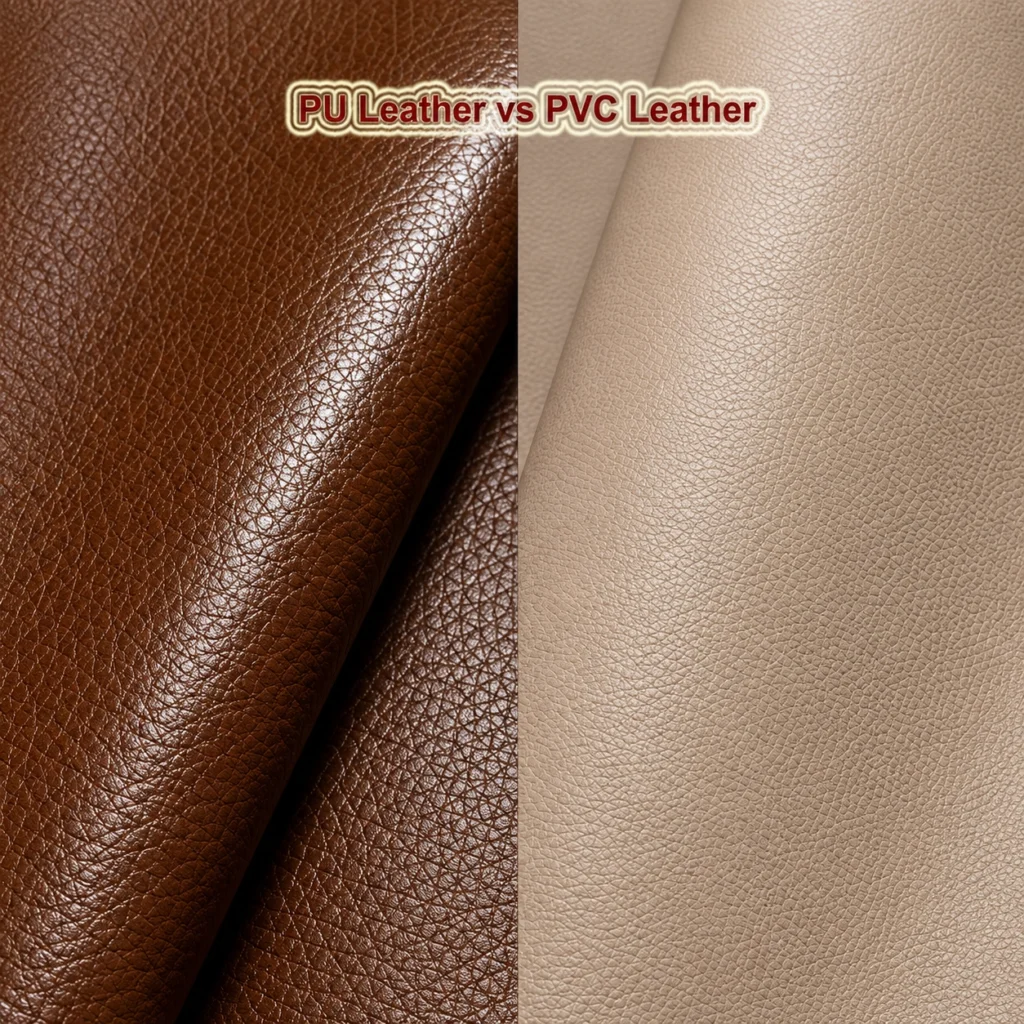
If a project needs a direct comparison between the two polymer directions, the separate PU leather vs PVC leather guide covers that sourcing decision in more detail.
Why the Same Synthetic Leather Label Can Hide Different Constructions
A material name is only the first layer of a specification. Two suppliers may both quote “0.9 mm black PU synthetic leather,” yet their samples may feel and behave very differently.
The difference can come from several areas:
- backing fabric or supporting substrate
- coating structure
- total material thickness
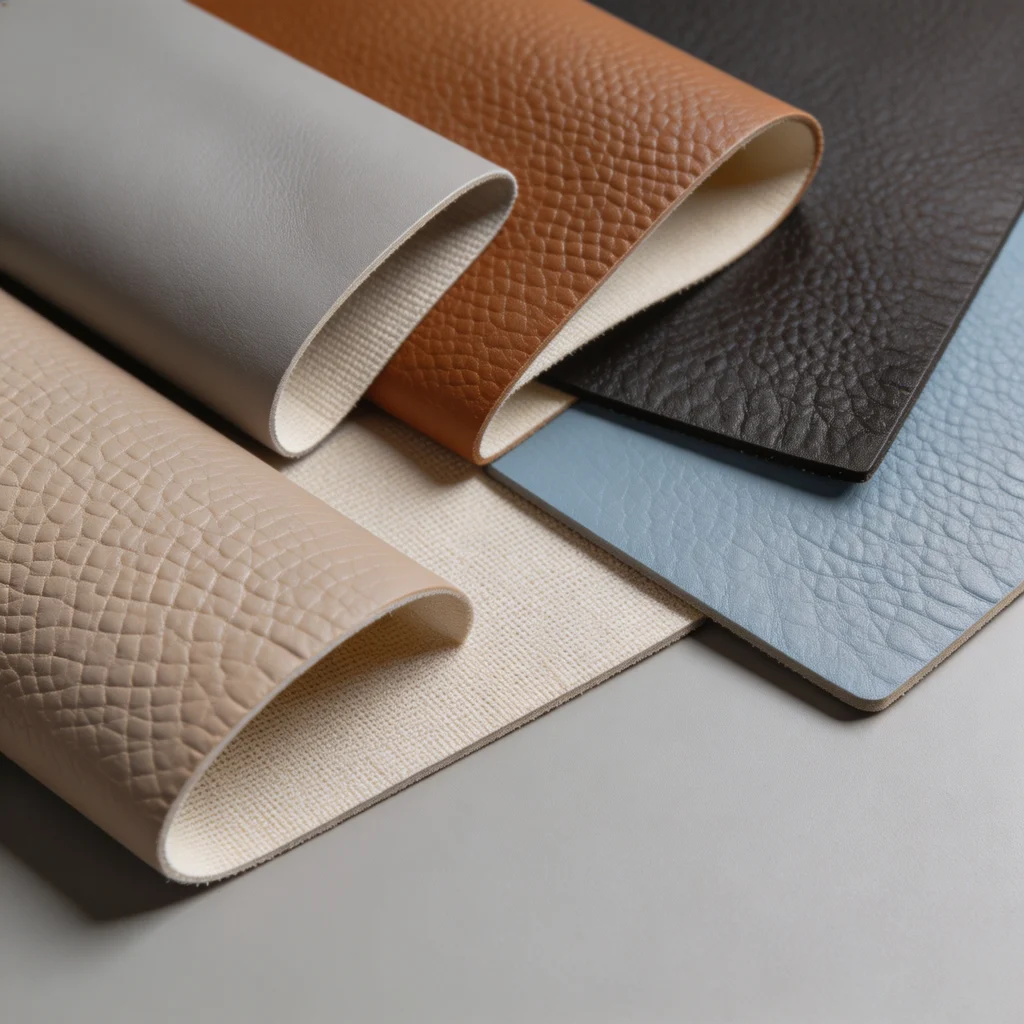
- surface grain and embossing depth
- matte, gloss or other surface finish
- softness and hand feel
- stretch and structural stability
- the production method used for the final product
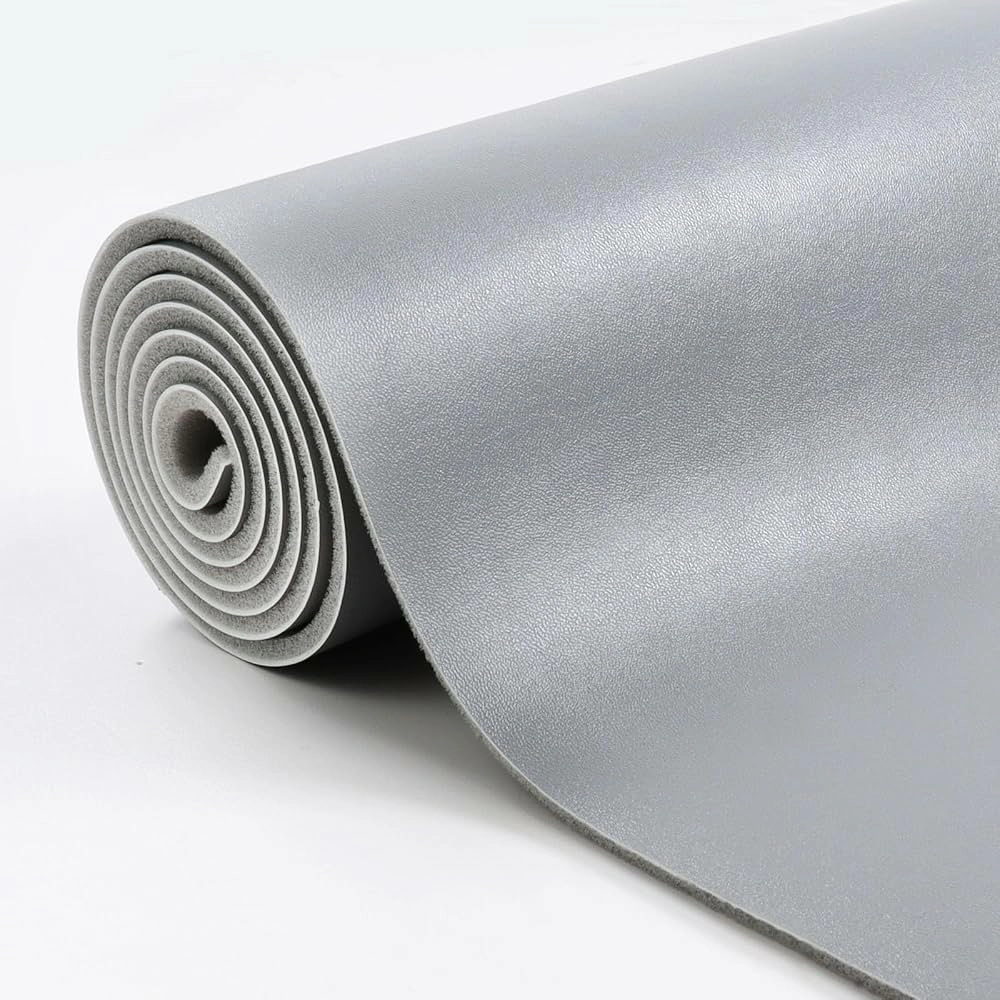
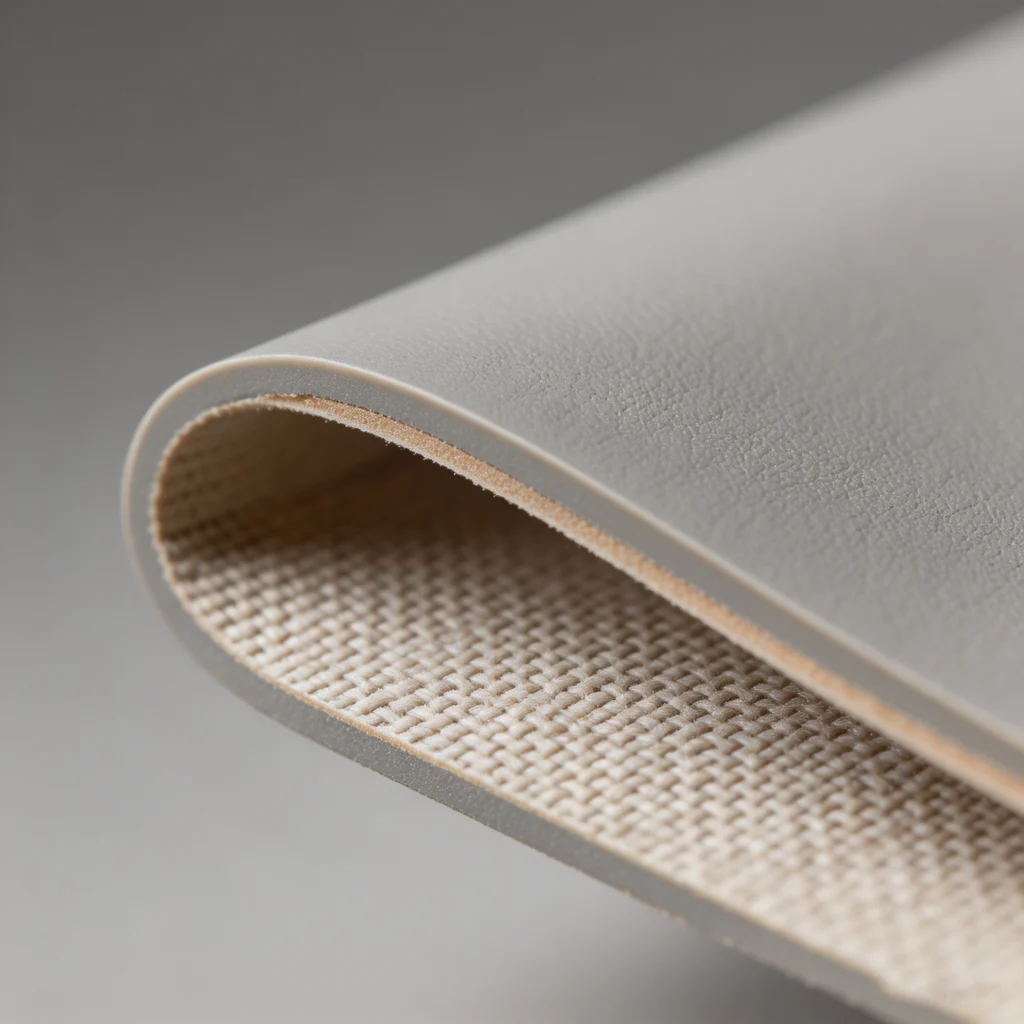
Buyers often underestimate the backing. A firmer backing may give a bag panel more body, while a softer construction may bend more naturally. Two PU surfaces can look almost identical on a small photo but react differently during folding, stitching or shaping.
This is why backing, surface finish and application should be evaluated together instead of treating PU as a complete specification.
Synthetic Leather vs PU Leather in a Buyer RFQ
The easiest way to see the sourcing difference is to compare two requests.
| Buyer Request | Information Available | Supplier Still Needs to Confirm |
|---|---|---|
| “Please quote black synthetic leather for bags.” | Color and general application | PU or other material system, thickness, grain, backing, hand feel, bag structure and quantity |
| “Please quote matte black PU leather for a structured handbag, around 0.9 mm, fine grain, medium-firm hand feel.” | Polymer direction, color, application, thickness direction, texture and hand feel | Exact backing, sample match, production behavior, quantity and any project-specific testing |
The second request is much easier to evaluate. However, it is still not ready for bulk approval. A physical sample should confirm how the full material construction works with the intended product.
In many sourcing projects, quotation differences are not simply supplier price differences. They may reflect different material constructions hidden behind the same broad product name.
How to Source Synthetic Leather for Bags and Shoes
When sourcing synthetic leather for bags and shoes, identifying PU is useful, but the application should decide the next questions.
Bags: Structure and Backing Matter
A soft pouch and a structured handbag can both use PU leather, but they usually do not need the same material behavior.
For bag projects, buyers should review:
- whether the material needs soft folding or stronger body
- how the backing works with reinforcement and lining
- whether folded edges become too bulky
- how the texture looks across larger panels
- whether the hand feel matches the intended product
Buyers can compare current PU leather for bags by application before narrowing the sample direction.
Shoes: Flexibility and Construction Matter
For shoe uppers, the material may need to form around curved components and move during use. A surface that looks suitable in a flat swatch may not behave the same after shaping and bending.
Footwear buyers should therefore check thickness, backing stability, flexibility, cutting behavior and surface appearance together. Material suitability should be confirmed according to the actual shoe construction rather than the word “synthetic” alone.
Application-based examples can be reviewed through the PU leather for shoes material category.
What Buyers Should Specify Before Comparing Quotations
A useful synthetic leather RFQ should reduce ambiguity before price comparison begins.
We usually recommend preparing the following information:
- Material direction: PU leather if PU is specifically required.
- Finished application: handbag, backpack, shoe upper, garment, glove or packaging.
- Thickness direction: provide a target or reference range when known.
- Texture: smooth, fine grain, pebbled, embossed or a physical reference.
- Surface finish: matte, semi-matte, glossy or another required appearance.
- Backing and hand feel: describe whether the product should feel soft, firm, flexible or structured.
- Color reference: color card, physical swatch or another clear reference.
- Quantity: required volume affects whether a proposed development direction is commercially practical.
- Target market or testing needs: share these early if the project has specific chemical or physical testing requirements.
Thickness also needs context. The same nominal thickness can feel very different when backing and coating construction change. Buyers comparing this variable can refer to the PU leather thickness guide.
A Common Buyer Mistake: Treating the Material Name as a Performance Specification
One common sourcing mistake is assuming that “PU leather” already tells the supplier how the material should perform.
It does not.
PU identifies an important material direction, but it does not automatically guarantee flexibility, abrasion performance, softness, hydrolysis performance, color fastness or suitability for a specific product.
For example, a buyer may send a bag photo and request “high-quality PU leather.” This is still difficult to match. The supplier needs to know whether the priority is surface appearance, soft touch, shape support, folding behavior, backing stability or another requirement.
The same applies to testing. For buyers selling into the United States or Europe, a material name alone does not establish market compliance. Testing support and required test items should be discussed according to the product, target market and project requirements.
Buyer warning: Never approve a synthetic leather material because the description sounds correct. Confirm the actual sample, construction and application behavior.
How to Read Artificial Leather and Man Made Leather Terminology
Supplier websites, catalogs and marketplaces may use synthetic leather, faux leather, artificial leather and man made leather in overlapping ways.
These terms are useful for discovery, but they should not replace a technical specification.
If a listing says “artificial leather for handbags,” ask what the coating system is.
If it says “PU synthetic leather,” the polymer direction is clearer, but backing, thickness and finish still need confirmation.
If it says “microfiber leather,” ask for the complete construction rather than assuming that the term alone confirms every material layer.
The practical rule is simple: use commercial material names to find options, then use specifications and samples to approve them.
How Danhon Supports PU Leather Specification Matching
Danhon focuses on PU artificial leather for shoes, bags, garments, gloves, jewelry boxes and packaging. For sourcing projects, buyers can compare color, texture, thickness, backing fabric, hand feel, embossing and surface finish according to the final product application.
If the first request only says “synthetic leather,” it is useful to add the finished product, preferred PU direction, physical reference, thickness range and target hand feel before sample development. Clearer information reduces unnecessary sample mismatch and makes quotation comparison more meaningful.
Final Sourcing Rule: Start With PU, Then Confirm the Full Construction
Is synthetic leather the same as PU leather? No. Synthetic leather is the broader category, while PU leather identifies a more specific polyurethane-based material direction.
For a material buyer, however, even “PU leather” is only the start of the specification. The final sourcing decision should consider backing, thickness, texture, surface finish, hand feel, application and physical sample performance together.
When comparing synthetic leather material for production, do not ask only what the material is called. Ask what it is made to do in your finished product.
FAQ
Can a supplier give an accurate quotation if I only request “synthetic leather”?
A preliminary quotation may be possible, but it can be based on assumptions. Providing the application, PU or other material direction, thickness, texture, backing preference, color and quantity usually makes quotations more comparable.
Is the term “PU synthetic leather” redundant?
Not necessarily. “Synthetic leather” states the broad material category, while “PU” clarifies the polymer direction. For B2B sourcing, the combined term can reduce ambiguity, although the full construction still needs confirmation.
Does microfiber leather always mean PU leather?
Do not rely on the name alone. Ask the supplier to confirm the substrate, resin or coating system and total construction, especially when a specific PU material is required.
Can PU leather and other synthetic leather materials look almost identical?
Yes. Color, embossing and surface finish can create very similar appearances. A photo or grain pattern therefore cannot reliably replace material composition information and physical sample checking.
Should US or European testing requirements be discussed before sample development?
Yes, when the finished product has specific market or buyer requirements. Sharing the target market early helps the supplier understand which project-specific material information or testing discussions may be needed later.
Compare PU Leather Samples for Your Application
If you are currently comparing synthetic leather for bags, shoes or other manufactured products, start with more than the material name. Share your application, preferred PU direction, thickness, texture, color, backing, hand feel and reference sample so suitable material options can be evaluated before bulk confirmation. Physical swatches are especially useful when two materials have similar surfaces but different constructions.
Contact Danhon for PU Leather Samples and Custom Material Support