Quick Answer: What Makes a Good Faux Leather Jacket Material?
For most faux leather jacket projects, the best starting direction is a soft PU material with flexible backing, controlled thickness and enough drape to move naturally across large garment panels. Surface appearance matters, but softness and backing often decide whether the material actually works as a jacket.
A good faux leather jacket material should not be selected from grain or color alone. Buyers should compare the complete construction: surface, thickness, backing fabric, hand feel, drape and sewing behavior. A PU leather that works well for a handbag can look similar but feel far too firm when used across a jacket body or sleeve.
A Jacket Needs Movement, Not Bag-Like Structure
Jackets create a very different material challenge from structured bags or many footwear applications.
A jacket body covers a large area. Sleeves bend repeatedly. Shoulder panels move with the wearer. Lapels, collars and cuffs may also need to fold without feeling excessively bulky.
This changes the sourcing priority.
For a structured bag, some material body can be useful. For a PU jacket fabric, too much body may make the finished garment feel rigid. The leather may look acceptable as a flat swatch but resist natural folds once it is sewn into a larger panel.
Buyers should therefore ask:
- Does the material hang naturally?
- Does it form soft folds rather than sharp, rigid bends?
- Does the backing move with the surface?
- Will several sewn layers become too bulky?
- Does the surface still look balanced when the material moves?
The useful question is not simply, “Is this soft PU leather?”
It is, “Is it soft in the way this jacket construction needs?”
Drape Should Be Checked on a Large PU Leather Panel
Small swatches can be misleading when evaluating jacket material.
A 10 cm color-card sample may feel flexible because there is very little material resisting the hand. A much larger panel may behave differently.
This is why drape is one of the most important checks for soft PU fabric for apparel.
Hang a larger shortlisted sample vertically. Fold it loosely. Let it fall over a rounded form. Compare it with the target garment or reference material.
Look at the shape of the folds.
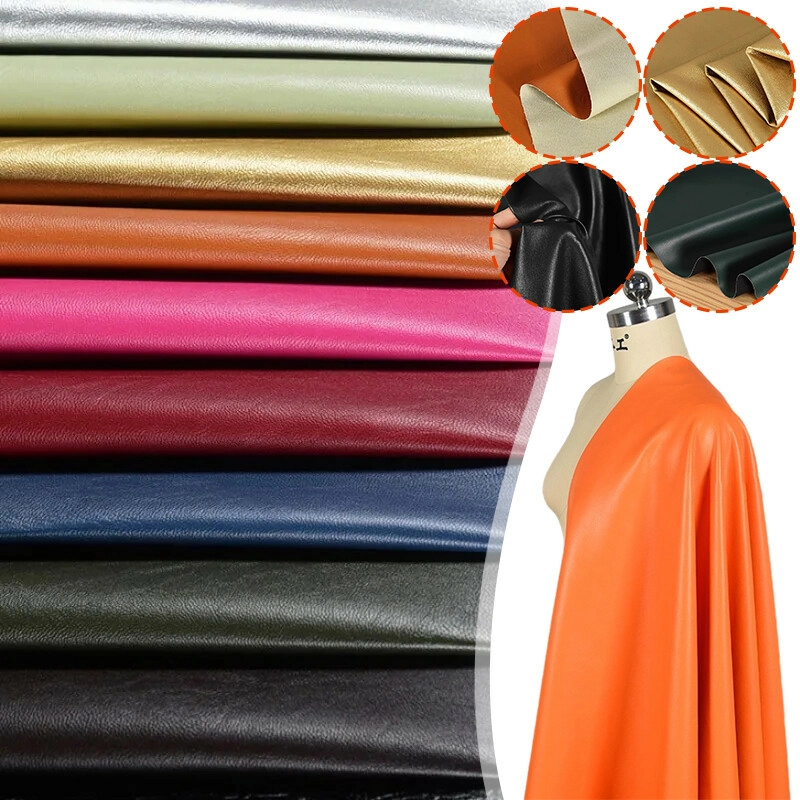
If the panel remains too flat or creates hard bends, the complete material may be firmer than expected. If it collapses too easily, it may not provide the amount of body required by the jacket design.
Drape should also be evaluated together with the intended lining and garment construction.
A cropped fashion jacket, oversized shirt jacket and fitted biker-style jacket do not necessarily need the same material behavior.
How Thickness Changes PU Jacket Fabric Selection
There is no single correct thickness for every synthetic leather jacket.
Danhon’s current garment-oriented material range provides useful examples around 0.7 mm, 0.8 mm and 0.9 mm. These figures should be treated as comparison directions, not universal apparel specifications.
| Material Direction | Possible Jacket Effect | What Buyers Should Check |
|---|---|---|
| Around 0.7 mm | Lighter and potentially easier to drape | Whether the complete construction feels too light for the design |
| Around 0.8 mm | Balanced medium-light direction | Drape, backing flexibility and seam thickness |
| Around 0.9 mm | More body while still possible for flexible applications | Whether large panels or multi-layer seams become too firm |
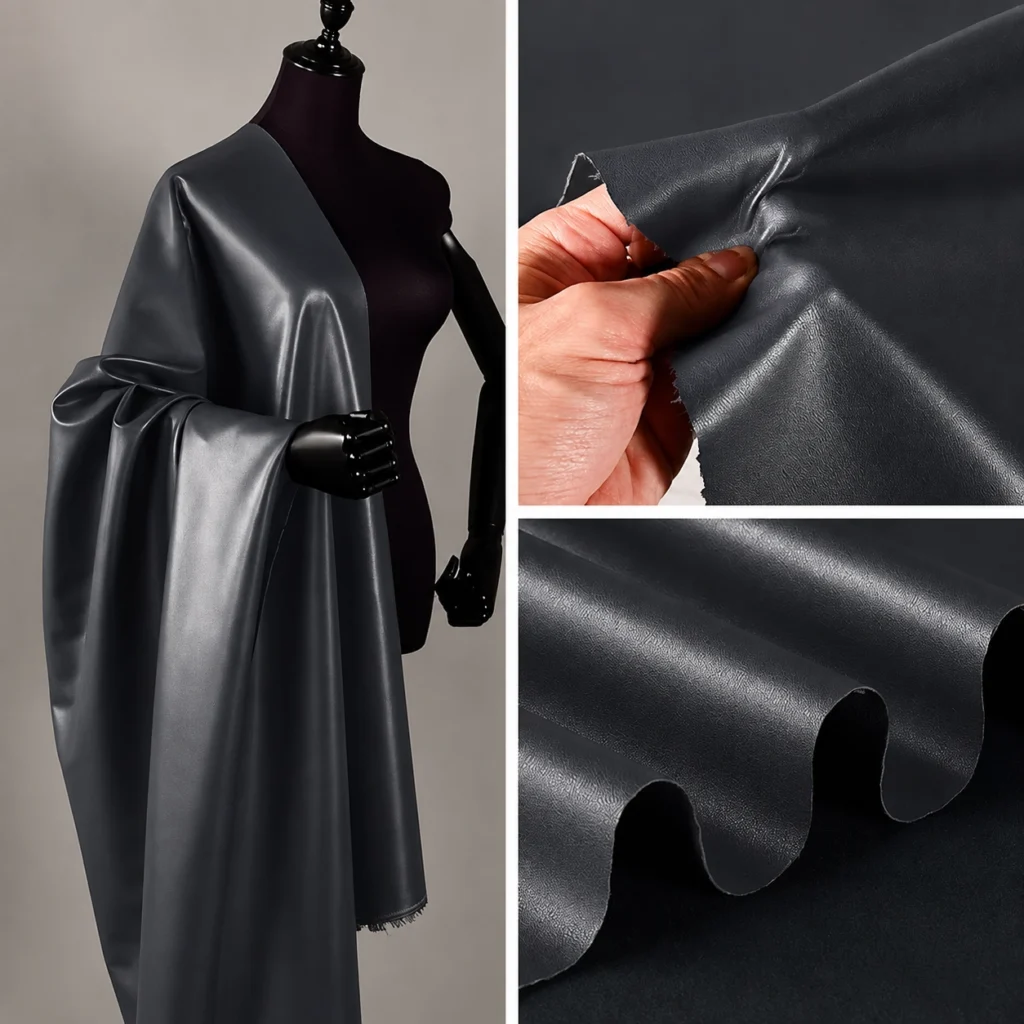
Thickness alone cannot predict softness.
Two 0.8 mm samples can feel noticeably different if their backing, coating construction or finish differs.
This is why buyers searching for the best faux leather material for jackets should compare thickness together with the full material structure.
Why the Backing Fabric Matters So Much
Buyers naturally look at the PU surface first. For jacket projects, the reverse side deserves equal attention.
The backing influences how the material bends, stretches, hangs and handles during sewing.
A more stable backing may help control the material. However, too much stability can make a large jacket panel feel firm.
A softer backing can support better drape and movement. However, the complete construction still needs enough control for cutting, sewing and the intended garment shape.
One common mistake is requesting the same front surface with no discussion about the backing.
The supplier may reproduce a similar color and grain while the finished material moves very differently.
When comparing samples, turn them over. Bend them in different directions. Hang them side by side. The backing should be evaluated as part of the jacket material, not as an invisible secondary detail.
Choosing the Surface for a Faux Leather Jacket
Surface selection affects both the visual character and how movement appears across the garment.
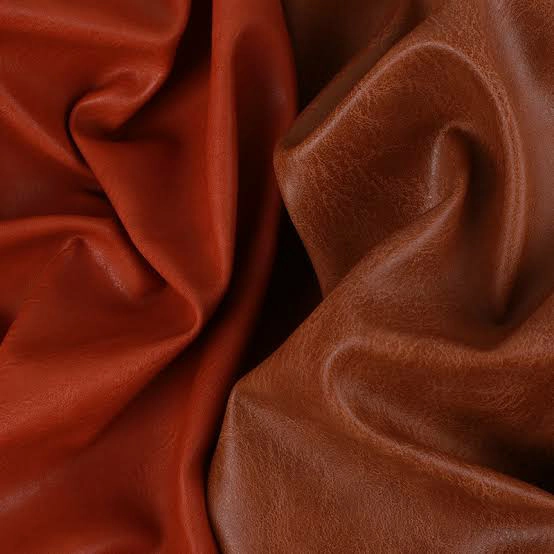
Smooth or Fine Grain
Smooth and fine-grain PU can create a clean surface with relatively subtle texture.
This direction often works well when buyers want the jacket silhouette, seams and pattern cutting to remain visually dominant.
However, a very smooth surface may make certain pressure marks or surface variations easier to notice.
Subtle Wrinkle or Crinkle Grain
A fine wrinkle can give the surface more visual movement.
It may suit relaxed or vintage-inspired jacket designs, especially when the material itself needs to contribute visible character.
The grain should still be evaluated after folding. A pattern that looks balanced while flat may change when the sleeves or body panels bend.
Matte or Semi-Matte Finish
Matte finishes reduce strong reflections and often create a softer visual impression.
A semi-matte or satin direction can introduce controlled reflection without creating a strong patent effect.
For many jacket projects, these are useful starting points because the material is viewed across relatively large moving surfaces.
Higher-Gloss Finish
Glossy PU can create a much stronger fashion statement.
However, reflection changes constantly as the jacket moves. Creases and folds may also become visually stronger.
This does not make glossy material unsuitable. It simply means buyers should review a large panel or actual garment prototype before approval.
Check Sewing, Seams and Fold Behavior Before Approval
A soft hand feel on the sample table does not guarantee easy garment production.
The shortlisted PU should be tested through operations that resemble the real jacket.
Useful checks include:
- straight sewing;
- curved seams;
- sleeve or armhole construction;
- folded edges;
- collars and lapels;
- pocket openings;
- topstitching;
- several material layers at seam intersections.
Pay particular attention to bulk.
A material may drape well as one layer but become too thick where several pieces overlap.
The surface should also be inspected after sewing and turning. Check whether the grain, finish or coating appearance changes around tight folds or stitched areas.
A small sewing trial can reveal more than another round of flat swatch comparison.
Do Not Approve Jacket Material From a Color Card Alone
Color cards are useful for narrowing the direction, but jacket materials should be evaluated as larger physical samples.
Large garment panels create broader areas of light and shadow. This can make the same color appear different from a small flat chip.
Surface grain changes the effect further.
A matte black fine grain, smooth black satin and glossy black PU may share a similar basic color direction but look very different in a finished jacket.
The practical sequence is:
- shortlist the color and surface direction;
- request the required PU construction;
- review a larger physical sample;
- check drape and movement;
- sew a representative trial;
- approve the complete material rather than the color alone.
For custom colors, retain the approved physical material as a reference for later production discussions.
U.S. and European Buyers Should Define Market Requirements Early
Material appearance and production behavior are only part of jacket sourcing.
For U.S. general wearing apparel, buyers should identify the finished-product requirements that apply to their project. The U.S. Consumer Product Safety Commission identifies 16 CFR Part 1610 as the general clothing-textile flammability standard for applicable wearing apparel.
For European projects, chemical requirements should also be reviewed according to the material and finished product. REACH is the EU’s main framework for managing chemical risks and restrictions.
This does not mean one report automatically proves that every PU jacket project meets every market requirement.
Tell the supplier the destination market early. Testing and documentation can then be discussed according to the actual material, finished product and buyer specification.
What to Send When Requesting Jacket PU Leather Samples
A clear brief makes sample comparison much more efficient.
When asking how to choose faux leather jacket fabric, start by defining the garment rather than sending only a surface photo.
Provide:
- jacket style or technical drawing;
- location where the PU leather will be used;
- target color;
- grain or texture reference;
- matte, satin or glossy direction;
- preferred thickness or acceptable range;
- soft, medium-soft or firmer hand-feel direction;
- backing requirement if known;
- lining construction;
- major sewing and folding details;
- target market;
- project-specific testing requirements;
- estimated material quantity;
- physical reference material when available.
If you already have a jacket that represents the desired result, providing the actual material reference can be much more useful than describing it as simply “soft” or “premium.”
Material Selection Support for Jacket Projects
At Danhon, jacket and garment projects can be compared by color, surface texture, thickness, backing fabric, hand feel and finish rather than selecting the material from one specification alone.
The current PU leather for garments range includes lightweight and medium-light material directions intended for garments, jacket panels, apparel trims and related flexible applications. Physical sampling remains important because the final choice depends on the jacket pattern and complete construction.
Key Takeaways
- A good faux leather jacket material needs suitable movement, not simply an attractive surface.
- Evaluate softness across a larger piece instead of relying on a small swatch.
- Thickness and backing should always be reviewed together.
- Fine-grain, matte and semi-matte PU are useful starting directions for many jacket projects, but design requirements still decide the final choice.
- Test seams and multi-layer areas before approving the material.
- Review color on the actual texture and finish.
- Use a larger physical sample or garment trial before bulk confirmation.
- Define the target U.S. or European market before finalizing testing requirements.
Frequently Asked Questions About Faux Leather Jacket Material
Can the jacket body, collar and cuffs use the same PU leather?
They can, but it should not be assumed automatically. Collars, cuffs and folded edges may contain more material layers than the main body, so a construction that drapes well across the jacket body can become bulky in smaller components.
Should the lining be considered when choosing PU jacket fabric?
Yes. The outer material and lining work together in the finished garment. A lining or interlining can change how the jacket hangs, so final drape should ideally be checked with a construction close to the intended production version.
Can a supplier match jacket PU leather from a finished garment?
A finished garment can provide a useful reference, especially when an actual material section can be inspected. Photos alone are less precise because they do not fully communicate backing, thickness, softness, stretch or surface finish.
Can a Pantone color be used for custom faux leather jacket material?
A recognized color reference can help communicate the target direction. However, final approval should still be made on the actual PU leather because grain and surface gloss can change how the color appears.
What should buyers keep after approving the material?
Keep a clearly labeled approval sample showing the final color, texture, backing, thickness and finish. It can be used as the physical reference during production discussions and later repeat orders.
Compare Soft PU Leather for Your Jacket Project
If you are developing a jacket or other apparel product, compare the material as a complete system rather than selecting it by color or grain alone. Share your jacket reference, target softness, thickness direction, backing, surface finish and destination market so suitable physical samples can be evaluated before production.
Contact Danhon for PU Leather Samples and Custom Material Support