
Quick Answer: B2B buyers sourcing faux leather fabric should not select a material by color, grain or thickness alone. The finished application decides what matters most. Footwear needs the material to work through bending and forming. Handbags may need more structure and stable edge construction. Apparel usually places greater importance on softness, movement and drape.
In this guide, faux leather fabric refers to PU artificial leather used for product manufacturing. Buyers should evaluate the surface, thickness, backing, hand feel and production behavior as one material system. A material that works well for one application should not automatically be approved for another.
Start With the Finished Product, Not the Material Name
“Faux leather” describes a broad material direction. It does not tell a buyer whether a specific material will work for a sneaker upper, structured handbag or soft jacket.
The first question should therefore be about the finished product. Where will the material be used? Will it bend repeatedly? Does the panel need to hold shape? Does it need to fall naturally with the body?
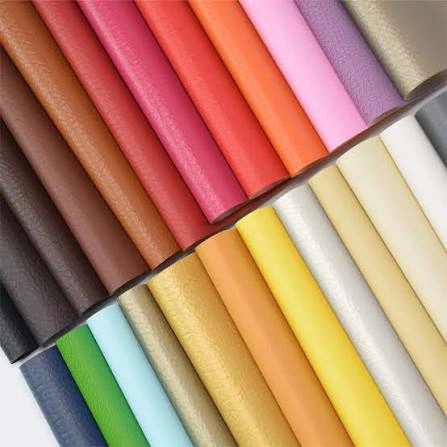
This distinction matters because two artificial leather fabric samples can look similar on a table while behaving very differently during production.
A supplier also needs more than a product photo. Photos can communicate color and general grain direction, but they cannot fully show thickness, backing, stretch, softness or how the surface behaves around seams.
How Faux Leather Fabric Requirements Change by Application
The same specification should not be copied across footwear, handbags and apparel. Each product places different demands on the material.
| Application | Main Material Priority | Useful Production Checks | Common Buying Risk |
|---|---|---|---|
| Footwear | Flexibility, backing stability and forming behavior | Bending, cutting, stitching and forming | Approving a flat swatch without checking the shoe construction |
| Handbags | Structure, folding behavior, surface appearance and backing | Panel construction, edge folding, stitching and corner handling | Choosing the grain first and ignoring the material body |
| Apparel | Softness, drape, movement and surface feel | Folding, sewing and movement in a larger panel | Selecting a material that looks right but feels too firm |
This is why application should come before color-card selection or final texture approval.
Footwear: Check What Happens When the Material Bends and Forms
Faux leather fabric for footwear should be evaluated beyond its appearance as a flat sheet.
A shoe upper moves around curved surfaces. It may be cut into relatively small pieces, stitched, folded and formed. The material therefore needs to be reviewed in a way that reflects the actual shoe construction.
For example, a visually attractive deep grain may look different after the material is shaped around a toe area. A backing that feels stable on a table may also make the upper firmer than expected.
Buyers should compare:
- material thickness and total hand feel;
- backing stability;
- bending behavior;
- surface appearance after flexing;
- cut-edge behavior;
- stitching performance;
- how the material forms around the intended shoe component.
The useful question is not simply, “Is this good shoe leather?” It is, “Does this material suit this shoe construction?”
Handbags: Balance Surface Appearance With Structure
Faux leather fabric for handbags is often selected first by color and grain because these details strongly affect the finished design.
However, an attractive surface does not confirm that the material has the right body for the bag.
A soft pouch, tote and structured handbag can require very different material directions. A softer material may fold naturally around relaxed shapes. A more structured bag may need greater stability in larger panels.
Buyers should also consider edge construction. If the material will be folded around narrow edges or stitched through several layers, excessive thickness or stiffness may create production problems.
For bag projects, it is useful to review texture together with thickness, backing and hand feel. These factors often decide whether the surface can be used successfully in the final structure.
Apparel: Softness and Drape Change the Selection Logic
Faux leather fabric for apparel sourcing needs a different evaluation approach from most structured bags. For dresses, the PU leather dress material guide adds garment-specific checks for drape, surface marking and panel appearance.
A jacket or garment panel moves over a much larger area. The material usually needs to bend naturally with the finished product rather than hold a rigid shape.
This makes hand feel and drape especially important.
A sample may have the right color and grain but still feel too firm once a larger section is cut. This problem is easy to miss when buyers only handle a small color-card swatch.
For apparel projects, review:
- softness across a larger piece;
- how naturally the material folds;
- weight and overall body;
- backing feel;
- surface appearance during movement;
- sewing and seam behavior;
- comfort expectations for the finished design.
The material should therefore be reviewed at the scale and movement expected in the final garment.
Thickness, Backing and Hand Feel Work as One System
One of the most common sourcing mistakes is approving faux leather material by thickness alone.
Two samples with the same measured thickness can still feel very different. The backing, surface construction and finishing direction can change softness, stability and bending behavior.
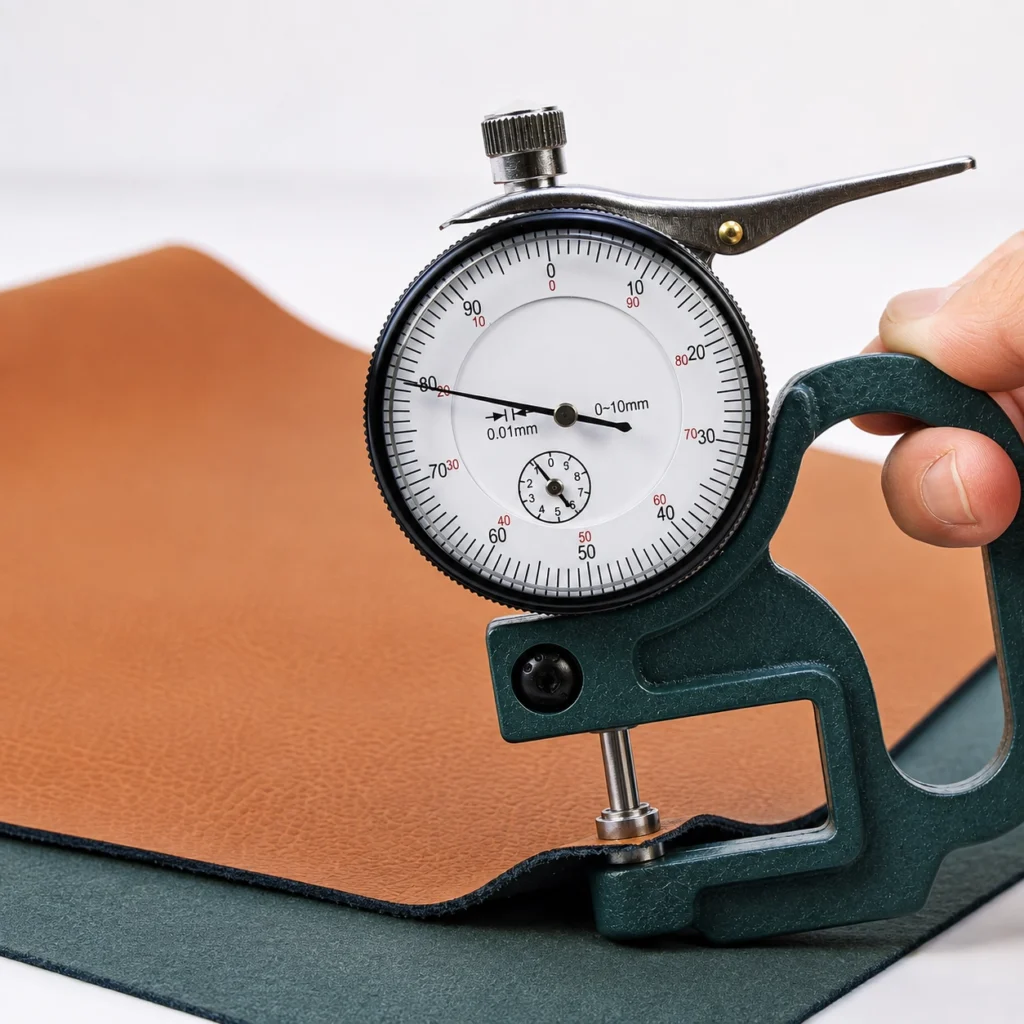
A stronger backing may provide better shape stability for some bag panels. However, it can also make the finished material feel firmer.
A softer construction may work better for garments or relaxed bags, but it may provide less support where the product needs more body.
This is why a target thickness should normally be treated as part of a complete specification rather than an isolated number.
Texture and Finish Can Change More Than Appearance
Texture is not only a visual decision.
A smooth, fine-grain, pebbled or deeply embossed surface can behave differently around seams, folds and small components. Grain scale also changes how the surface looks when it is cut into a small shoe panel versus a large handbag panel.
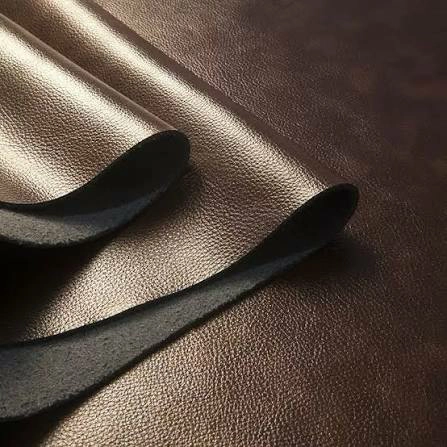
Finish creates another variable. Matte, satin and glossy directions reflect light differently and can change how buyers perceive the same general color direction.
Small swatches may hide this difference. A finish that looks balanced on a color card can appear stronger across a larger garment or bag panel.
Buyers should therefore approve color on the intended texture and finish rather than treating color as an independent specification.
Why Faux Leather for Upholstery Should Not Be Used as a Shortcut
Buyers sometimes find a faux leather for upholstery specification that has the right appearance and ask whether the same material can be used for bags, footwear or clothing.
Appearance alone is not enough to make that decision.
An upholstery project and a shoe upper may place very different demands on flexibility, backing, forming and component size. Apparel introduces another requirement because softness and drape become more important.
The material may still be worth sampling. However, the original upholstery application should not be treated as proof that it is automatically suitable for another product category.
Always reassess the material according to the new end use.
Approve the Material Through a Physical Sample
Digital photos and color cards are useful for narrowing the search, but physical samples provide more information before bulk approval.
A physical sample allows buyers to handle the backing, compare flexibility and inspect the surface from different angles. It can also be cut or sewn in a way that resembles actual production.
Whenever possible, move one step beyond a flat swatch.
For footwear, make a trial component or upper section. For bags, test a panel, folded edge or seam. For apparel, review a larger piece to understand drape and movement.
This often reveals differences that are difficult to judge from photographs or specification sheets.
Define Target-Market and Testing Needs Before Approval
Buyers selling into the United States or Europe should identify project-specific material and finished-product requirements early.
Do not assume that one test report or one general statement covers every application. Requirements can depend on the destination market, finished-product category, material position and buyer specification.
The practical approach is to tell the supplier the target market before final sample approval. Required testing or documentation can then be discussed according to the actual project.
Performance requirements should be handled in the same way. If abrasion, flexing, color fastness, peeling strength or another property matters to the product, define the requirement and testing method rather than relying on a general description such as “high quality.”
What to Send When Requesting Faux Leather Samples
A clear sourcing brief can reduce unnecessary sample comparisons.
When contacting a supplier, provide as many of the following details as possible:
- finished product application;
- where the material will be used on the product;
- product photos or drawings;
- preferred color direction;
- texture or grain reference;
- matte, satin or glossy finish direction;
- target thickness or acceptable range;
- soft, medium or firm hand feel;
- backing requirement if known;
- expected cutting, stitching, folding or forming process;
- target market;
- project-specific testing requirements;
- estimated material quantity;
- physical reference sample when available.
A physical reference remains especially useful when the project needs a close match. It communicates details that are difficult to describe through words or screen images alone.
Material Selection Support for Multi-Application Projects
At Danhon, buyers can compare PU artificial leather according to application, color, texture, thickness, backing fabric, hand feel and surface finish. For projects covering more than one product category, the material can be reviewed separately for footwear, bags and garments instead of assuming that one construction must fit every application.
This approach is particularly useful when a brand wants a similar visual identity across a collection but needs different material behavior for each finished product.
Key Takeaways for B2B Buyers
- Choose faux leather fabric according to the finished product, not the material name alone.
- Footwear requires close attention to bending, forming, backing and construction behavior.
- Handbags require a balance between surface appearance, structure and edge processing.
- Apparel places greater importance on softness, movement and drape.
- Thickness should be checked together with backing and hand feel.
- Approve color on the selected texture and surface finish.
- Do not transfer an upholstery specification directly into shoes, bags or garments without new evaluation.
- Use physical samples and application-relevant trials before bulk approval.
- Define the destination market and testing expectations before final sample confirmation.
Frequently Asked Questions About Faux Leather Fabric Sourcing
How should coordinated products handle opposite cutting directions on the same grain?
Compare representative panels in their intended orientations and viewing positions. Record directional limits separately for each product so one appearance approval does not hide an orientation difference.
What if shoe and bag factories request different conditioning before approval?
Record the conditions and purpose of each evaluation, keeping the resulting decisions traceable to the product. Do not average unlike observations into one shared material rating.
How should leftover material be approved for a different product category?
Identify its original construction, storage history and remaining traceability before a new application trial. Treat the reuse as a new application decision rather than automatic approval based on available stock.
Can a shared appearance master cover different materials in one coordinated collection?
Use it as a visual direction, then approve each construction on its actual product. Record permitted differences caused by grain, gloss and panel form rather than forcing one swatch to stand in for every application.
How should a multi-application project manage changes requested by one factory?
Identify whether the change affects only that product version or the shared material specification. Reapprove the affected versions explicitly so a shoe-factory adjustment does not silently alter bag or apparel orders.
Compare Faux Leather Fabric for Your Product
If you are sourcing PU faux leather for footwear, handbags or apparel, prepare your product reference and expected material specifications before requesting samples. Share the application, color, texture, thickness direction, backing, hand feel and target market so the material can be compared under the right conditions.
Contact Danhon for PU Leather Samples and Custom Material Support to discuss suitable material directions, color cards or custom development for your project.