Quick Answer: Choose the Construction, Not Just the Surface
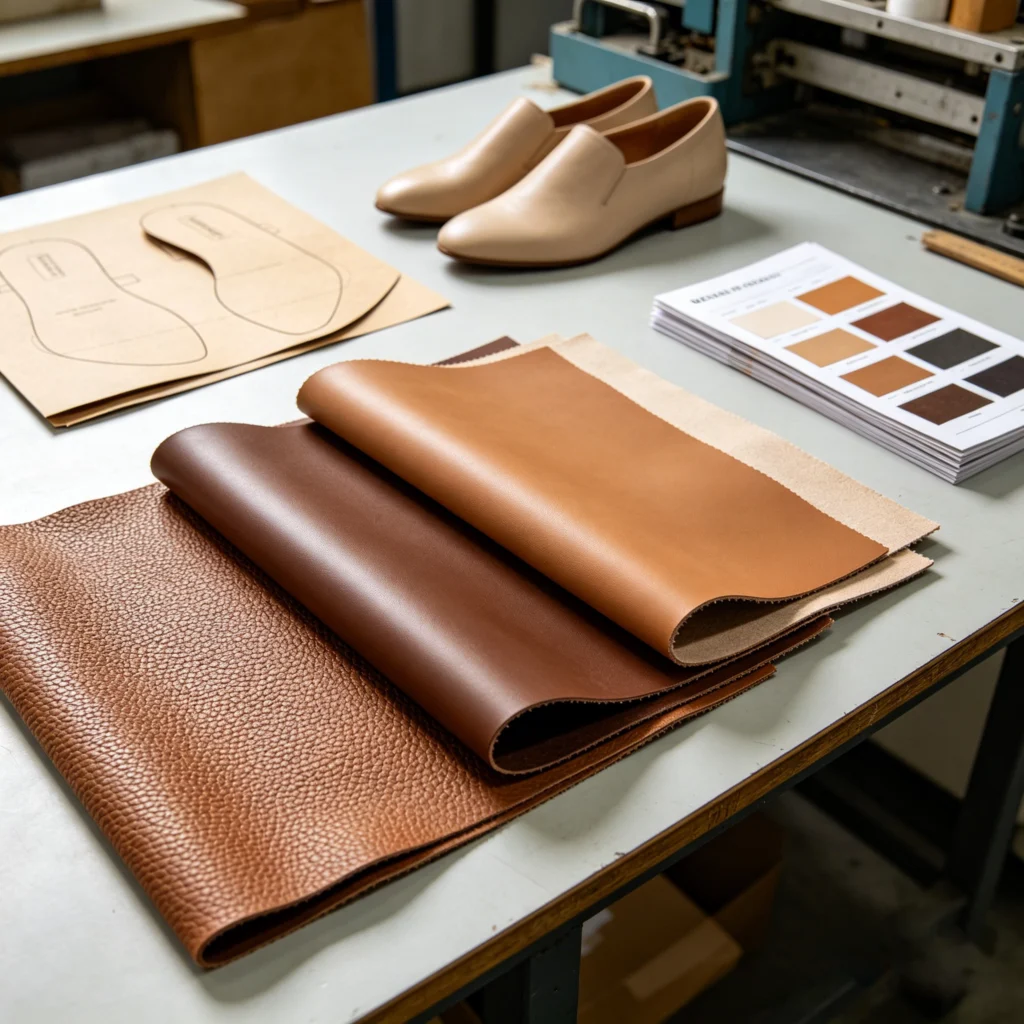
When choosing PU leather fabric, B2B buyers should start with the finished product, then compare the backing, surface finish, hand feel and production behavior. Two materials can have almost the same color and grain but behave very differently during cutting, stitching, bending, forming or wrapping.
The practical rule is simple: do not approve PU leather fabric from the surface alone. A material that works for a structured handbag may be too firm for a garment. A soft synthetic leather fabric suitable for apparel may not give enough support for a shoe upper or structured bag.
Start With What the Finished Product Must Do
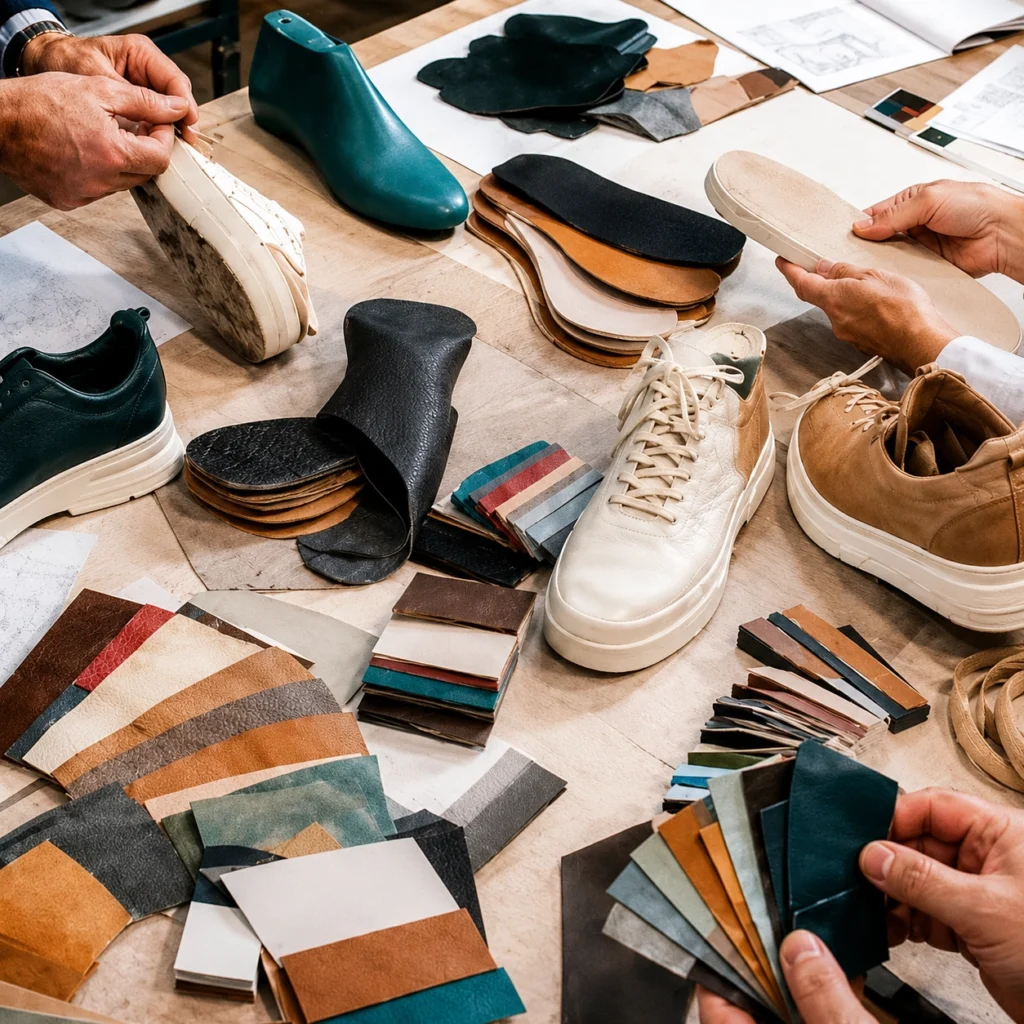
Material selection becomes easier when buyers stop asking, “Which PU leather looks best?” and start asking, “What must this material do in the finished product?” For a cross-application brief, compare faux leather fabric for shoes, bags and apparel to establish which requirements belong to the finished product before narrowing the construction.
Consider the difference between four products.
A handbag panel may need body and clean edge folding.
A shoe upper must form around curved parts and move during wear.
A garment panel needs softness and natural movement.
A jewelry box covering needs to wrap corners and work with the board and adhesive system.
All four products may use PU leather fabric. However, they should not automatically use the same construction.
This is why application should come before color, grain or finish.
How PU Leather Fabric Priorities Change by Application
| Application | Main Material Direction | Backing Priority | Finish Priority | Sample Check |
|---|---|---|---|---|
| Soft bags and pouches | Flexible with controlled body | Softness with enough stability | Finish should remain clean after folding | Fold, stitch and compare with lining |
| Structured handbags | More support and shape control | Stability is more important | Surface should remain consistent on larger panels | Build a panel or corner sample |
| Shoe uppers | Flexible but supported | Stable during forming and movement | Finish should remain visually balanced after bending | Form and repeatedly flex a test piece |
| Garments | Soft and easy to move | Drape and flexibility | Finish should match the desired visual softness | Hang, fold and sew a larger sample |
| Gloves | Flexible with comfortable movement | Soft and responsive | Surface feel and grip direction matter | Bend and handle repeatedly |
| Jewelry boxes and packaging | Easy to wrap or laminate | Controlled stretch and stable handling | Clean, consistent visual presentation | Wrap actual board and corners |
The table is a starting point rather than a performance guarantee. Final suitability depends on the complete material and the way the finished product is manufactured.
Why Backing Can Change the Same-Looking PU Surface
Backing is easy to ignore because buyers normally see the surface first. In production, it can be one of the most important differences between two PU coated fabric samples. Imagine receiving two black fine-grain swatches. From the front, they look nearly identical. One bends easily and follows a curved part. The other feels more stable and resists stretching. That difference may come partly from the backing and complete construction rather than the visible grain. A more stable backing can help a material hold its shape.
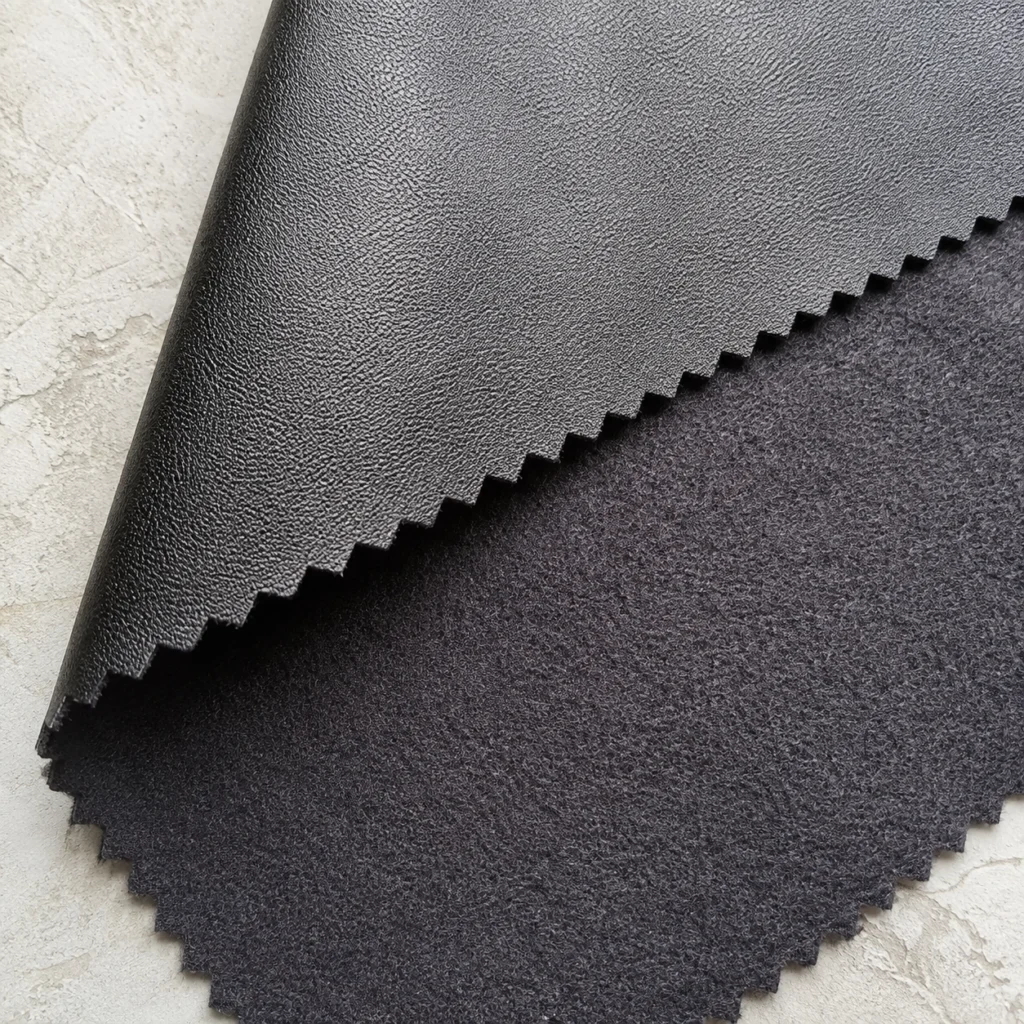
However, it may also make the material feel firmer. A softer backing can improve flexibility and drape. However, the same direction may provide less support for a structured product. For this reason, “same color, same grain, same thickness” does not always mean “same material.” Buyers should turn the sample over, bend it and compare how the complete material behaves.
Surface Finish Changes More Than Appearance
Surface finish is often treated as a styling choice.
It is more useful to treat it as both a visual and application decision.
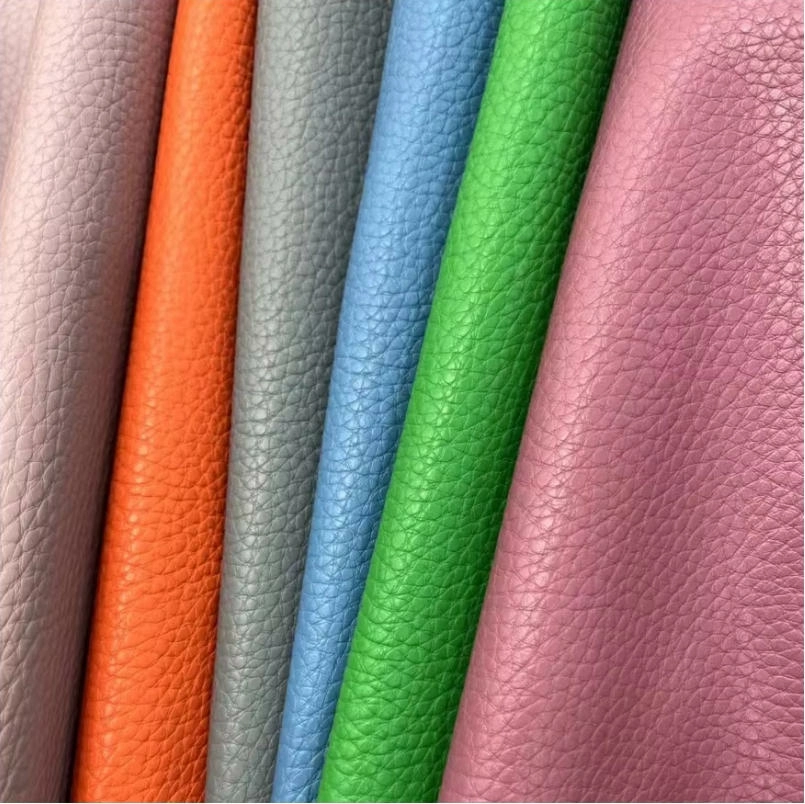
A matte finish can reduce strong reflection and create a softer visual effect. A satin or semi-matte direction can add controlled light reflection. A higher-gloss surface creates a stronger visual statement but may show reflections, pressure marks or surface changes differently.
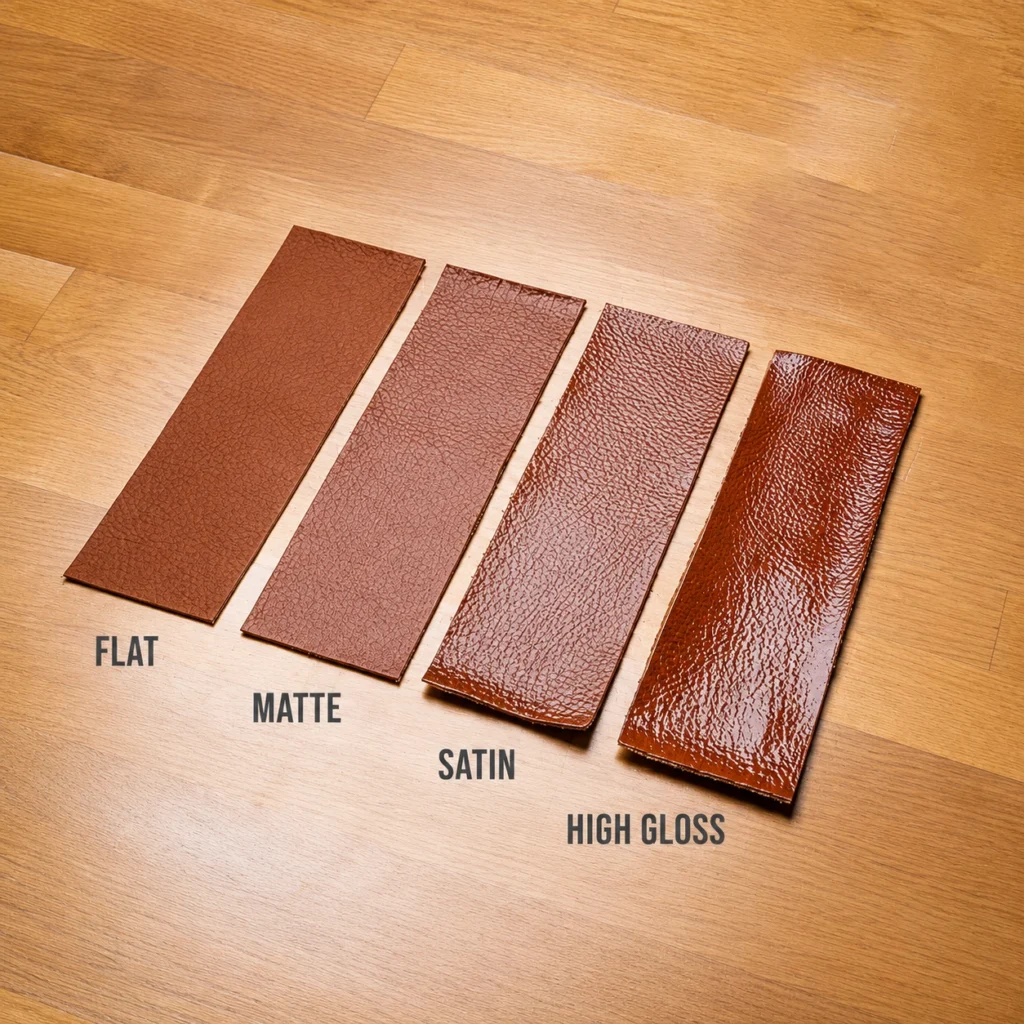
Finish also interacts with grain and color.
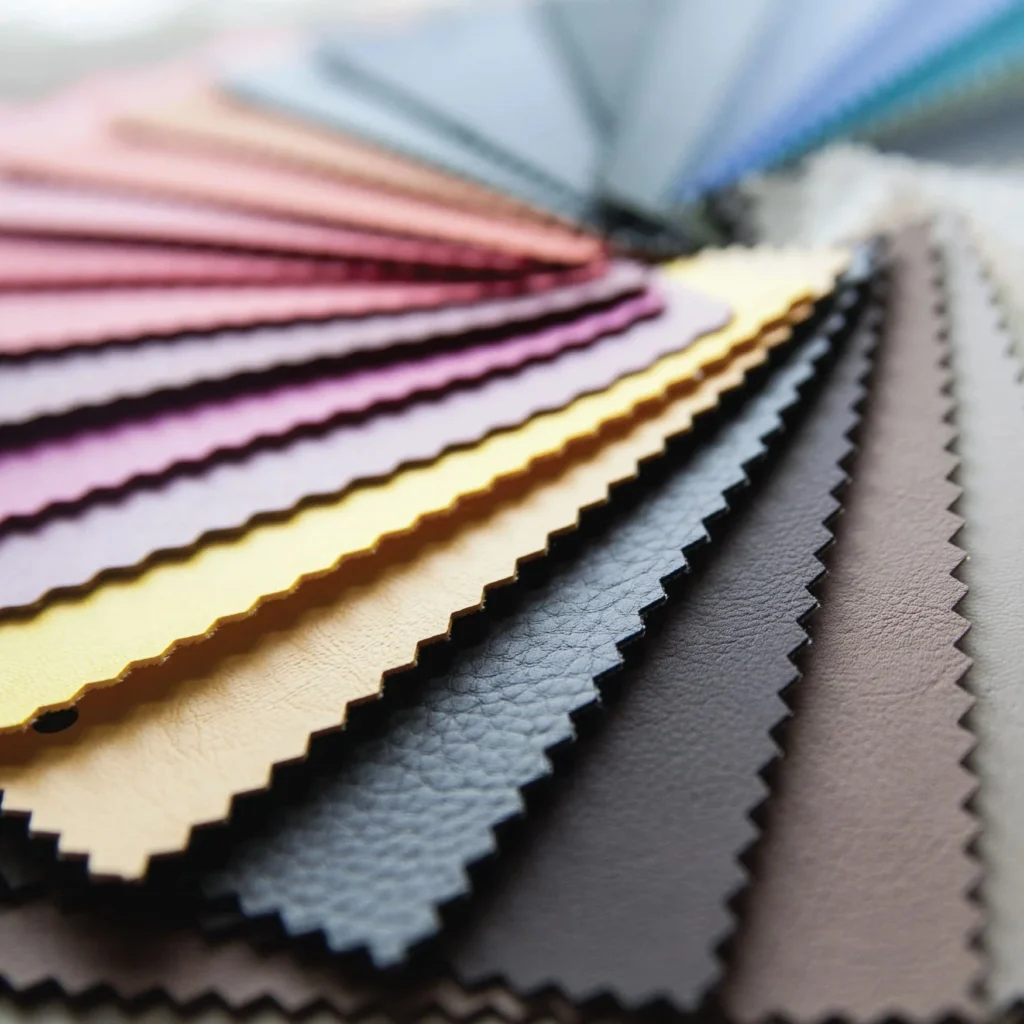
The same dark brown may look deeper on a textured matte surface and brighter under a smoother, more reflective finish. This is why buyers should approve color on the actual finish rather than choosing the color and finish as two separate decisions.
Finish should also be viewed on a larger piece. Small swatches do not always show how reflection changes across a bag panel, garment section or box lid.
For buyers who need a deeper comparison of grain and embossing, the PU leather texture guide explains grain scale, embossing and surface-finish selection in more detail.
Bags: Balance Structure With Surface Character
For bag projects, one common mistake is choosing an attractive surface before deciding whether the material needs to be soft or structured. For an animal-free bag brief, the vegan leather bag material guide adds finished-product and claim-verification checks to the construction review.
A soft pouch may need material that folds naturally and does not create bulky edges. A structured handbag may need more support so that large panels do not appear too loose.
Backing therefore becomes part of the design decision.
If a buyer wants a soft-looking pebbled surface but the bag must hold a defined shape, the solution is not automatically to choose the softest sample. The buyer needs to compare how the surface direction works with a backing and complete construction that can support the bag.
The reverse is also true.
A material can look excellent on a structured sample card but feel too rigid when used for a relaxed bag.
Buyers can first compare suitable PU leather for bags before testing shortlisted materials with the actual reinforcement, lining and folding method.
Shoes and Garments: Movement Changes the Selection Logic
Shoes and garments demonstrate why one PU material fabric should not be selected across applications only because the surface matches.
When comparing PU leather for shoes, buyers should check whether the material can form around curved upper areas while maintaining an acceptable surface appearance.
The backing, coating construction and finish should therefore be reviewed after bending and forming, not only while the swatch is flat.
A grain that looks balanced on the sample table may stretch or flatten around certain shoe components.
Garments create a different challenge.
For softer apparel applications, buyers can compare PU leather for garments before evaluating drape, backing flexibility and surface movement.
Here, softness and movement usually matter more. A backing that gives excellent shape support to a bag may make an apparel panel feel too stiff.
The surface finish also changes the visual result when the material moves. A highly reflective surface can behave very differently from a matte finish as the garment folds.
Buyers sourcing PU leather fabric for shoes and garments should therefore compare samples under the movement conditions of each product rather than trying to find one universal specification.
For PU materials intended for U.S. wearing apparel, buyers should also identify finished-product requirements separately. The official CPSC clothing requirements provide guidance on applicable U.S. apparel flammability requirements. Material suitability and finished-product compliance should always be evaluated according to the specific project.
Packaging: Wrapping Behavior Comes Before Grain Preference
Packaging buyers often concentrate on color and delicate surface texture. The guide to PU leather for jewelry boxes and packaging develops this into corner wrapping, lamination and finished-box sample checks.
Before finalizing either, check how the material behaves around the package structure.
A covering material may need to wrap flat board, curved corners, narrow edges or hinged sections. If the backing stretches too much, positioning can become more difficult. If the complete material is too firm, clean corner wrapping may become harder.
Finish also deserves attention.
Large flat box surfaces can make uneven reflection or surface marks more noticeable than they appear on a small swatch.
Buyers comparing PU leather for jewelry boxes and packaging should trial shortlisted materials with the actual board, adhesive system and corner construction.
A beautiful flat sample is only the beginning.
Use a Three-Way Sample Comparison Before Approval
Instead of collecting many random swatches, buyers can make sample evaluation more useful by controlling what changes between samples.
1. Compare Similar Surfaces With Different Backings
First, compare a similar surface with different backing directions.
This shows how backing changes flexibility, support and handling.
2. Compare Similar Constructions With Different Finishes
Second, compare a similar construction with different surface finishes.
This makes it easier to judge gloss, color expression and visual character without confusing those differences with major construction changes.
3. Test the Shortlisted Material in the Actual Application
Third, put the shortlisted material into an application mock-up.
- For a bag, make a sewn or folded panel.
- For footwear, form or bend a representative upper section.
- For a garment, sew and drape a larger panel.
- For packaging, wrap the actual board.
This final step often reveals differences that cannot be seen on a color card.
What to Include in a PU Leather Fabric Sourcing Brief
A useful sourcing request should describe the product before describing the leather.
Send the supplier:
- finished product application and material position;
- product photos or drawings;
- preferred surface grain or reference sample;
- matte, semi-matte, satin or gloss direction;
- target color or physical color reference;
- target thickness or acceptable range if known;
- preferred softness or firmness;
- backing direction if already specified;
- cutting, stitching, folding, forming or lamination process;
- target market;
- project-specific testing requirements;
- estimated quantity;
- physical reference material when available.
Avoid subjective descriptions such as “premium,” “very high quality” or “luxury leather” without supporting specifications.
A physical reference and an explanation of how the material will be used usually communicate much more.
For custom PU leather development, color, texture, thickness, backing, hand feel, embossing and surface finish can be discussed together rather than as isolated specifications.
For European projects, buyers should identify applicable chemical requirements early and use the official EU REACH Regulation as a regulatory reference. Final testing requirements should still be determined according to the specific material, finished product and target market rather than assuming that one requirement applies to every PU leather project.
Key Takeaways for Material Buyers
- PU leather fabric should be selected as a complete material construction.
- The application decides which material properties matter most.
- Backing can change stability, softness, stretch and production handling even when two surfaces look similar.
- Surface finish changes reflection, color appearance and how the material looks on larger finished-product areas.
- Bags, shoes, garments and packaging place different demands on the same broad material category.
- Physical samples are most useful when buyers test them under conditions that resemble actual production.
At Danhon, buyers can compare PU artificial leather directions according to application, color, texture, thickness, backing fabric, hand feel and finish before moving into custom material development or bulk confirmation.
Frequently Asked Questions About PU Leather Fabric
What should buyers compare when two backings curl in opposite directions after cutting?
Record cutting orientation, relaxation and the behavior of representative component sizes. Evaluate the intended bonding or sewing process before deciding whether the curl is acceptable.
How should two PU constructions be compared when the backing is commercially confidential?
Request enough non-confidential construction and performance information to assess the intended use, plus representative samples. Record any unresolved difference instead of claiming equivalence from gauge and appearance alone.
How should a buyer approve an intentionally exposed reverse side?
Define its visible color, texture and permitted variation separately from the face. Check its actual contact and finishing conditions instead of treating it only as a hidden structural layer.
Can a construction be approved before a release-paper texture is finalized?
Limit any early approval to the properties actually evaluated. Recheck appearance and relevant handling on the final transferred surface before releasing the finished material.
What should a buyer do if a supplier changes finish without changing the material code?
Request a versioned specification and compare the revised sample against the retained reference. Review relevant appearance, handling and processing checks before accepting the lot under the old approval.
Compare PU Leather Fabric Options for Your Project
If you are selecting PU leather fabric for bags, shoes, garments, gloves or packaging, start with the product application rather than a surface photo alone.
Share your product reference, preferred texture, color, finish, thickness direction, backing requirements and expected manufacturing process. Physical samples can then be compared under conditions closer to real production before a final material direction is confirmed.
Contact Danhon for PU Leather Samples and Custom Material Support to discuss your application, compare suitable material directions, or request samples for further evaluation.