
Quick Answer
The best PU leather for jewelry boxes is not selected by appearance alone. Buyers should compare the surface finish, backing fabric, thickness, flexibility and color on the actual box structure.
A fine-grain or smooth surface often creates a clean presentation. A stable backing can support cutting, lamination and edge wrapping. However, the final choice depends on whether the material will cover a flat lid, a rigid box, a curved corner or a hinged structure.
Physical samples should be laminated or wrapped onto the real box board before bulk approval. A flat swatch cannot fully show corner behavior, adhesive compatibility or final color appearance.
Start with the Box Construction
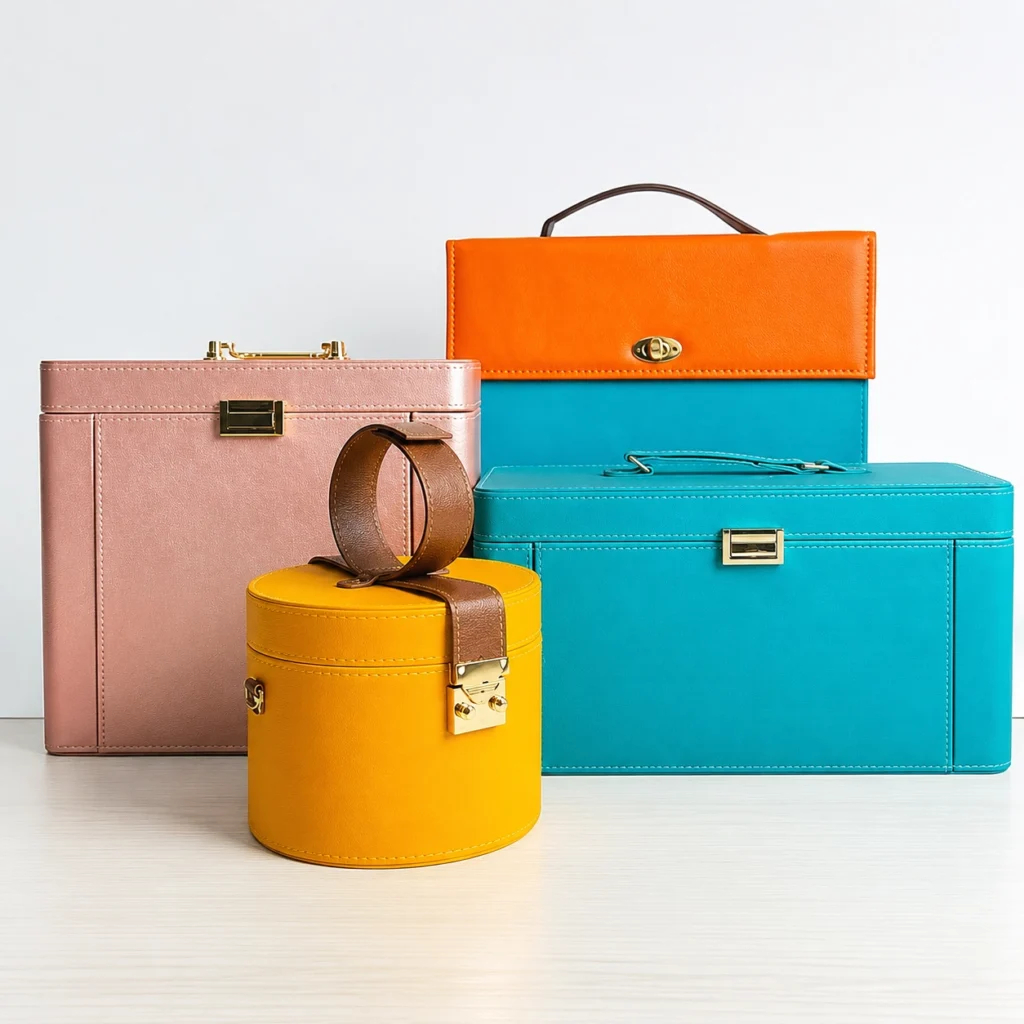
Buyers often begin by choosing the most attractive grain. A better starting point is the construction of the finished box.
A simple rigid gift box may use large flat panels. A jewelry case may include rounded edges, hinges, narrow channels or several wrapped components. These structures place different demands on the covering material.
Before comparing PU leather for jewelry boxes and packaging, clarify the following details:
- Whether the PU leather will cover the exterior, interior or both.
- Whether the surface will be flat, curved, folded or wrapped around corners.
- Whether the material will be glued, laminated, stitched or heat processed.
- Whether the box needs a soft touch or a firmer, more structured appearance.
- Whether a logo will be printed, embossed, debossed or foil stamped.
This information helps determine whether the material needs softness, dimensional stability or a balance of both.
How Surface Finish Changes Packaging Presentation
The surface creates the first visual impression, but it also affects color, handling and logo processing.
| Surface Direction | Visual Effect | Possible Advantage | Buyer Checkpoint |
|---|---|---|---|
| Smooth matte | Clean and controlled | Works with simple, modern packaging | Check whether marks or uneven lamination are visible |
| Fine pebbled grain | Subtle visual depth | Can make minor surface variation less noticeable | Check grain scale on small box panels |
| Deep embossed grain | Strong decorative character | Creates a more pronounced leather-like appearance | Check corner folding and logo clarity |
| Glossy or patent finish | Bright reflection | Suitable for selected decorative concepts | Check glare, fingerprints and surface marks |
| Suede-like finish | Soft, low-reflection appearance | Can create a warm presentation | Check nap direction, rubbing and adhesive handling |
A deep grain may look attractive on a large swatch but appear too strong on a small ring box. A smooth surface may look refined, yet it can make board unevenness or glue marks easier to see.
Buyers can review the PU leather texture guide when comparing grain depth, embossing and surface finish.
Why the Backing Matters During Wrapping and Lamination
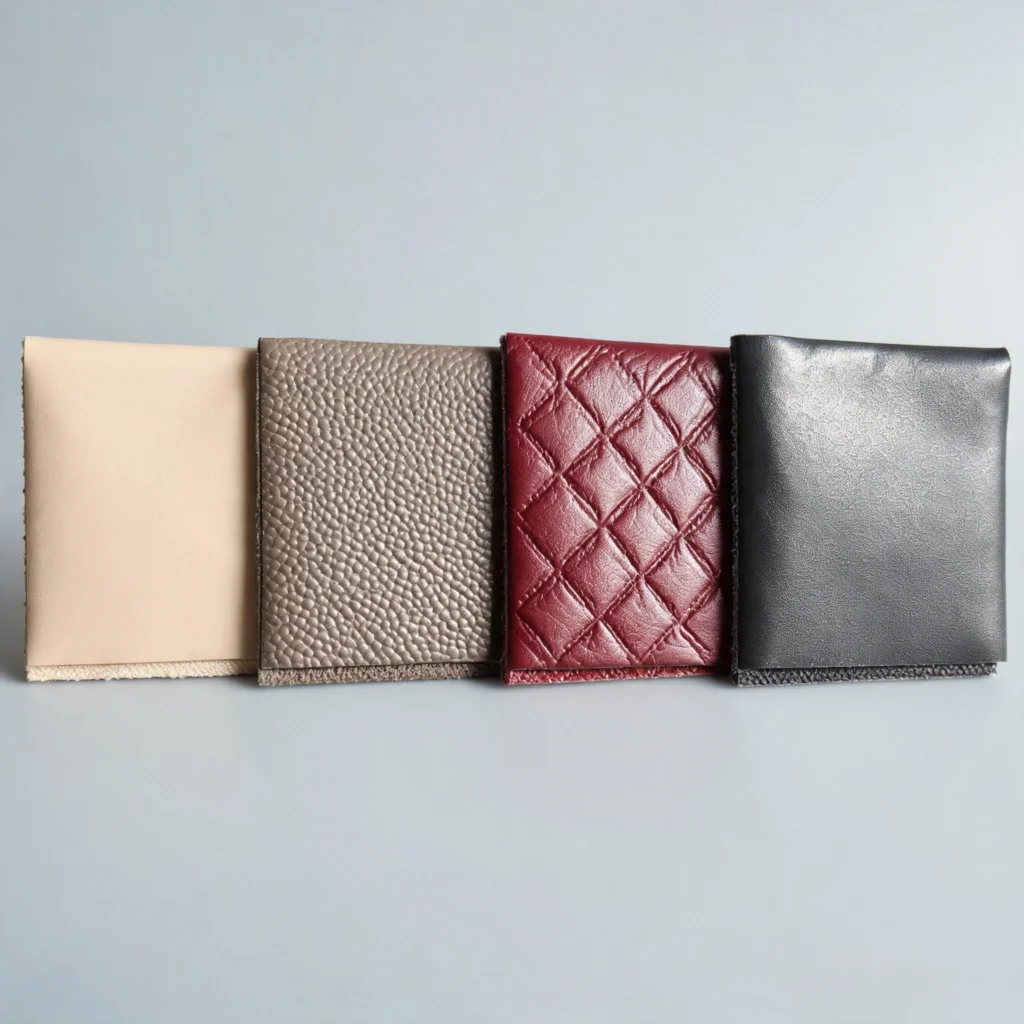
The backing is normally hidden after assembly, but it strongly affects production.
A stable textile backing can help the material remain controlled during cutting and lamination. This may work better on flat panels or box parts that require consistent shape.
A softer backing may wrap more easily around curved edges. However, excessive stretch can make alignment, corner finishing and logo placement less predictable.
The main tradeoff is straightforward:
- A firmer backing may improve stability but reduce softness.
- A softer backing may improve wrapping but provide less structural control.
- A thicker backing may create bulky corners or visible edge build-up.
- A very open or uneven backing may require additional adhesive trials.
Adhesive compatibility should never be assumed from the surface appearance. The buyer should test the selected PU leather with the intended adhesive, box board, pressure method and curing conditions.
Select Thickness According to the Box Shape
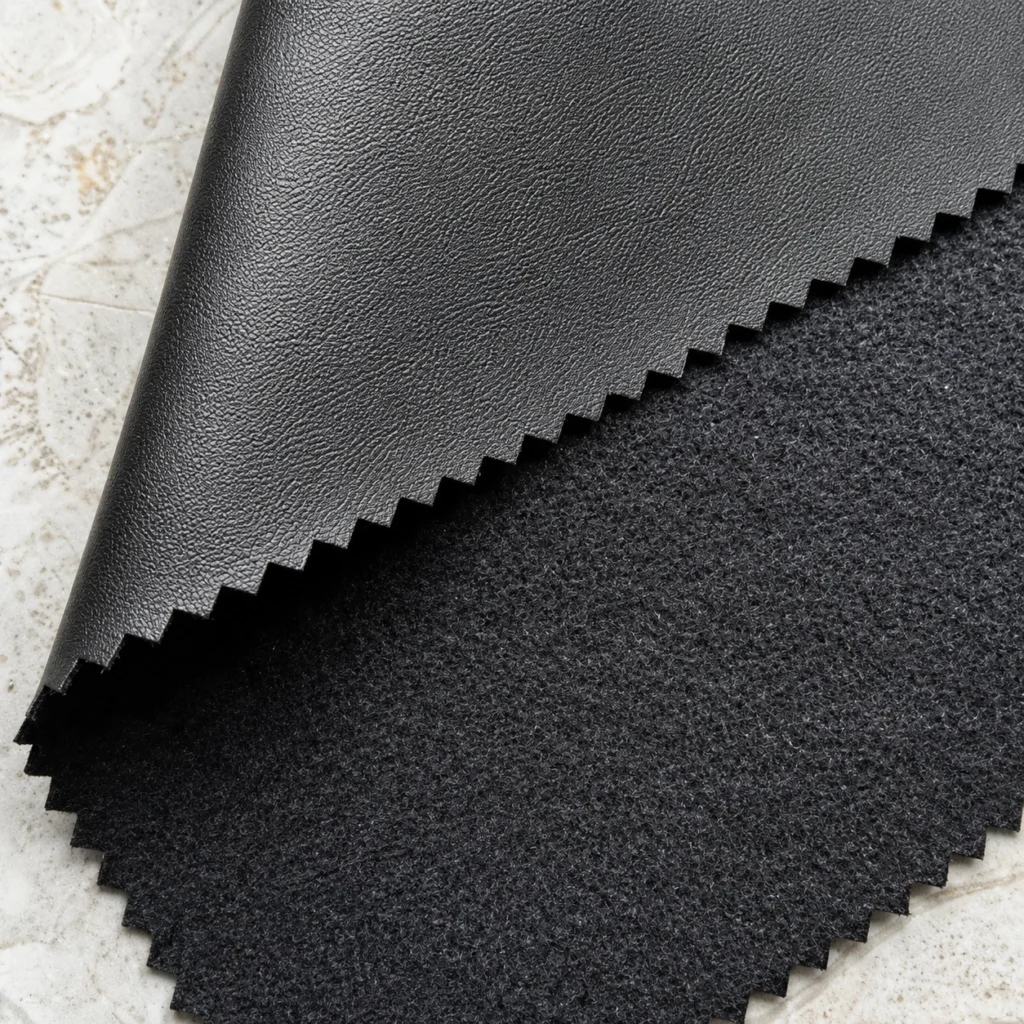
For many decorative packaging projects, thinner PU leather is easier to wrap and fold. However, thin material may reveal unevenness in the supporting board if the surface and backing are not stable.
Materials around 0.7mm to 0.8mm can be a useful starting direction for lightweight covering and detailed wrapping. Materials around 0.8mm to 1.0mm may provide more body for general jewelry boxes and gift boxes.
Thicker materials may suit selected rigid-cover designs, but they can create bulky corners or resist close folding. These ranges are only starting references, not universal specifications.
The PU leather thickness guide explains why thickness should be reviewed together with backing, flexibility and processing method.
Approve Color on the Final Surface
Color should be approved on the selected grain and finish. The same pigment direction may look different on smooth, embossed, matte or glossy PU leather.
Box shape also changes color appearance. Flat lids reflect light differently from curved corners, recessed panels and narrow edges.
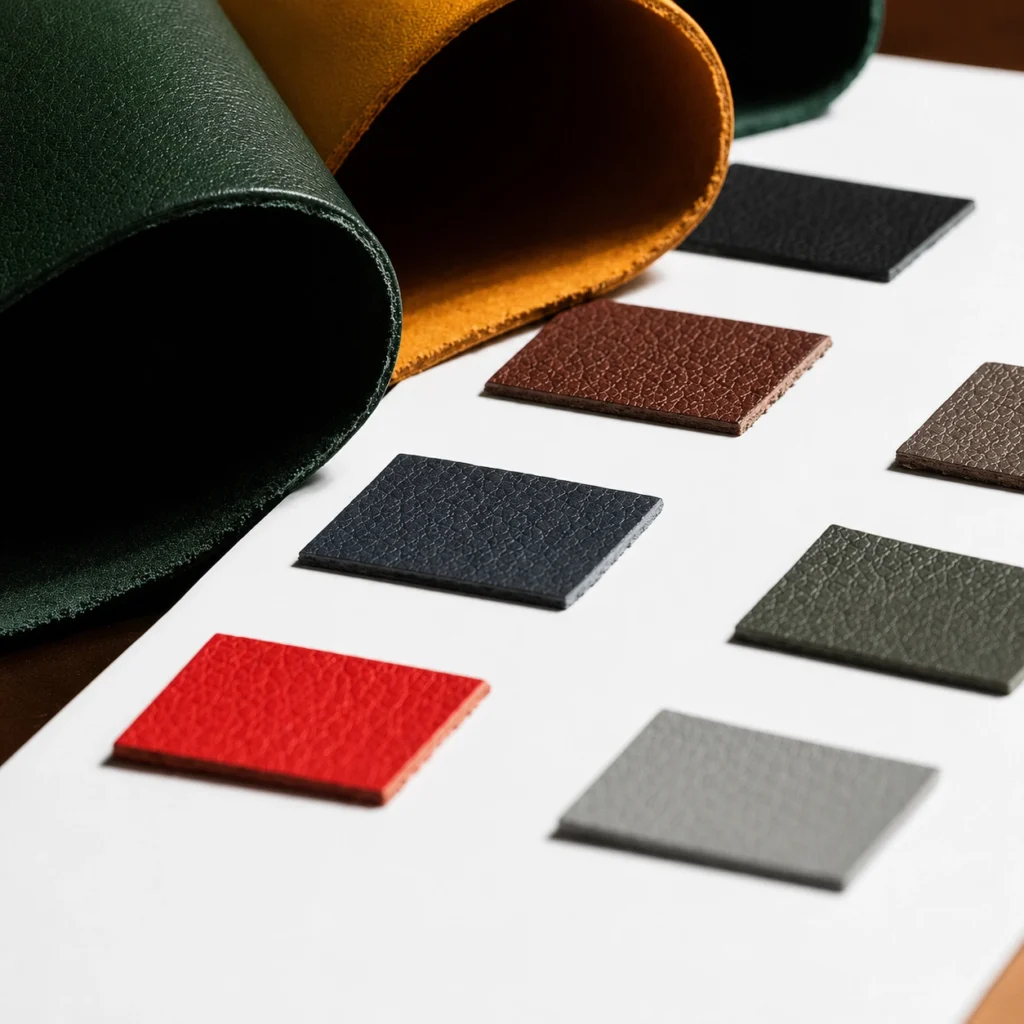
A PU leather color card can help buyers shortlist several directions. It should not replace a larger physical material sample.
For more reliable approval:
- Record the complete material series and color code.
- Compare the selected color under neutral and retail-relevant lighting.
- Apply the sample to the actual board or a representative mockup.
- Review the color beside the jewelry insert, lining, logo and hardware.
- Retain the approved sample for production communication.
Phone photos are useful for discussion, but screen settings and lighting can change the displayed shade.
Practical Material Selection by Packaging Type
| Packaging Type | Surface Direction | Backing Direction | Starting Thickness | Main Check |
|---|---|---|---|---|
| Small ring or earring box | Smooth or very fine grain | Stable and relatively thin | About 0.7mm–0.8mm | Small corners and logo definition |
| Rigid jewelry presentation box | Fine grain or controlled embossing | Balanced stability and flexibility | About 0.8mm–1.0mm | Flatness and edge wrapping |
| Curved or hinged jewelry case | Fine grain with flexible finish | Softer, controlled backing | Application dependent | Repeated opening and curved wrapping |
| Decorative gift box | Matte, embossed or special finish | Selected according to board structure | About 0.7mm–1.0mm | Large-panel appearance and color |
| Display or presentation packaging | Chosen according to brand direction | Stable backing for clean panels | Application dependent | Lighting, logo process and visual consistency |
The table is a starting guide. The same thickness may behave differently when the backing, coating structure or embossing changes.
Common Mistakes That Cause Sample Revisions
- Selecting from a finished-box photo only: The photo cannot confirm thickness, backing or hand feel.
- Approving color before selecting the grain: A different texture may change the final appearance.
- Testing only a flat swatch: Flat samples do not show corner folding or curved wrapping.
- Ignoring the box board: Different boards can change flatness and lamination results.
- Changing several specifications together: It becomes difficult to identify what caused the result to change.
- Using subjective descriptions: Terms such as “luxury,” “soft” or “high quality” need physical references.
- Skipping adhesive trials: A material that looks suitable may not work with the intended assembly process.
How to Evaluate a Physical Sample
A useful sample review should reproduce the real production process as closely as practical.
- Cut the material using the intended cutting method.
- Apply it to the actual board or a representative board sample.
- Wrap both straight and curved edges.
- Check whether the backing stretches or distorts.
- Inspect corners for bulk, lifting or visible tension.
- Review the surface for glue marks or uneven areas.
- Test the intended logo or decorative process.
- Compare color under more than one lighting condition.
For custom projects, buyers can use the custom PU leather development guide to prepare color, texture, thickness, backing and processing information.
Define Market and Testing Requirements Early
Testing requirements depend on the target market, finished-product category, material construction and customer specifications.
For products entering Europe, buyers may need to review applicable chemical obligations and the ECHA Candidate List. For products sold in California, the finished product and potential exposure may need evaluation under Proposition 65 requirements.
These references should not be treated as automatic material labels. Buyers should define the required test plan before final material approval.
Available third-party report examples can also be reviewed through the Danhon testing and certificate page. A report for one material does not automatically apply to every color, construction or finished product.
How Danhon Supports Packaging Material Selection
Danhon can help B2B buyers compare dry-process PU artificial leather by surface texture, color, thickness, backing fabric and hand feel.
For a more useful recommendation, provide the box dimensions, board type, wrapping method, surface reference, target color, logo process, estimated quantity and destination market. A physical box sample or material swatch is more reliable than a general product photo.
Key Takeaways
- Choose the material according to the box structure and wrapping process.
- Evaluate surface appearance together with logo and edge requirements.
- Use the backing to balance stability and wrapping flexibility.
- Treat thickness as a starting range rather than a fixed rule.
- Approve color on the final texture and finish.
- Test the material with the actual board and adhesive.
- Retain the approved physical sample as the production reference.
Frequently Asked Questions
Should an interior lining approval cover direct contact with jewelry?
Assess the actual contents, contact surface and storage conditions with the buyer. A decorative exterior-material approval does not establish suitability for every plated metal, finish or stored item.
How should a box maker investigate corner lifting that appears after transport?
Retain packed samples and record board, adhesive, cure and transit conditions. Compare a representative assembled corner rather than assuming a flat material test identifies the cause.
How should foil stamping be approved when a box has both flat and curved surfaces?
Trial the relevant surfaces using the actual tooling and process conditions. Check definition and adhesion on each geometry rather than extending a flat-panel appearance approval to a tight curve.
What if adhesive shows through a pale packaging-cover material?
Compare the actual board, adhesive spread and finished covering under intended display lighting. Review opacity and bonding together before changing color or increasing adhesive coverage.
How should a box cutting plan handle a directional embossed pattern?
Mark the required grain direction and align visible adjacent panels in the layout. Calculate usage from that approved orientation rather than assuming every rectangle can be rotated freely.
Should a presentation box be checked with its actual protective insert?
Evaluate the insert and covering together under intended storage and contact conditions. A successful empty-box review does not establish that the inserted product and adjacent materials are compatible.
Request Samples for Your Packaging Project
Selecting artificial leather for gift boxes requires more than choosing a color from a photo. Share your box construction, preferred surface, thickness direction, backing requirement, color reference and intended wrapping process. Physical swatches can then be compared on a representative box panel before bulk material approval.
Contact Danhon for PU Leather Samples and Custom Material Support.