Quick Answer: What Makes PU Leather Suitable for Backpacks?
The best PU leather backpack material is not defined by thickness or surface appearance alone. Buyers should evaluate the PU surface together with backing stability, thickness, flexibility, seam behavior and the amount of rubbing the finished backpack will face. For many bag projects, around 0.8–1.0 mm is a useful starting range for comparison, while more structured constructions may require buyers to evaluate thicker options as well.
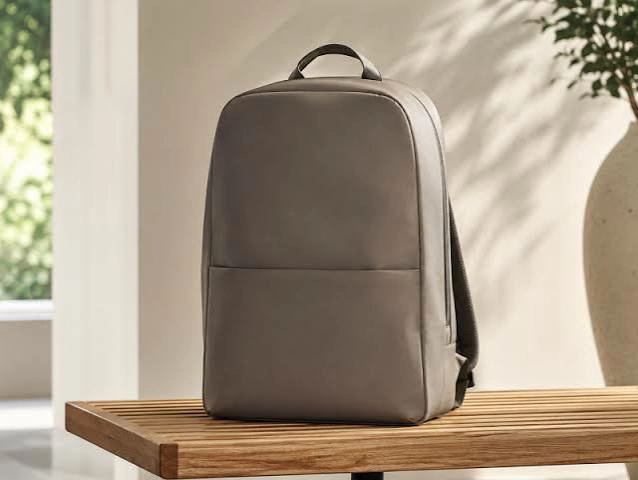
A backpack also creates different material demands from a small handbag or wallet. Large panels must keep their appearance while areas around zippers, corners, pockets and seams are repeatedly bent or handled. This means a suitable backpack leather material should be approved as a complete construction rather than selected from a color card or surface photo.
Why Backpacks Need Different Material Thinking
A backpack distributes material across several areas that do not all behave in the same way. The front and side panels mainly control appearance and body, while the bottom, zipper areas, corners and attachment points may experience more rubbing, folding or local stress. A material that looks good on a flat front panel can therefore behave differently when it is folded around a narrow seam or used near a reinforced part.
This is why a PU leather backpack should not simply copy the specification of another bag. The general bag category may be the same, but backpack size, internal reinforcement, lining, load, panel design and sewing construction can change the material requirement. Buyers should first define how the backpack is built, then compare suitable PU materials against that construction.
Start with the Backing, Not Just the PU Surface
The visible PU layer gets most of the attention during sourcing, but the backing can have a major effect on how the complete material behaves. A more stable backing can help control unwanted stretch and give larger backpack panels more support, while a softer backing can make folding and handling easier. Neither direction is automatically better because the correct choice depends on how much structure the backpack already receives from lining, foam or internal reinforcement.
Backing also deserves attention around stitching and folded areas. A surface can look almost identical on two samples while the materials feel very different because the backing construction has changed. Danhon’s existing bag guidance also identifies backing strength and seam performance as important checks for backpack materials.
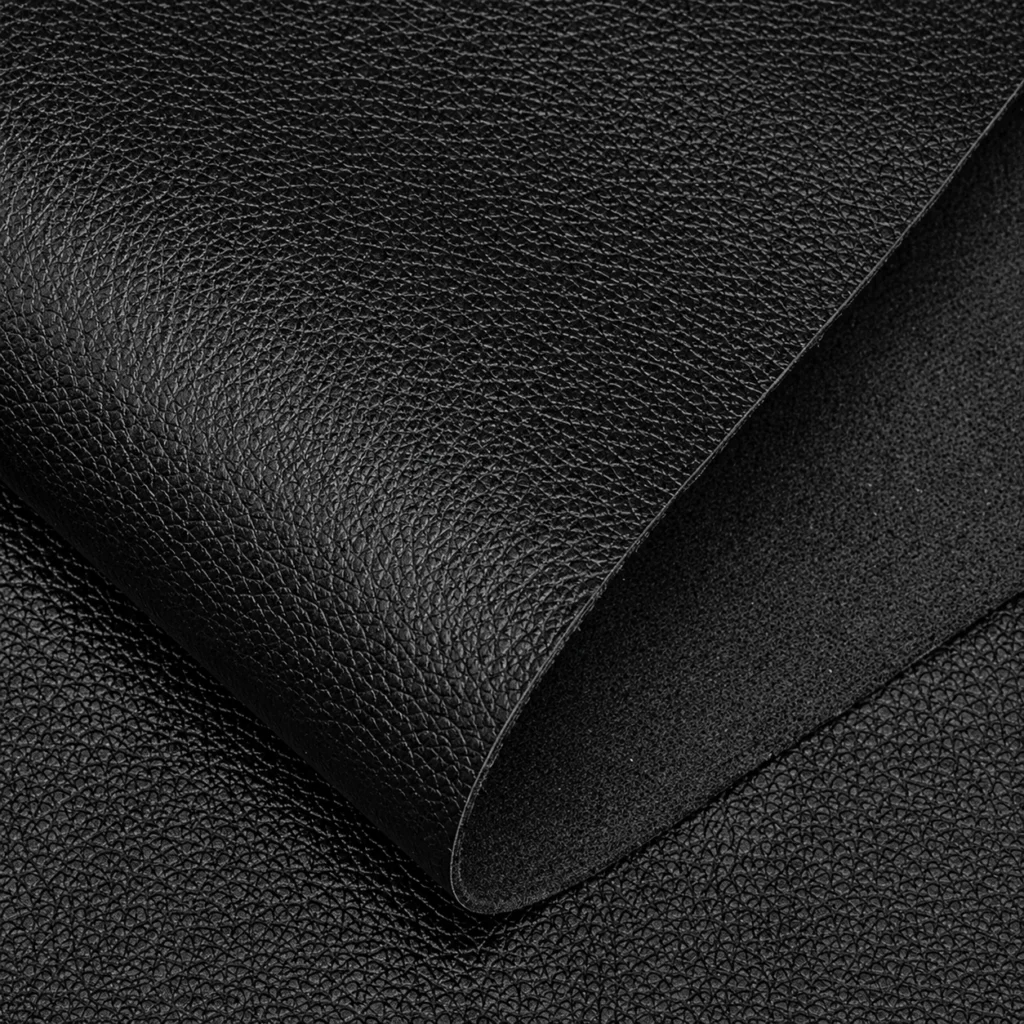
For this reason, buyers comparing a faux leather backpack material should turn the sample over rather than judging only the grain. Check whether the backing feels stable, whether it stretches easily and whether the material becomes too firm when folded. The supplier should also know whether the material will be directly sewn, folded over reinforcement, laminated or combined with another fabric.
Choose PU Leather Backpack Thickness by Construction
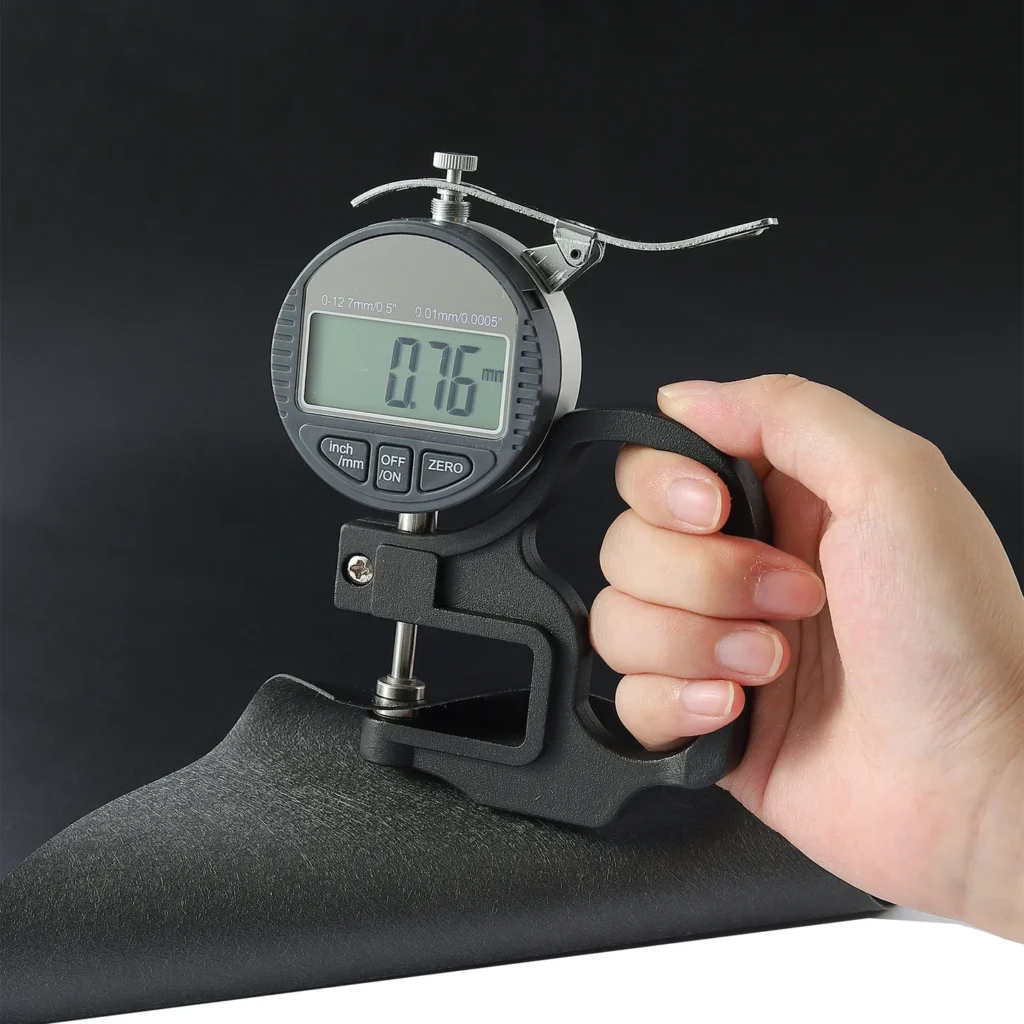
There is no universal thickness that can be called the best PU leather for backpacks. Danhon’s current thickness guidance uses roughly 0.8–1.0 mm as a common comparison range for many bag applications, while approximately 1.1–1.3 mm may be considered where more body is required. These ranges are starting points only because the backing and coating structure can make two materials with the same measured thickness feel very different.
A lightweight fashion backpack may need enough flexibility to fold naturally around side panels and zipper sections. A more structured backpack may need greater body across larger surfaces, but simply increasing thickness can create bulky folded edges or make tight sewing areas more difficult. Buyers should therefore compare thickness with the actual lining, foam, board or other reinforcement used inside the backpack.
Thickness measurement should also be consistent when samples are compared. ISO 2286-3 specifies a method for determining the thickness of rubber- or plastics-coated fabrics under a defined pressure, which shows why measurement conditions matter when suppliers or buyers compare coated materials. A number printed on a specification sheet is useful, but it should still be checked together with the physical material.
Surface Durability Is More Than Scratch Resistance
When buyers ask for a durable synthetic leather backpack, they often focus first on whether the surface scratches easily. In practice, surface durability can involve several different behaviors, including abrasion from repeated contact, coating adhesion, bending around seams and the appearance of the surface after repeated handling. One simple description such as “scratch resistant” cannot confirm all of these properties.
Backpacks make this distinction especially important because different areas face different use conditions. The bottom may contact floors or other surfaces, side panels may rub against clothing, and zipper or pocket areas may bend repeatedly during use. Buyers should therefore identify which surface performance matters to the project before deciding what should be tested.
Formal test requirements should be chosen according to the finished product and buyer specification rather than added as generic marketing claims. For example, ISO 5470-2 covers wet and dry abrasion testing for coated surfaces, while other methods can be used for properties such as coating adhesion. Passing one test does not prove that a material will perform correctly in every backpack design.
How Grain and Finish Affect Visible Wear
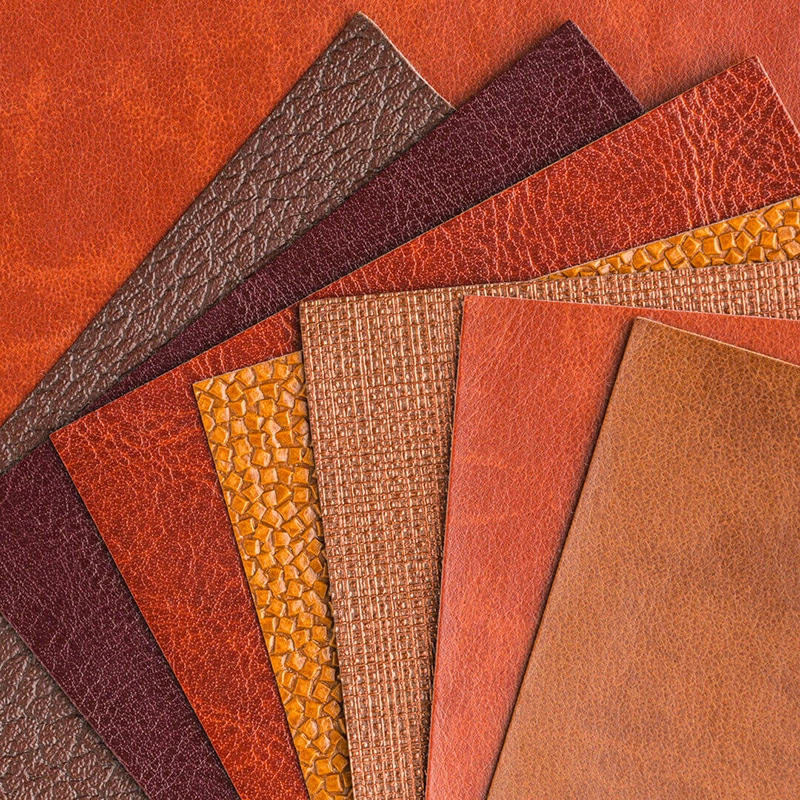
Surface texture changes both the visual character of a backpack and how normal marks may be noticed. Smooth PU leather can give a clean appearance, but scratches, pressure marks or unevenness may be easier to see depending on the finish. Pebbled or other embossed surfaces add more visual variation, which may make minor marks less visually obvious, but embossing itself does not prove higher abrasion resistance.
A deeper grain is also not automatically the best choice for a backpack. Large embossed patterns may look attractive on broad front panels, yet the same pattern can appear distorted around narrow piping, pocket corners or tightly folded sections. Buyers should review both a flat swatch and a sample that has been folded or stitched before approving the surface direction.
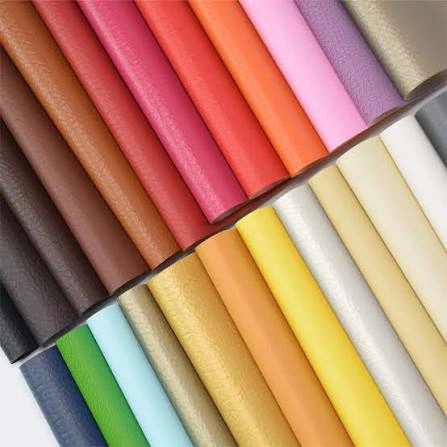
Gloss level matters as well. Matte, semi-matte and glossier finishes reflect light differently and can change how the same color and grain appear on a large backpack panel. For this reason, color, texture and finish should be approved together rather than in three separate decisions.
Backing, Thickness and Surface Must Work as One System
A PU leather backpack material works best when backing, thickness and surface are treated as one construction. Changing the backing can change firmness, changing thickness can affect folding, and changing embossing can alter the hand feel or apparent body of the material. This is why matching only one specification from a reference backpack rarely gives enough information for accurate material development.
| Material Decision | What It Influences | Main Backpack Tradeoff |
|---|---|---|
| Backing | Stability, stretch, hand feel and sewing behavior | More support may also create a firmer feel |
| Thickness | Body, folding, edge bulk and handling | More thickness can improve body but reduce flexibility |
| Grain | Appearance and surface character | Deeper grain changes appearance but does not prove durability |
| Surface finish | Gloss, touch and visibility of marks | Clean surfaces may show wear differently |
| Internal reinforcement | Final backpack structure | The PU leather does not need to provide all structure by itself |
The important point is that the PU leather does not work alone. Lining, reinforcement, foam, stitching method and panel construction can all change how much support the outer material needs. A buyer should therefore approve the material in the backpack system, not only as an isolated swatch.
Common PU Leather Backpack Material Mistakes
One common mistake is taking a PU leather used on a handbag and assuming it can move directly into a backpack project. The surface may be suitable, but the larger panels, reinforcement and repeated handling may require a different backing or thickness. Starting with the existing material is reasonable, but the final construction should still be sampled again.
Other common problems include:
- choosing the material from a surface photo without checking the backing;
- selecting a thicker option only because it feels stronger;
- approving a grain before testing it around seams and corners;
- checking the front panel but ignoring the backpack bottom and pocket areas;
- approving a flat swatch without sewing or folding it;
- asking for “high durability” without defining the required performance;
- changing backing or thickness after the surface sample has already been approved.
These mistakes often come from treating material specifications independently. A backpack development process becomes clearer when the buyer first defines the product structure and then changes one important material variable at a time. This also makes sample comparisons easier because the reason for each difference can be identified.
How to Approve a Backpack Material Before Production
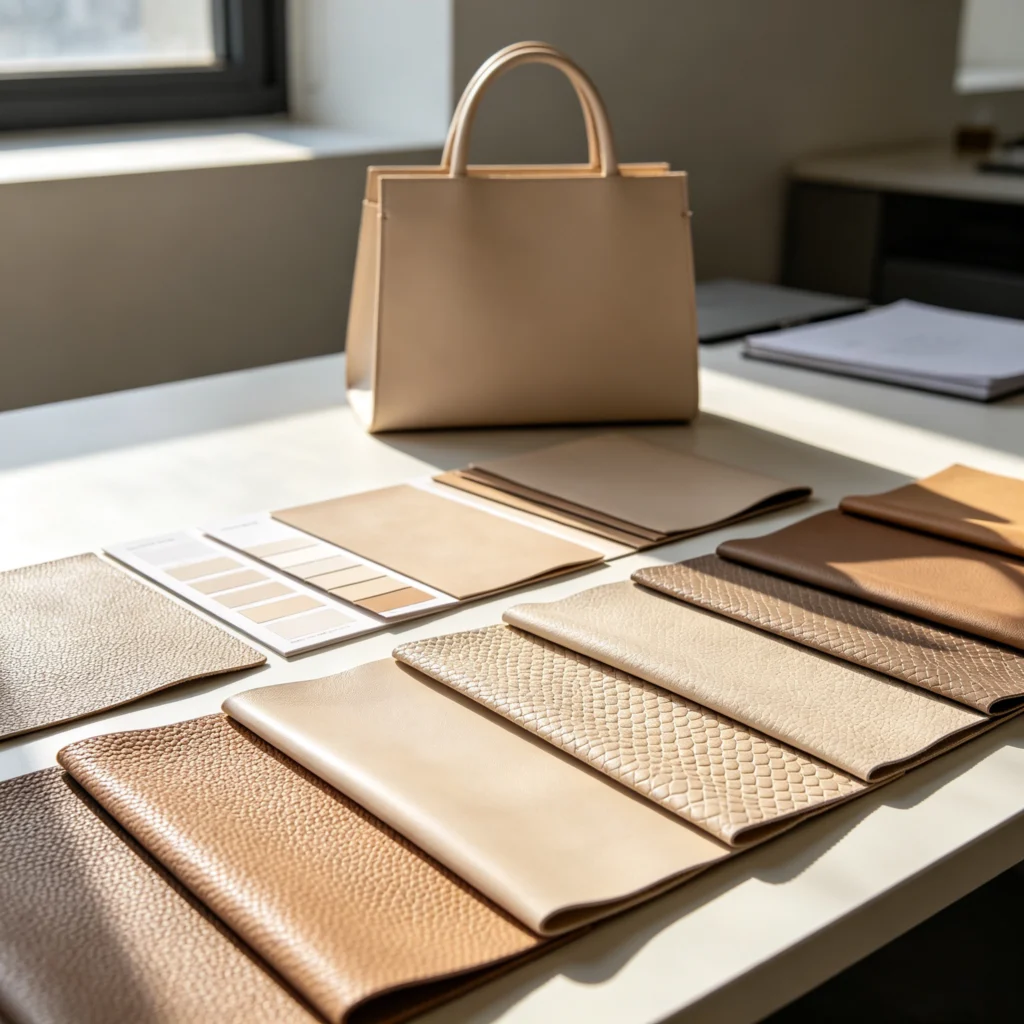
The first approval step should be a physical material comparison rather than a digital image. Buyers can begin with several swatches that are close to the required appearance, then compare backing, thickness, firmness, grain and finish side by side. After narrowing the options, the preferred material should be tested in a representative backpack construction.
A practical review can include:
- Measure and compare thickness using the same method.
- Examine the front surface and textile backing.
- Bend and fold the material around expected seam directions.
- Sew a representative panel or corner construction.
- Review the material together with lining and reinforcement.
- Check high-contact areas such as the bottom, pockets and zipper surroundings.
- Define any required abrasion, adhesion, color or other project-specific testing.
- Keep the final approved sample as the production reference.
The goal is not to create an unnecessarily complicated approval process. It is to identify problems while they can still be corrected at material stage instead of after the whole backpack has been produced. Physical approval is particularly useful when color, grain, backing or thickness has been customized.
Danhon Support for Backpack Material Selection
For backpack projects, Danhon can help buyers compare PU artificial leather by thickness, backing, texture, color, hand feel and surface-finish direction. The starting material should be selected according to the backpack construction, while physical samples can be used to compare how different combinations behave before final approval. Danhon’s current bag material range covers backpack applications and supports different surface, backing and thickness directions.
For a useful material discussion, buyers should provide the backpack type, reference images, intended material position, preferred thickness range, texture direction and information about lining or reinforcement where available. If a physical reference backpack or material swatch exists, it can provide much more information than a product photo alone. Testing requirements should also be identified according to the destination market and finished-product category rather than assumed from the material name.
Key Takeaway
The right PU leather backpack material is a balance rather than a single specification. Backing controls much of the stability, thickness influences structure and folding, while grain and surface finish affect appearance and the way wear becomes visible. Buyers should compare all three against the real backpack construction before making a final decision.
A material that looks attractive on a swatch may still be too soft, too firm or unsuitable around a particular seam. A thicker material may not solve a weak construction, and an embossed surface does not automatically provide better abrasion performance. The most reliable approach is to compare physical samples and approve the material after realistic cutting, folding and sewing checks.
Frequently Asked Questions
Can the same PU leather be used for the backpack body, straps and trim?
It can be possible, but it should not be assumed. Strap attachments, trim pieces and main body panels may have different stress, folding and construction requirements, so reinforcement or another material construction may be more suitable in some designs.
Can PU leather be combined with textile panels in a backpack?
Yes, hybrid constructions can combine PU leather with woven or other textile materials when the design requires different appearance, weight or flexibility in different areas. Buyers should still confirm seam compatibility, thickness transitions and how the materials behave together during assembly.
How should two backpack PU leathers with the same thickness be compared?
Compare their backing, firmness, stretch, grain, surface finish and folding behavior instead of relying on the thickness number. Two materials measured at the same thickness can behave differently because their coating and textile backing constructions are different.
Do children’s or school backpacks need different market checks?
The final product category and target market should be identified before defining testing requirements. In the United States, a product primarily intended for children aged 12 or younger can fall within the CPSC definition of a children’s product, so buyers should not assume that requirements for a general-use backpack automatically apply to a children’s backpack.
How can buyers control material consistency after approving a backpack sample?
Keep the approved physical material as a reference together with agreed specifications such as thickness, color, grain, backing and finish. Future production comparisons should use the same reference and measurement approach rather than relying only on a color name, photograph or previous quotation.
Compare PU Leather Materials for Your Backpack Project
If you are developing a backpack and need to compare backing, thickness, texture or surface-finish options, physical samples are the best next step. Share your backpack design, material position, preferred hand feel, color direction and any available reference sample so the material can be evaluated against the real construction. Contact Danhon for PU Leather Samples and Custom Material Support to discuss suitable PU leather directions before bulk material confirmation.