
Quick Answer: Assess color fastness in PU leather through separate rubbing-transfer, light-exposure, contact-migration and batch-shade checks as relevant to the product. Agree the applicable method, conditions and rating with the buyer and laboratory; no single grade or Delta E limit suits every finish. Approve both the physical reference and the production-representative construction before bulk cutting.
Why Color Fastness Failures Trigger Costly Retail Returns in Synthetic Leather
A satisfactory tear or tensile result does not establish resistance to color transfer or fading. For PU bag materials and apparel, examine the surfaces that contact clothing, lining and contrasting trims. Coating, backing dyes, finish and contact conditions can all influence the result, so avoid assigning one mechanism to every color complaint.
Select tests from the intended use, including wet exposure, light display and warm storage where relevant. Dark and pale colors can present different concerns, but color names alone do not determine a pass or fail. Tie each report to the sampled color, finish, construction and lot.
Dry and Wet Rubbing Color Fastness: ISO 105-X12 Crockmeter vs. ISO 11640 Veslic
ISO 105-X12 concerns textile rubbing, while ISO 11640 concerns leather color fastness to repeated rubbing. They differ in scope and procedure and are not interchangeable with each other or automatically equivalent to an AATCC method. Ask the laboratory which method applies to the supplied coated construction and record any agreed adaptation.
- Dry and wet procedures: Specify cloth or felt, moisture condition, loading, cycles and assessment. Do not compare grades from different procedures as if they were directly equivalent.
- Finish and nap: Smooth, wax-effect and napped surfaces need their own appearance and transfer criteria. A material name or sealing treatment does not guarantee a particular grade.
- Reverse-side contact: Include an exposed backing if it touches garments or contents in use. A face-only result cannot validate the untested reverse surface.
Light Fastness, UV Yellowing, and Dye Migration Resistance
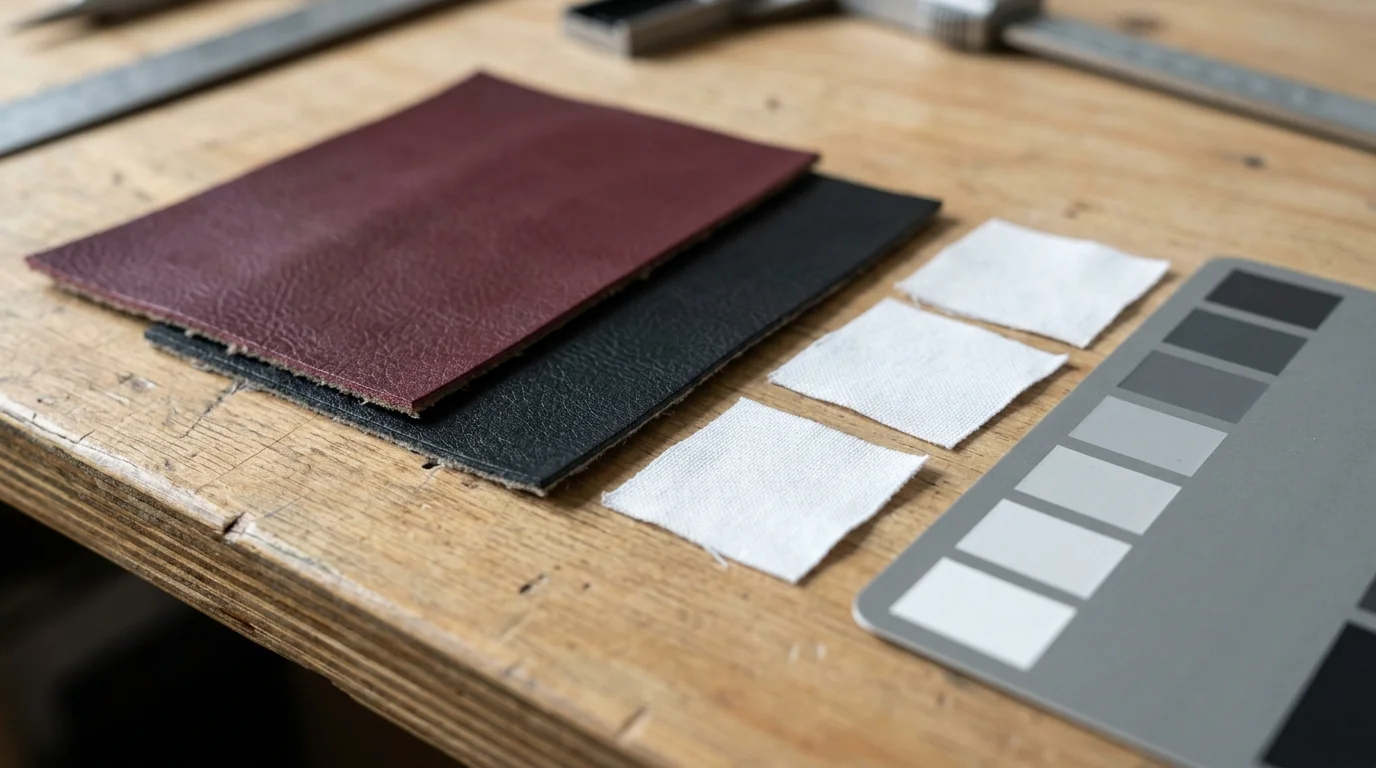
Light fading, light-related yellowing, phenolic yellowing and color migration are distinct concerns. Select the relevant procedure for the material and intended exposure; a light-fastness rating does not prove stability during dark storage or direct contact. Where using a textile method such as ISO 105-B02, confirm its application to the proposed construction with the laboratory.
| Concern | Method decision | Acceptance basis | Application focus |
|---|---|---|---|
| Dry rubbing transfer | Applicable textile, leather or coated-material procedure | Agreed conditions and staining criterion | Straps, cuffs and surfaces touching light clothing. |
| Wet rubbing transfer | Relevant wet-rubbing procedure | Separate wet condition and rating | Damp use and cleaning contact; no automatic equivalence with dry testing. |
| Repeated felt rubbing | ISO 11640 only where applicable or an agreed method | Felt, load, cycles and surface assessment recorded | Distinguish transfer from surface marring. |
| Light exposure | Applicable light-fastness method, such as ISO 105-B02 where suitable | Exposure and reference scale specified | Display and use exposure; not a service-life prediction. |
| Contact migration | Procedure suitable for the actual adjacent materials | Contact pair, time and temperature agreed | Contrast piping, lining, trims and packaging. |
| Storage yellowing | Applicable phenolic-yellowing or storage assessment | Construction and packaging evaluated together | Do not infer this result from light-fastness testing. |
Batch Shade Approval SOP: Controlling Roll-to-Roll Delta E and Metamerism
Define shade approval before spreading and cutting so acceptable variation is not decided after assembly. Retain a master on the final grain and finish, and agree viewing conditions representative of use. Instrumental readings support rather than replace visual approval on textured or glossy surfaces.
- Viewing conditions: Compare under agreed illuminants, such as daylight and the intended retail lighting. TL84 and CWF are different light sources; record the source actually used and inspect metamerism.
- Instrumental comparison: State the color-difference formula, geometry, aperture and inclusion or exclusion of specular reflection. Set a project tolerance instead of a universal Delta E number.
- Roll sampling: Agree positions across usable width and along production rolls, retaining labeled shade bands. The sample size and frequency must reflect the lot rather than an arbitrary cutting length.
- Grain and gloss: Review on the final embossed finish because surface orientation and gloss can change perceived shade. Reapprove appearance if the finish or embossing route changes.
Managing Color Matching and Fastness Stability with Danhon
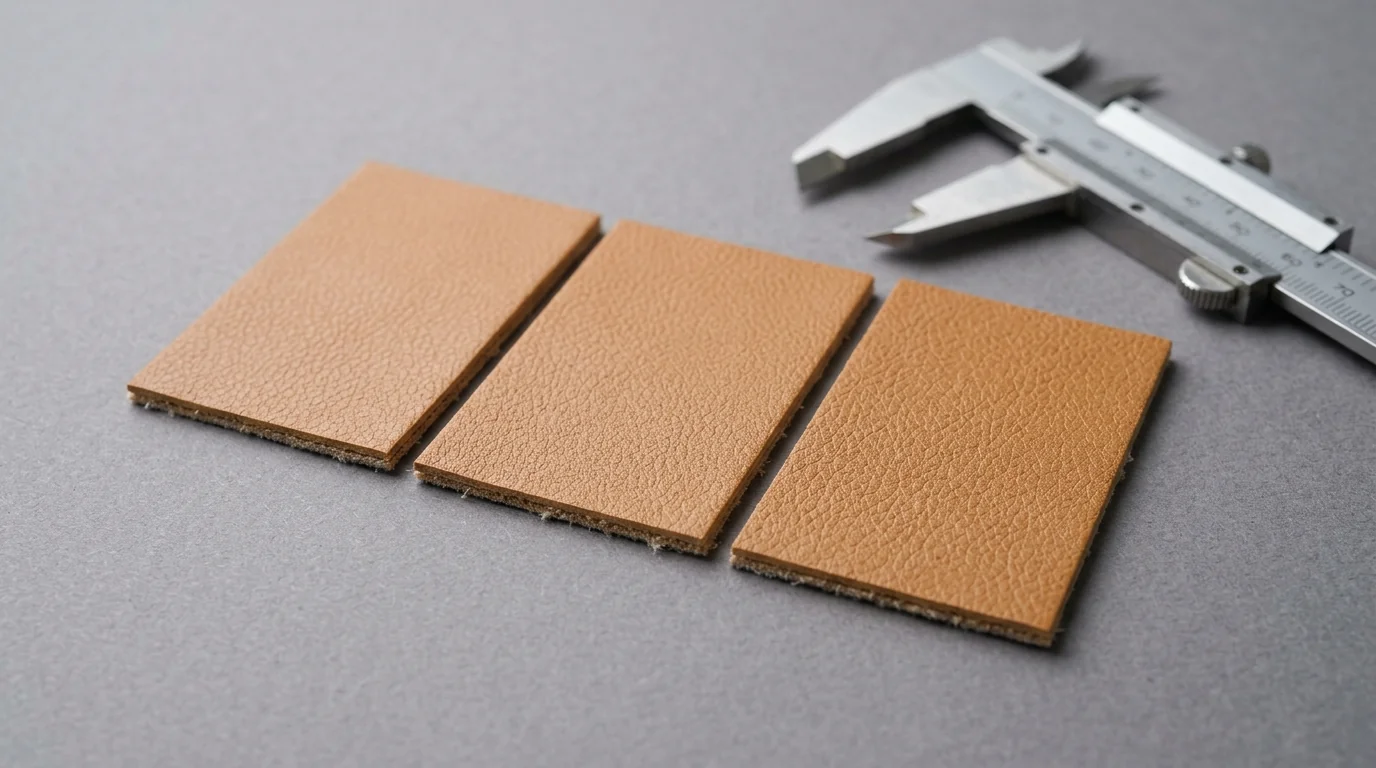
Danhon can review a color brief against available material samples and development options. Supply a physical target, intended finish and required use conditions, then confirm the proposed color and construction before testing. Do not describe an untested sample as high-fastness or assume that a showroom color establishes bulk-lot performance.
The PU leather color-card guide can help identify a series and shade reference for initial communication. For final approval, retain the tested physical construction and document allowed shade variation. A change to pigments, backing or finish should trigger a review of the evidence needed for continued approval.
Frequently Asked Questions (FAQ)
What should a report marked "not detected" say about color-transfer testing?
Color-transfer tests normally report a rating or observation rather than chemical absence. Ask the laboratory to clarify the reported endpoint and confirm that the requested surface and condition were actually evaluated.
How should buyers handle two lots that pass an instrumental shade limit but look different?
Hold them for a visual comparison under the agreed lighting and orientation. Review gloss, grain and metamerism before assigning shade groups or approving mixed-panel use.
Can a return complaint be investigated without the original master sample?
Retain the complaint article, unused material and production records, but acknowledge the weaker reference basis. Establish a documented replacement master before approving further lots rather than recreating the target from a screen image.
Does changing shoe-box tissue require a color review?
If the tissue contacts the material, review the need for contact-migration and storage checks. Keep its ink, treatment and supplier specification in the approval record so packaging substitutions remain traceable.
Request Custom Color Lab Dips and High-Fastness PU Leather Swatches
Achieving reliable rubbing fastness, UV stability, and roll-to-roll shade consistency starts with evaluating physical lab dips and sealed topcoat options before bulk ordering. Contact Danhon for Custom Color Matching & PU Leather Swatch Cards to align color fastness benchmarks for your next footwear, bag, or apparel collection.