
Quick Answer: Select PU glove material by dexterity, directional stretch recovery, loaded-seam behavior and the intended use environment. Thickness, backing, palm grip and any touchscreen function need approval on a finished glove rather than on material names alone. Confirm a test method suitable for the coated construction with the laboratory; ASTM D3107 is not a default method for knitted PU glove materials.
Why Glove Materials Need Application-Specific Flexibility
Glove material selection starts with intended use and dexterity, not the lowest possible modulus. A fashion glove, lined commuter glove and light utility glove place different demands on stretch, support and surface friction. Review PU leather for gloves on the actual pattern and hand-size range before choosing a construction.
Knuckle, thumb and fourchette zones combine movement with narrow seams. A very soft material can still grow permanently or fail at a stitch line, while a firmer material may be suitable for a reinforced panel. Compare directional recovery and seam behavior together rather than treating softness as proof of ergonomic performance.
Thickness and Backing Selection Across Glove Categories
Gauge and backing must be selected with lining, seam allowance and pattern orientation in view. Evaluate stretch along both material directions rather than assuming every knit has the same useful stretch axis. Set any cold-weather or touchscreen requirement for the finished glove, not from the backing name.
| Glove category | Gauge decision | Backing candidates | Assembly focus |
|---|---|---|---|
| Fashion / driving | Balance finger seam bulk and recovery | Fine knit or another validated backing | Assess fit across hand sizes and grip on the intended contact surface. |
| Winter / lined | Evaluate shell and insulation together | Brushed or lined constructions, if available | Confirm cold flexibility and comfort; a brushed backing alone does not prove warmth. |
| Touchscreen / commuter | Trial the completed fingertip assembly | Material with a documented conductive route | Check function with the lining, seam and intended devices. |
| Light utility / sport | Match panel reinforcement and movement | Suitable microfiber or reinforced textile construction | Verify wet/dry grip and wear; do not imply certified protective performance. |
Evaluating Tactile Touch, Palm Grip, and Touchscreen Conductivity
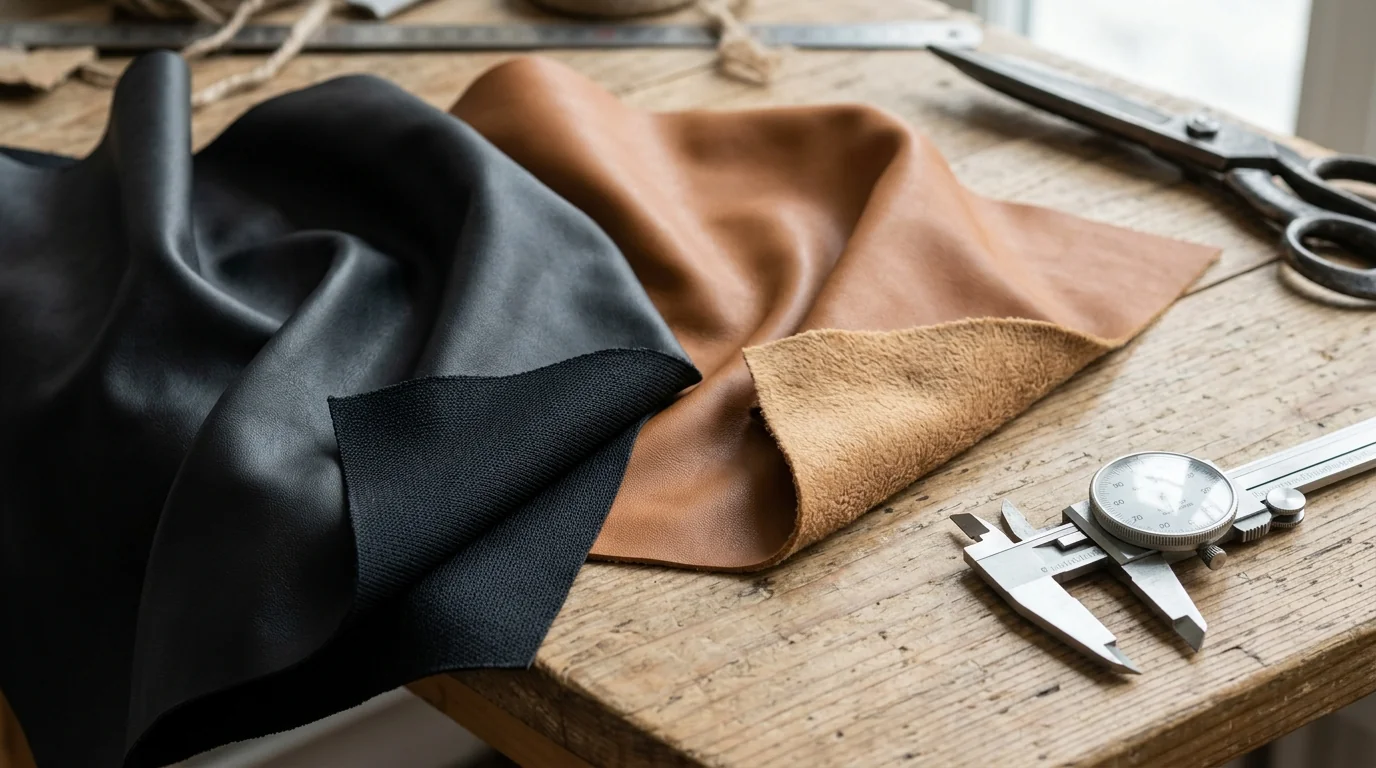
Touch, grip and touchscreen response describe different functions and require separate trials. A matte or suede-like surface does not guarantee wet grip, and a conductive swatch does not establish reliable function through a lined fingertip. Compare relevant microfiber material constructions without assuming that one substrate always gives better friction or wear resistance.
- Surface feel and grip: Evaluate the actual handle or contact surface in relevant dry and damp conditions. Document any requirement for a protective glove under the appropriate product assessment, not as a generic material claim.
- Touchscreen function: Ask how conductivity is supplied and verify performance after agreed wear and conditioning. A rubbing result cannot prove the location or chemistry of a conductive additive.
- Crease recovery: Inspect finger zones after repeated movement and recovery. Distinguish cosmetic marking from coating cracks and permanent dimensional growth.
Pre-Production Quality Check Matrix for Glove Leather Buyers
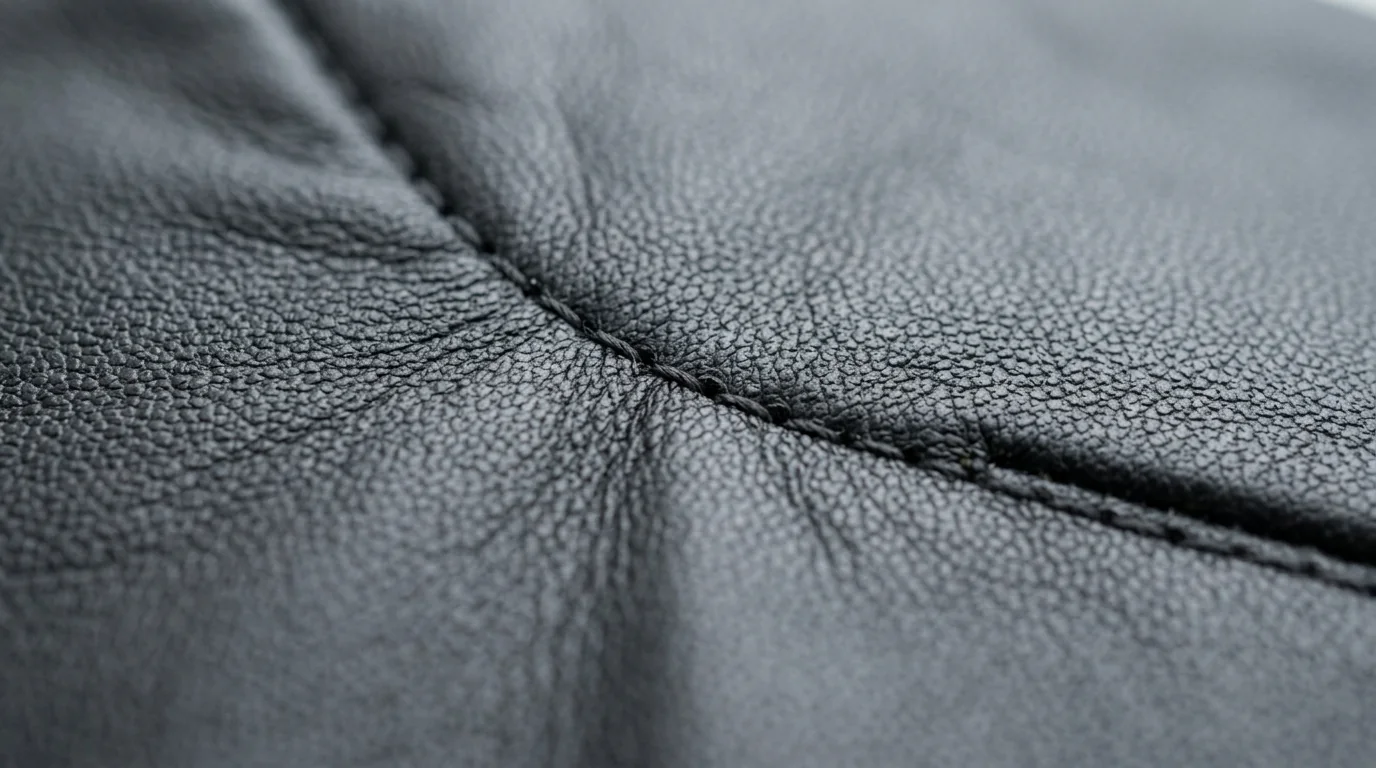
Use the proposed seams and pattern when setting the glove approval plan. ASTM D3107 is not a default recovery method for knitted PU composites, and ISO 13935-2 is not a generic needle-hole damage method for coated materials. Confirm suitable procedures with the laboratory before setting thresholds.
| Inspection parameter | Procedure | Criteria to agree | Approval decision |
|---|---|---|---|
| Thickness uniformity | Suitable method for the composite | Gauge, pressure and permitted variation | Review narrow seams and multiple-ply finger zones. |
| Stretch and recovery | Construction-appropriate method | Direction, loading and recovery interval | Assess dexterity and growth on the finished glove. |
| Seam and stitch-hole behavior | Actual sewing trial and suitable load assessment | Thread, needle, seam allowance and failure mode | Inspect yarn damage and seam opening independently. |
| Cold behavior | Separate applicable cold-flex / cold-crack procedures | Exposure and damage definition | A cold-crack temperature is not a repeated-flex endurance result. |
| Perspiration and rubbing transfer | Methods suitable for the exposed materials | Relevant conditions and buyer ratings | Assess hand-contact surfaces and lining as well as the outer face. |
Sourcing Custom Glove PU Leather with Danhon
Danhon can review glove material requirements alongside available PU artificial leather samples. Provide the glove category, pattern, stretch direction, desired surface and backing expectations so feasible options can be discussed. Confirm any unusual thickness, conductive finish or specialized backing with the supplier before describing it as an available or tested Danhon product.
Frequently Asked Questions (FAQ)
How should a sewing trial investigate thumb-crotch tearing?
Retain failed gloves and inspect pattern strain, seam allowance, thread tension, needle damage and backing direction together. Change one variable at a time; no single needle size or backing prevents every failure.
Can the same glove material approval cover every size?
Check the smallest and largest relevant sizes because panel strain and seam loading can differ. Record any size-specific pattern or reinforcement changes before extending approval.
Does a water-resistant outer swatch establish a waterproof winter glove?
No. Seams, inserts, closures and the full assembly need their own assessment under the intended exposure. Do not make a finished-glove waterproof claim from a coating description alone.
What should a touchscreen acceptance record contain?
List devices, operating conditions, lining, fingertip construction and the wear or cleaning sequence before rechecking function. Agree an observable pass criterion instead of assuming a fixed rubbing count represents a winter of use.
Request Glove PU Leather Swatches and Custom Specification Support
Evaluating glove leather material requires testing hand-feel suppleness, directional trank stretch, and seam strength on physical swatches before bulk production. Contact Danhon for Glove PU Leather Swatches & Color Cards to review customized thicknesses, backing fabrics, and surface finishes for your upcoming glove collection.