Quick Answer
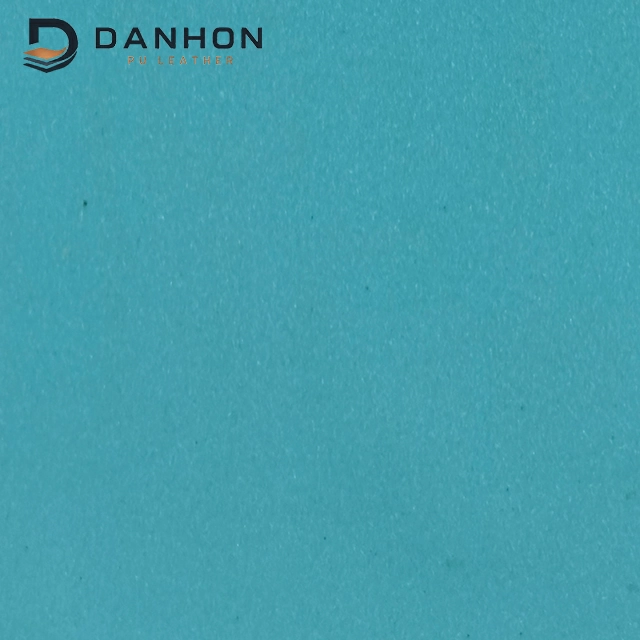
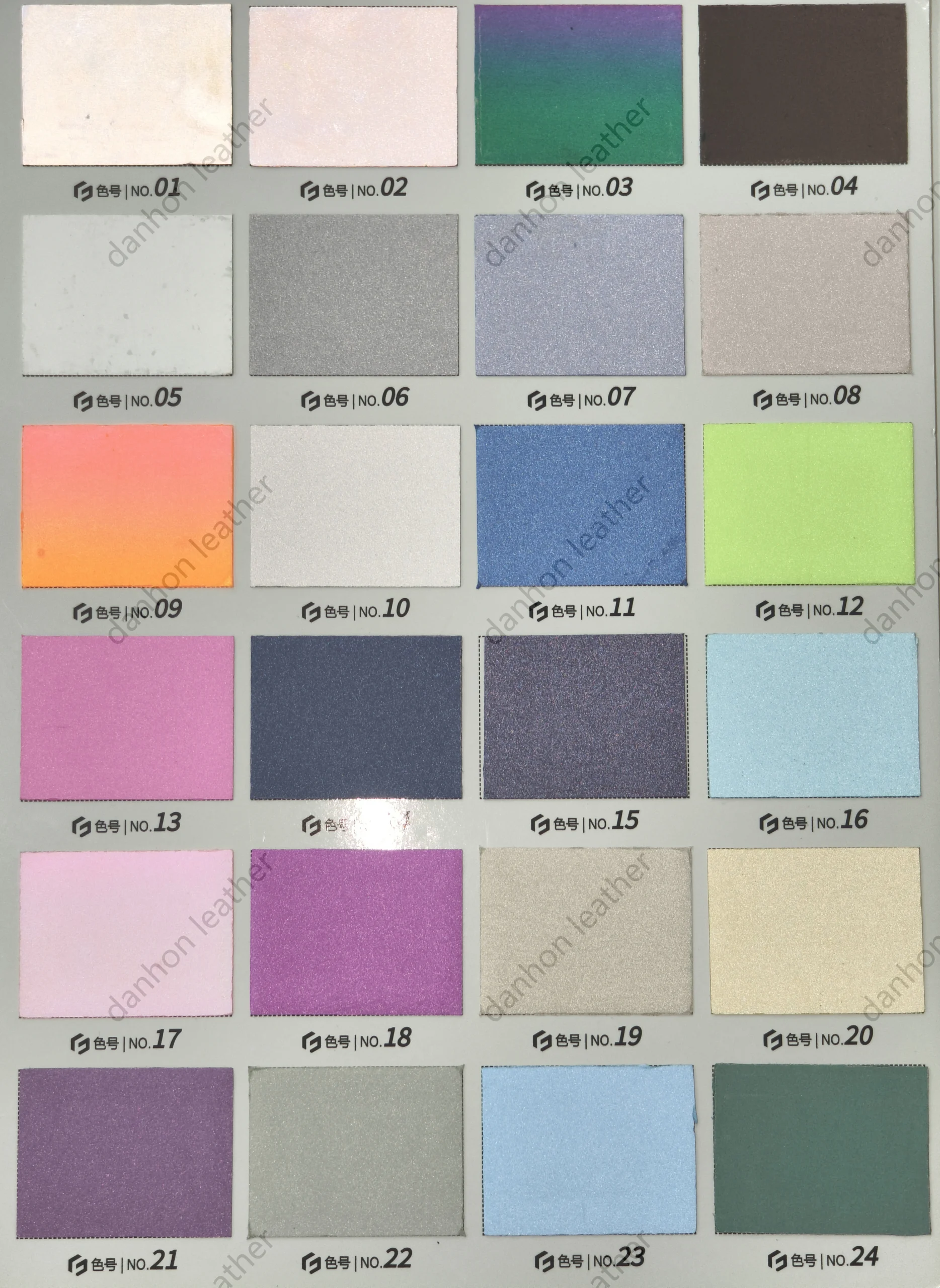
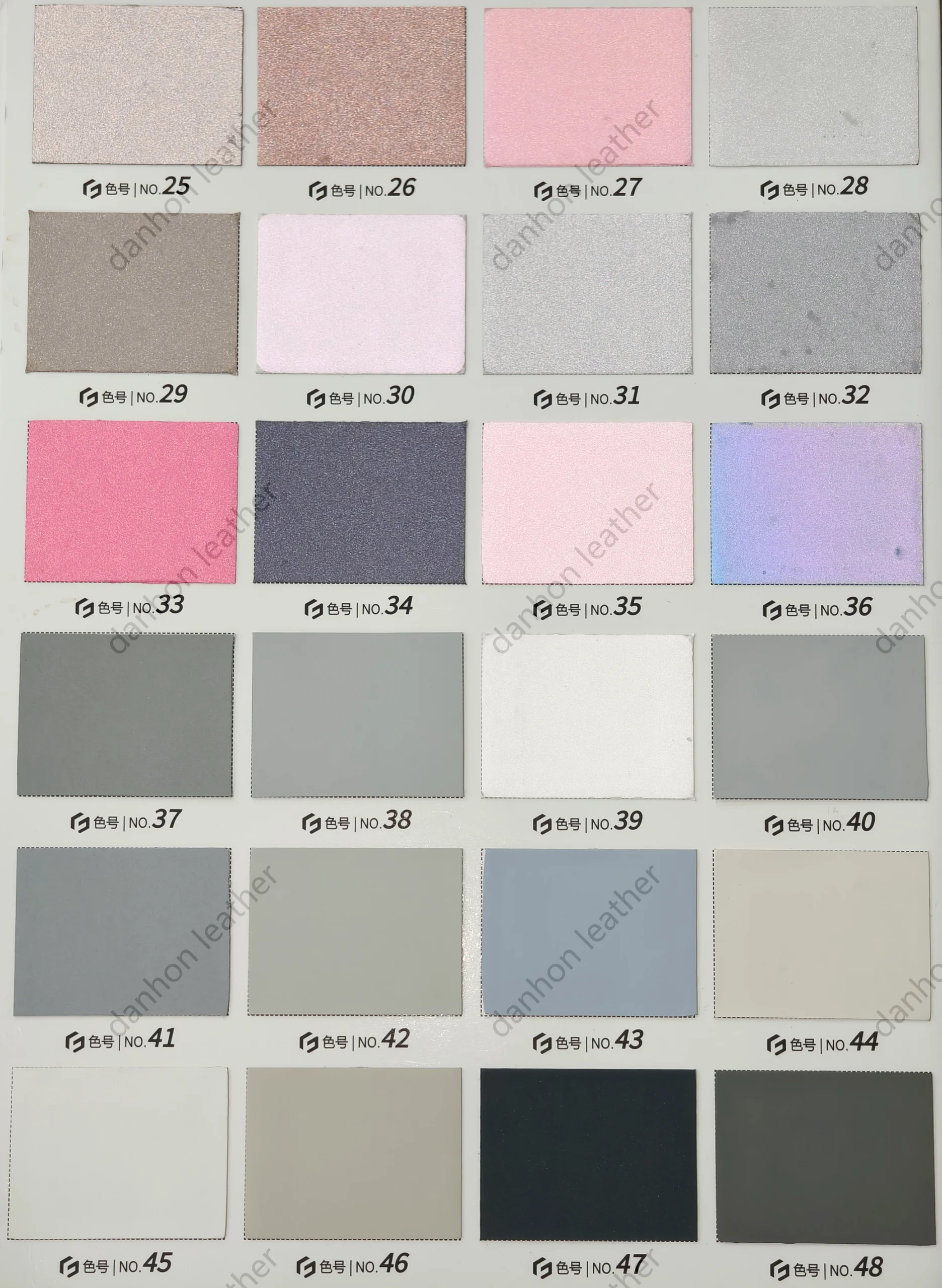
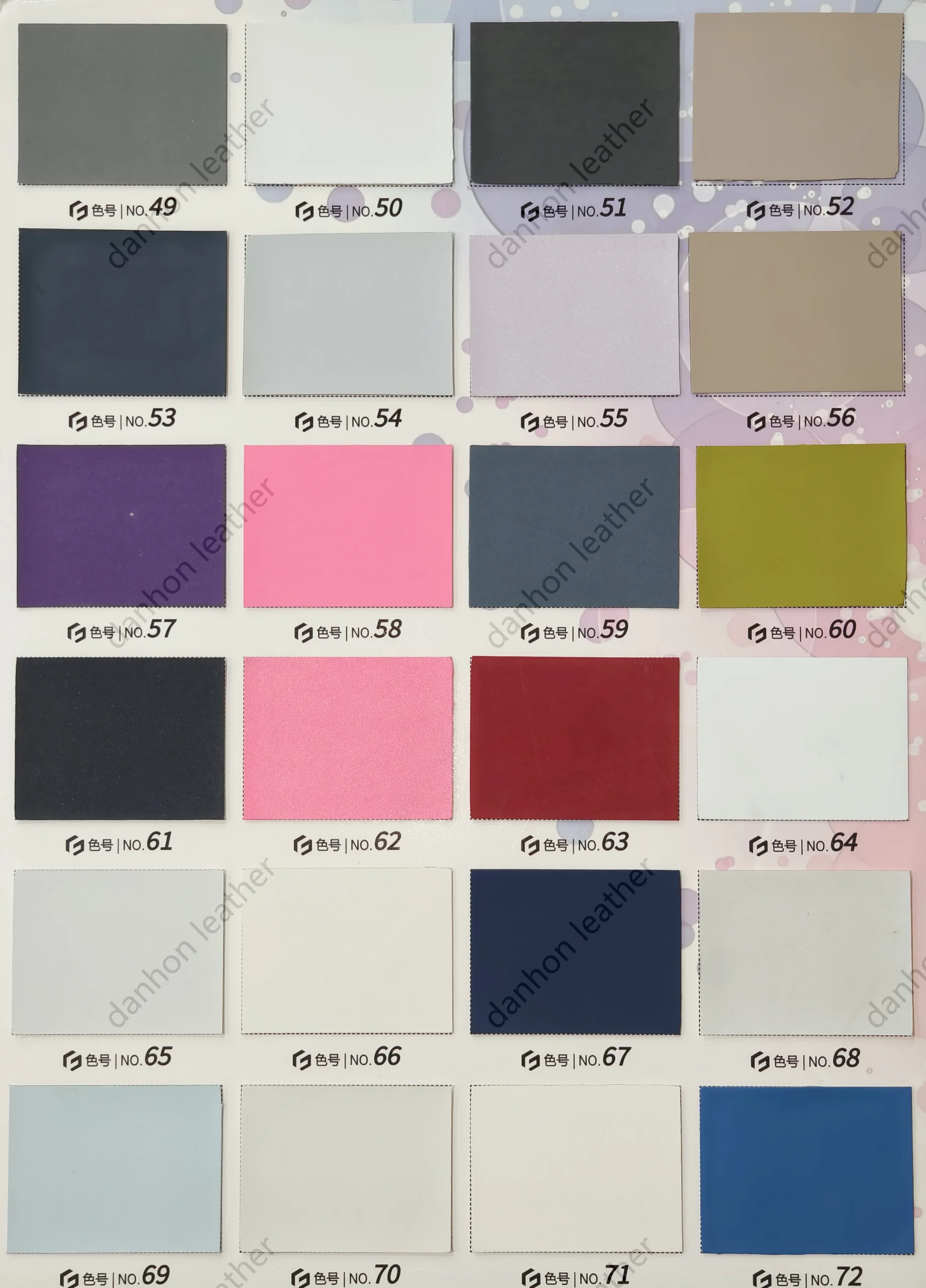
Danhon Smooth Surface Satin TPU Leather Material is a TPU-based material series distinguished by a visually clean, low-texture surface and a soft satin-like reflection. The photographed sample appears turquoise blue, while the accompanying No.01-144 color cards include solid shades together with several visually pearlescent or color-shifting effects. Thickness, backing and final construction remain project-specific and should be confirmed through physical samples.
Material Overview
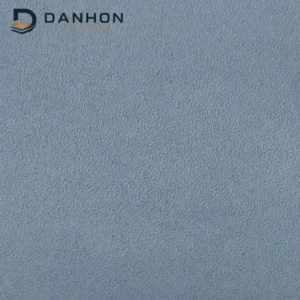
This Danhon TPU material presents a cleaner and flatter visual character than a pronounced leather-grain surface. The close-up sample shows a turquoise blue tone across a very fine, uniform surface, with light reflecting more softly than on a high-gloss finish.
This makes surface cleanliness and finish character the main visual identity of the series rather than a defined pebble, litchi or embossed grain.
The material belongs to Danhon’s TPU Leather & TPU-Based Materials range. TPU projects may involve different coated, laminated or textile-supported constructions, so appearance alone does not confirm the internal structure, backing, thickness or physical behavior.
For purchasing and development, the surface direction can therefore be selected first, followed by confirmation of the complete TPU construction required by the finished product.
Surface and Color Options
The supplied main image shows a surface that appears comparatively smooth and visually uniform, with only very subtle micro-level texture. Its reflection is controlled rather than mirror-like, giving the sample a satin or soft-lustre visual appearance.
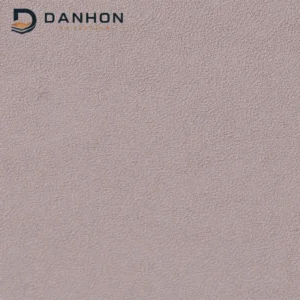
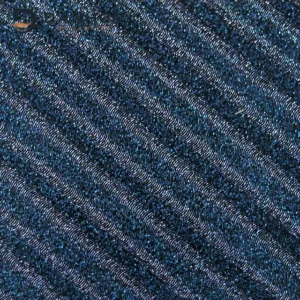
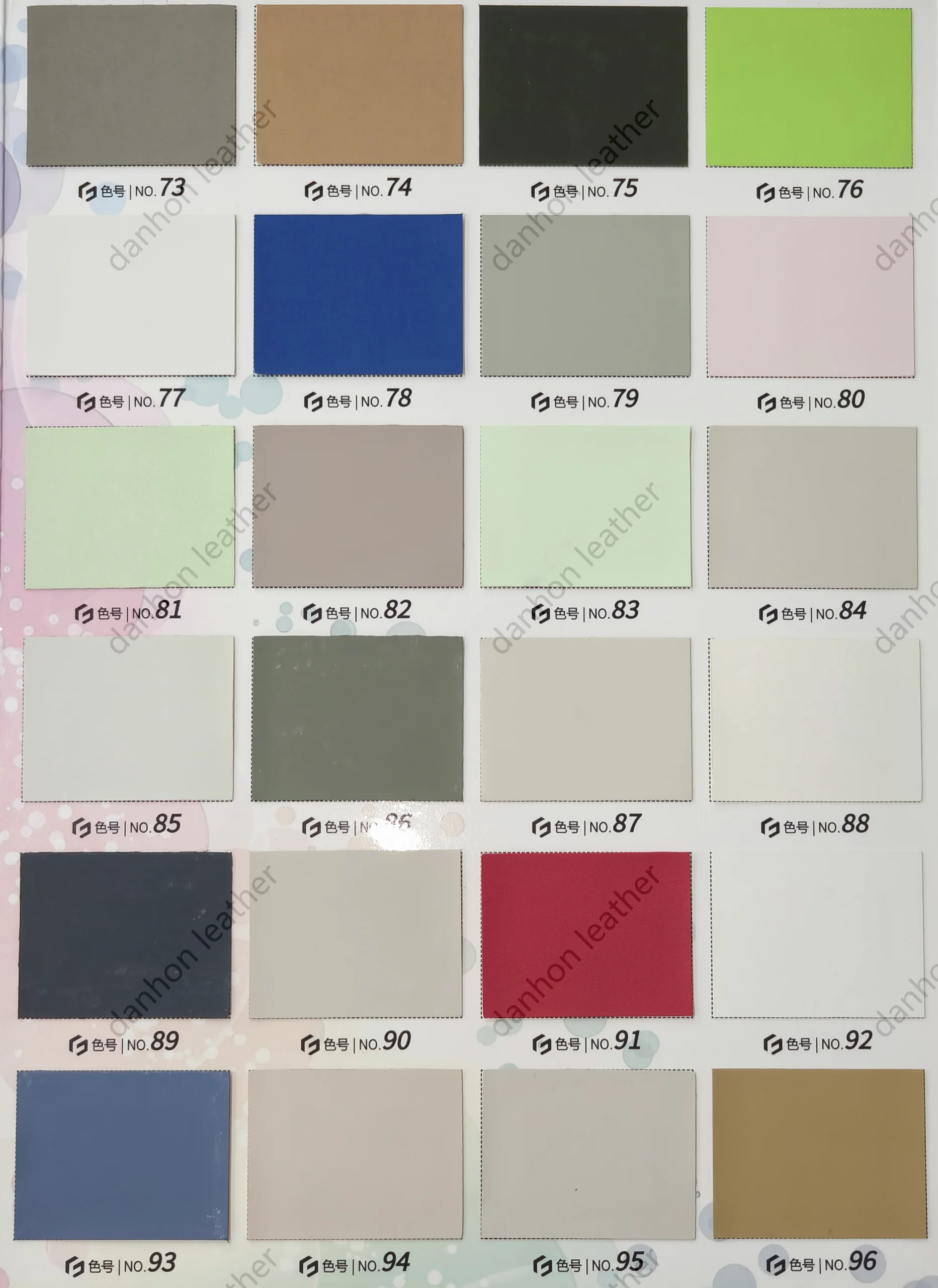
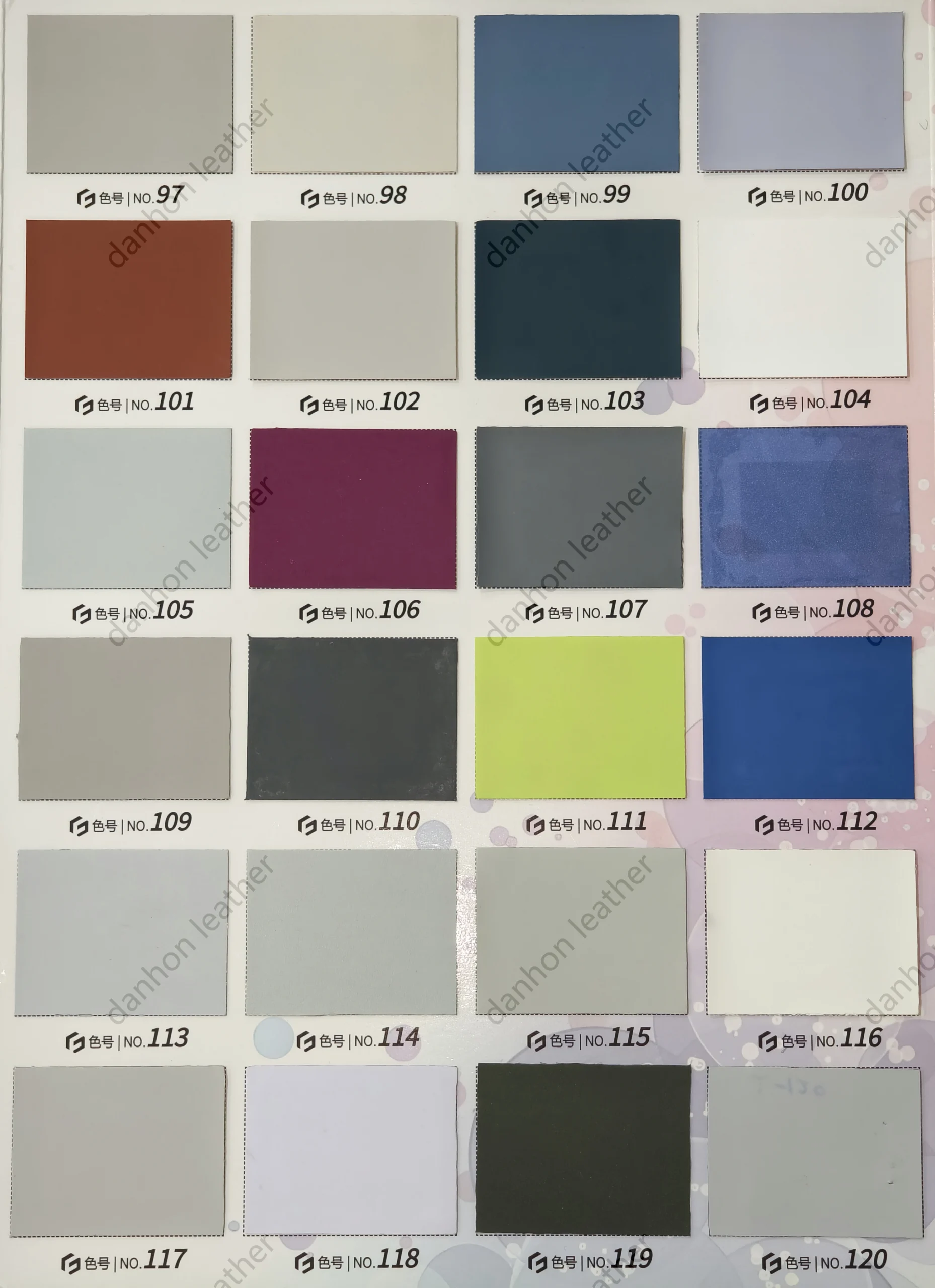
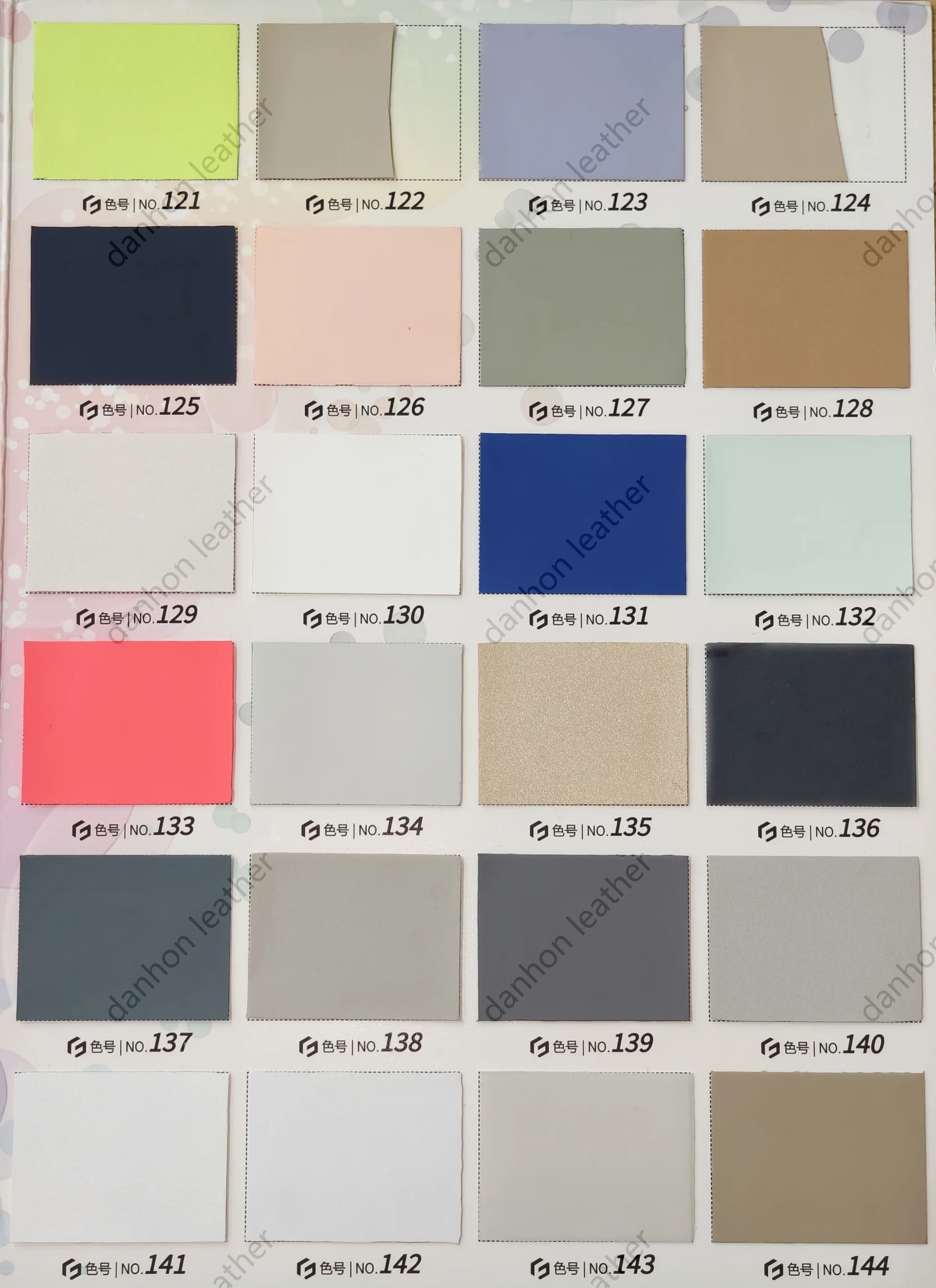
The supplied color-card set covers No.01 to No.144. In addition to conventional solid shades, several swatches visibly show pearlescent-looking reflection, metallic-looking effects, multi-tone or angle-dependent appearance and bright color directions.
These observations describe only what is visible on the provided cards. They do not mean every color reference uses the same special-effect finishing process.
For bulk production, a physical swatch should be approved because satin, pearlescent and color-shifting appearances can vary substantially depending on lighting and viewing angle.
Current Product Information
| Current Product Fact | Information |
|---|---|
| Material | TPU |
| Surface Grain | Smooth Surface |
| Visible Texture | Very Fine / Uniform Surface |
| Surface Finish | Satin Appearance |
| Visible Sample Color | Turquoise Blue |
| Color Options | See Color Card – No.01 to No.144 |
Current data limitation: Exact thickness, backing, TPU construction, handfeel, processing method, application and physical performance cannot be confirmed from the supplied images and are therefore not stated as current product specifications.
Typical TPU Material Specifications
The information below is a category-level reference rather than the specification of the photographed material.
TPU leather and TPU-based materials can use substantially different constructions. For many lightweight film, coating or composite directions, thicknesses around 0.3-0.8 mm are commonly encountered. Different substrate, coating or laminated structures may fall outside this range.
| Item | Reference |
|---|---|
| Material Category | TPU / TPU-Based Synthetic Material |
| Typical Lightweight Thickness Direction | Approx. 0.3-0.8 mm |
| Standard Danhon Width | 54″ / 137 cm |
| Typical Roll Format | Around 50 yards per roll |
| Actual Construction | Confirm according to project |
The current photographed material should not be treated as a 0.3-0.8 mm product until the actual thickness has been measured or confirmed.
Backing and Surface Customization
For a smooth-surface TPU project, backing selection should be reviewed together with the required processing method rather than being chosen from appearance alone. Common textile directions that may be discussed include polyester knitted fabric, polyester fabric, nylon fabric and woven fabric.
Where the finished product requires a more specialized composite structure, stretch or spandex textile, mesh substrate, high-tenacity nylon or application-specific laminated textile can also be evaluated.
Surface development can be discussed around smooth surfaces, fine grains, subtle embossed textures or custom surface effects. These are development possibilities and should not be interpreted as additional specifications already present in the current sample.
Custom Color and Surface-Effect Development
For conventional custom color development, buyers should provide both a Pantone color reference and a physical color swatch or reference sample.
When a pearlescent, metallic-looking or color-shifting appearance is required, a physical reference becomes particularly important because a Pantone number alone cannot fully describe reflection intensity, viewing-angle color change, surface shimmer or the relationship between the base color and effect layer.
No Pantone number or special-effect production process has been inferred from the supplied images.
Performance Testing Options
Testing for a TPU material project should follow the final construction and intended application. Relevant evaluation may include tensile strength, elongation, peel strength, tear strength, flex resistance and abrasion resistance.
If additional functional requirements apply to the finished product, yellowing resistance, hydrolysis resistance or cold resistance can also be discussed where relevant.
The selection of test items should be project-specific, and no performance result is currently claimed for the photographed material.
REACH and Project Testing
REACH testing can be arranged according to project requirements and destination-market needs. The applicable test scope should be determined after confirming the final material construction, finished-product application, target market and customer specification.
Additional chemical or market-specific testing requirements can also be discussed with Danhon. Testing support does not mean that the current material is automatically REACH Certified or REACH Compliant.
Material Selection and Series Differentiation
This product represents a different visible material direction from Danhon’s existing Fine Texture Matte TPU Leather Material. The existing series has a more apparent micro-textured matte surface, while this sample presents a smoother visual field with a softer satin-type reflection.
| TPU Series | Main Visual Direction |
|---|---|
| Fine Texture Matte TPU | More visible micro-texture with matte appearance |
| Smooth Surface Satin TPU | Cleaner smooth surface with softer satin reflection |
This comparison is based only on observable surface differences. Final material selection should still consider actual thickness, backing, TPU structure, processing method, application and required testing.
Supply and Commercial Information
| Commercial Item | Danhon Supply Reference |
|---|---|
| Standard Width | 54″ / 137 cm |
| Typical Roll Length | Around 50 yards per roll |
| Quotation Unit | Per Yard |
| Standard MOQ | 300 yards |
| Sample Preparation | Typically 3-5 days |
| Bulk Production | Typically 10-12 days after specification confirmation |
Pricing is quoted per yard after the selected color, surface effect, construction, backing, quantity and customization requirements are reviewed. Standard MOQ starts from 300 yards. Special-effect colors, special backing structures or custom TPU developments may require separate quantity confirmation.
Sample and bulk-production timing are planning references rather than unconditional delivery guarantees and may change according to material development, color matching, testing and production requirements.
FAQ
Is this the same TPU material as Danhon’s Fine Texture Matte TPU Leather?
No. The previously published TPU series has a more visible fine micro-texture and matte appearance. This series is being separated because the supplied sample visually shows a smoother, more uniform surface with a softer satin-type reflection. Actual construction should still be confirmed from physical material specifications.
Does the color card include pearlescent or color-shifting TPU options?
Several supplied swatches visibly show pearlescent-looking, metallic-looking or multi-tone effects, while many other references appear as conventional solid colors. Because these effects can change under different lighting and viewing angles, buyers should confirm the selected reference from a physical swatch.
Can I request a solid custom color instead of a special-effect color?
Yes. Buyers may select an existing color-card reference or request custom color development. For custom matching, provide both a Pantone reference and a physical color sample whenever possible.
What information should I provide before requesting a TPU sample?
It is helpful to provide the finished-product application, preferred surface appearance, target thickness if known, backing or structure requirements, color reference, estimated yardage and any required performance or market testing. Danhon can then review the appropriate TPU material direction.
What testing can be discussed for a TPU project?
Depending on the final construction and application, relevant testing may include tensile strength, elongation, peel strength, tear strength, flex resistance and abrasion resistance. Hydrolysis, yellowing or cold resistance can also be discussed where the project requires them. REACH testing can be arranged according to target-market requirements.
How is this TPU material supplied and quoted?
Danhon’s standard width is 54″ / 137 cm, finished material is commonly supplied in rolls of around 50 yards, and pricing is quoted per yard. Standard MOQ starts from 300 yards. Sampling typically takes 3-5 days and bulk production typically takes 10-12 days after specifications are confirmed.
Compare a Smooth TPU Sample or Select a Color
Send Danhon your preferred color-card number, finished-product application, target material structure and estimated order quantity. For a custom solid shade, provide a Pantone reference together with a physical swatch.
For pearlescent, metallic-looking or angle-dependent surface effects, sending the actual reference material is strongly recommended so both the base color and visible effect can be evaluated during sampling.
Contact Danhon to discuss your TPU material, surface, color and testing requirements.