Quick Answer
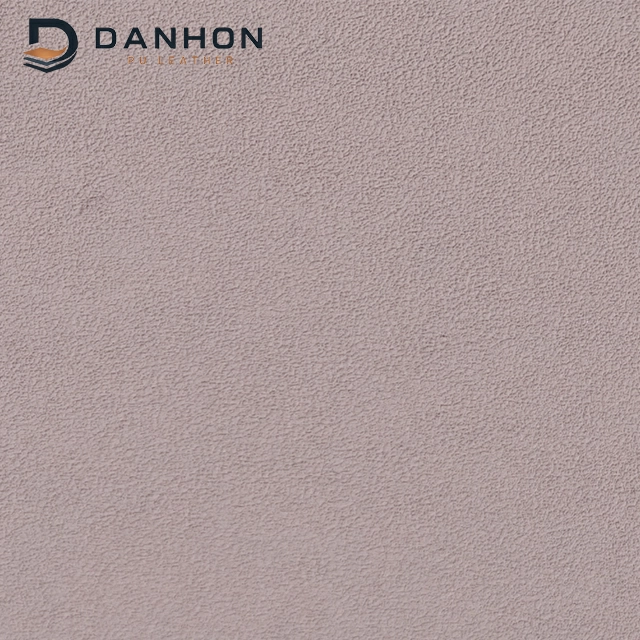
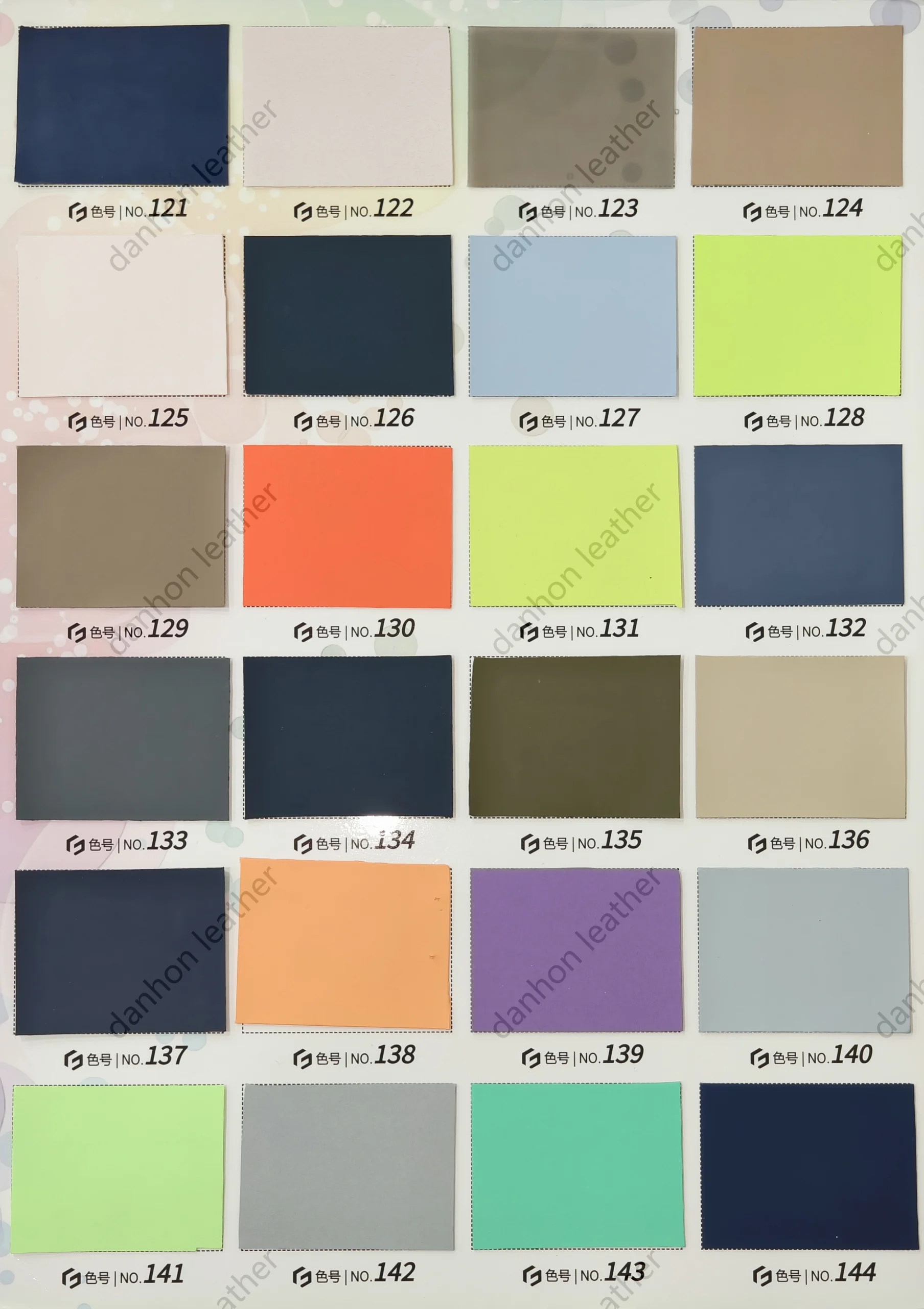
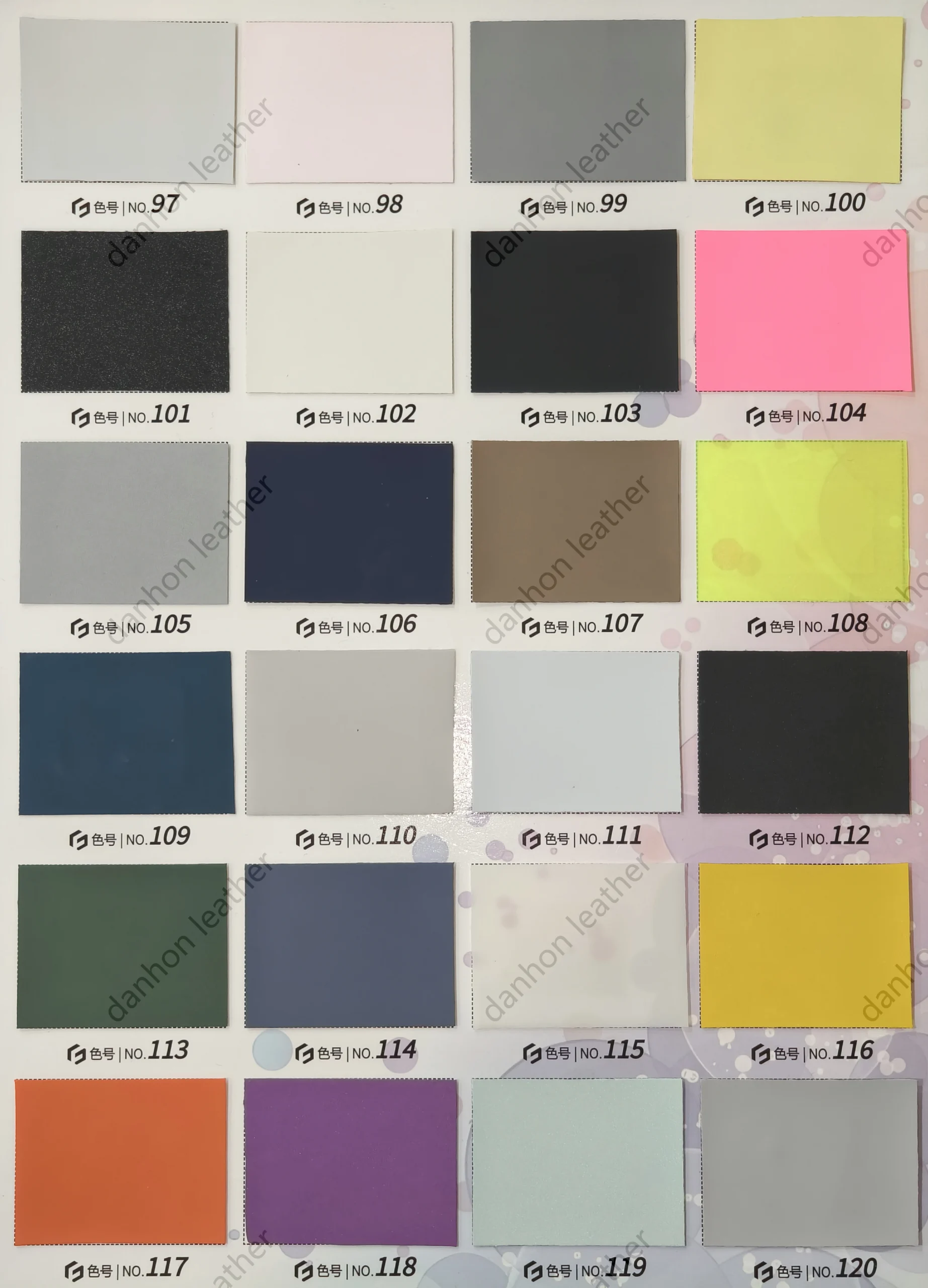
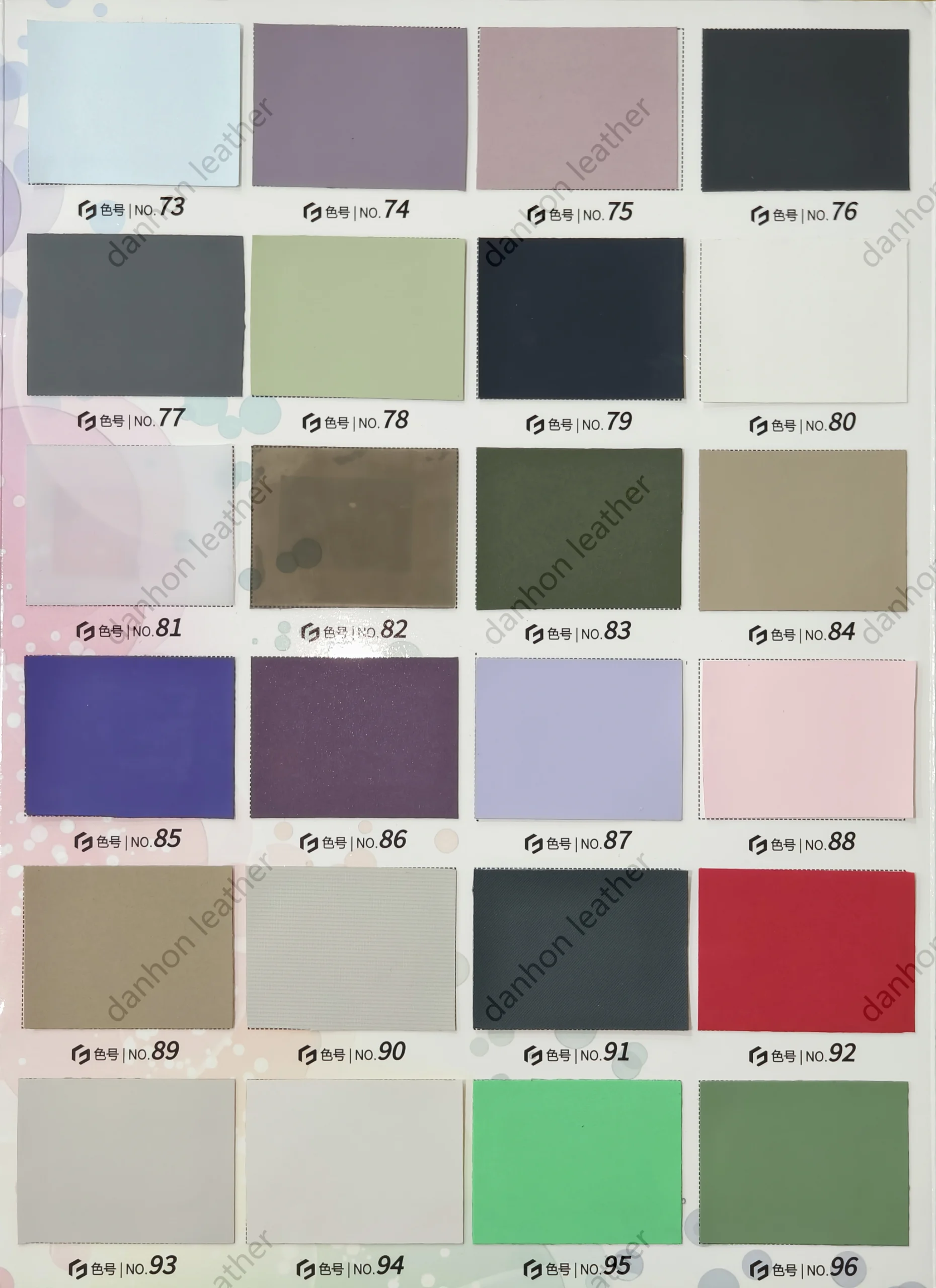
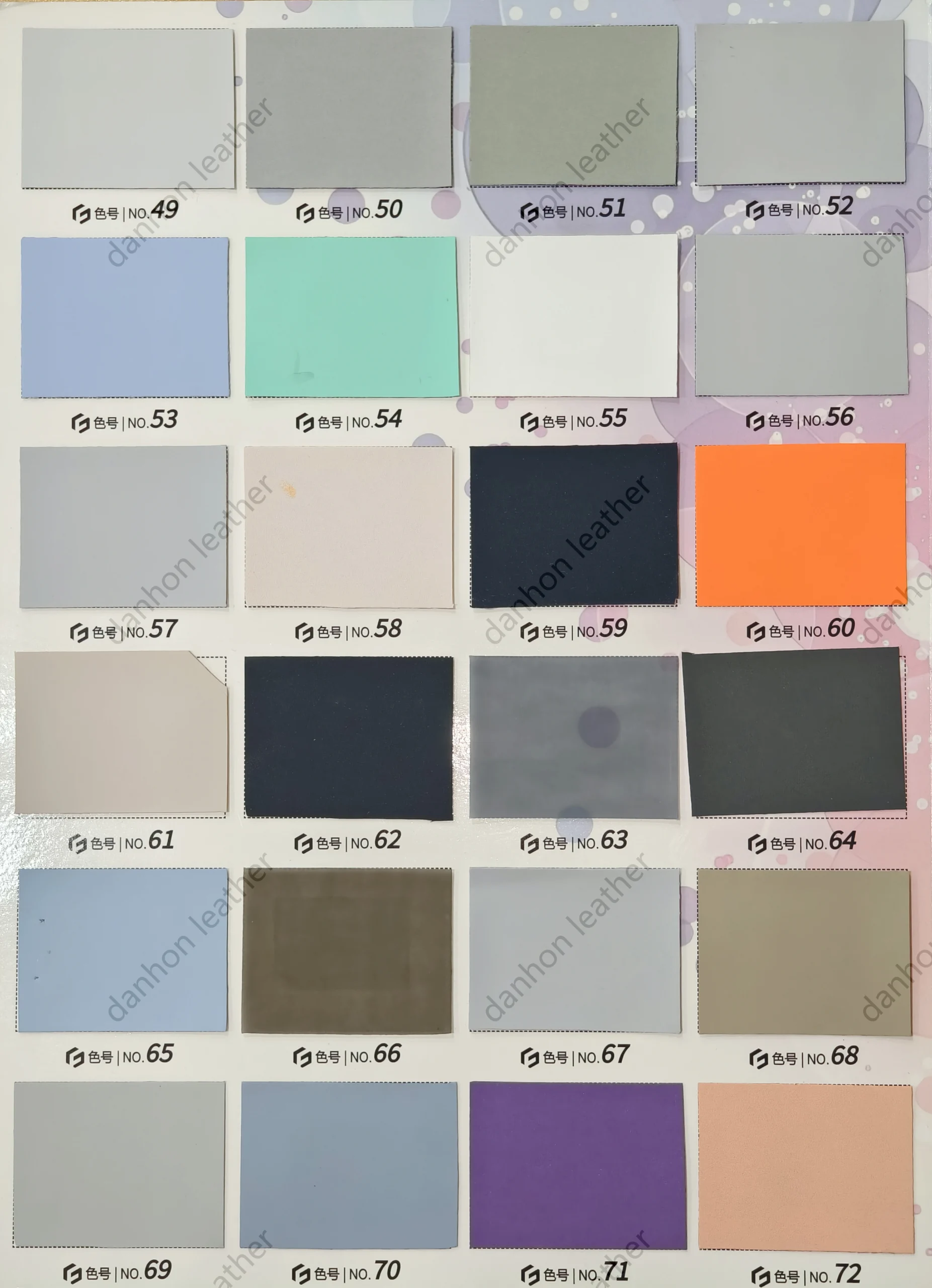
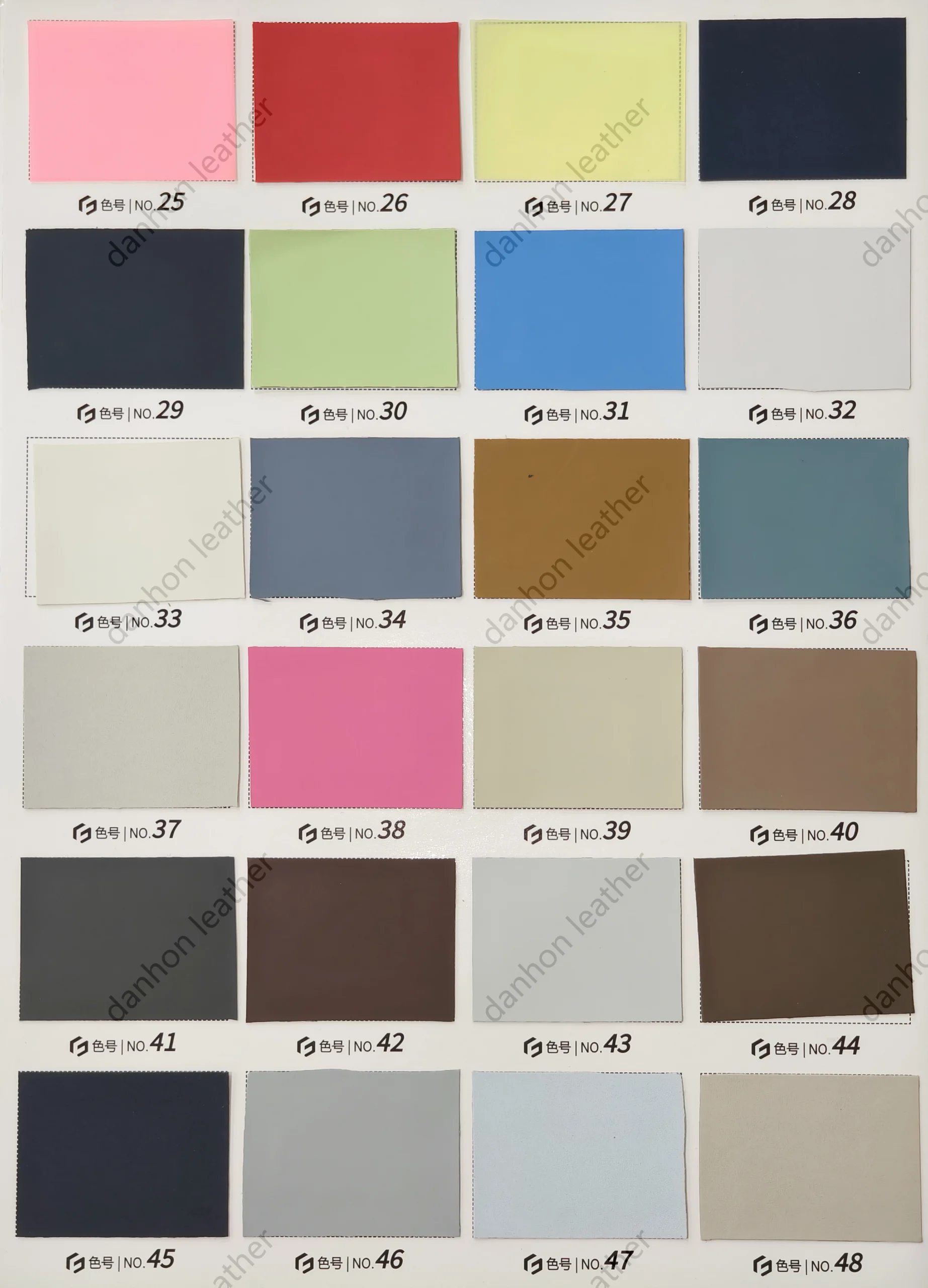
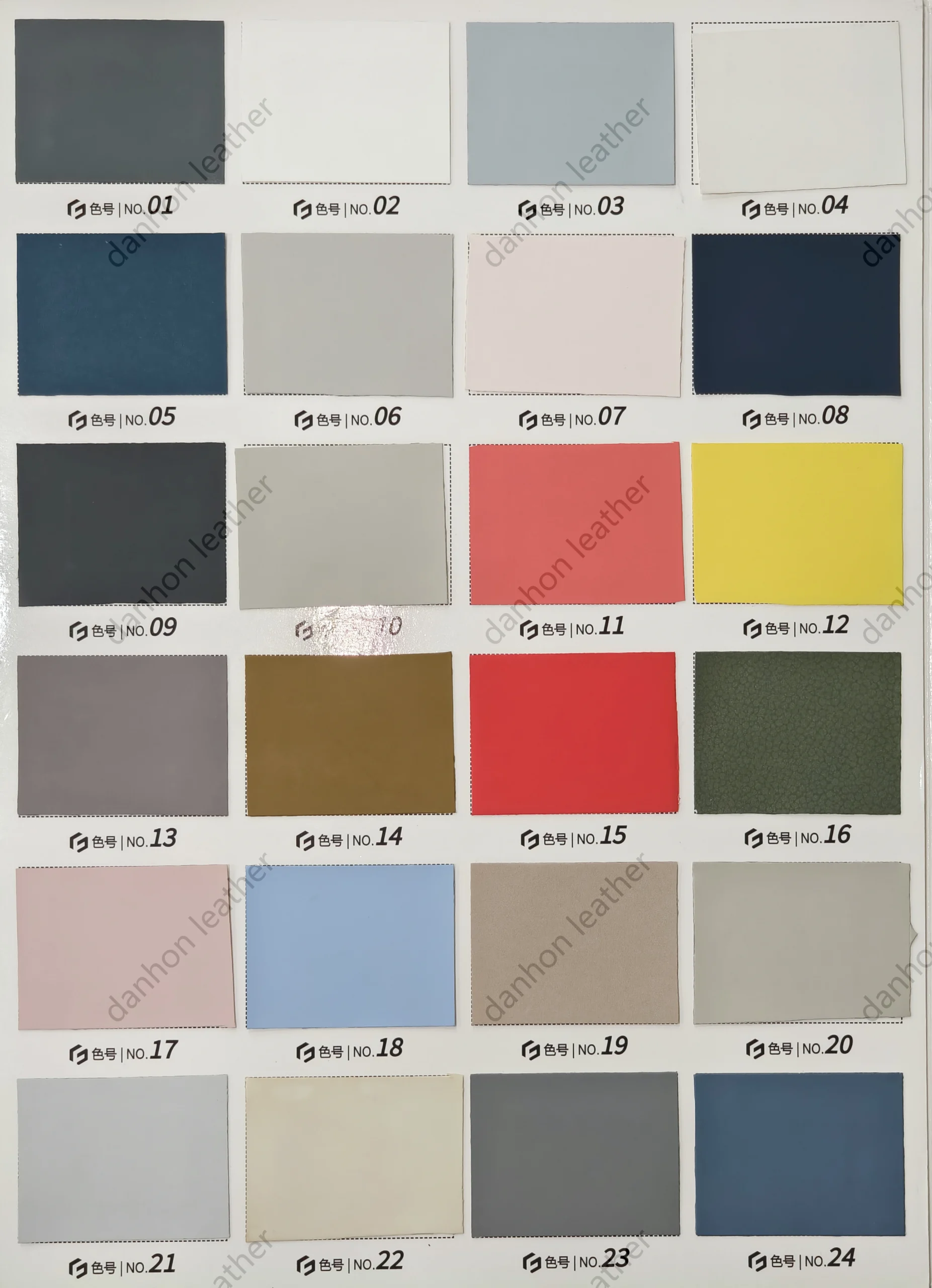
Danhon Micro Crepe Texture TPU Leather Material is visually distinguished by a dense, irregular micro-textured surface with fine crepe-like ridges rather than a smooth, satin or directional nubuck appearance. The photographed sample appears dusty rose to pale mauve pink. The supplied reference cards show No.01-144, although several swatches visibly differ in surface texture, so matching color and surface construction should be confirmed through physical samples before production.
Material Overview
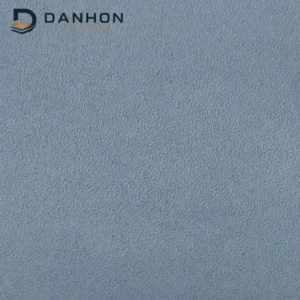
This TPU material is characterized by a fine crepe-like surface pattern made up of dense, short and irregular micro ridges. The visual structure is more broken and granular than a conventional smooth TPU surface, but it does not form the larger rounded cells normally associated with pebble or litchi grain.
Under the photographed lighting, the surface produces limited reflection, allowing the micro texture itself to remain visually dominant. The main sample is shown in a muted dusty rose / pale mauve pink direction.
Because only the front surface is supplied, it is not possible to determine whether this appearance comes from embossing, coating structure, release-paper texture, mechanical finishing or another process. The description therefore remains based on observable surface appearance only.
This material belongs to Danhon’s TPU Leather & TPU-Based Materials category, where final construction, backing, surface effect and project requirements should be reviewed together before material confirmation.
Micro Crepe Surface Character
The main visual difference of this series is the way the surface breaks up into thousands of small irregular ridges. The pattern appears fine in scale, non-geometric, densely distributed and slightly broken rather than uniformly embossed.
Compared with earlier smooth, satin or nubuck-effect TPU directions, this material has a more recognizable crepe-like or fine wrinkle visual character. These terms describe only the visible appearance and do not confirm a particular production method.
Color and Reference Card Selection
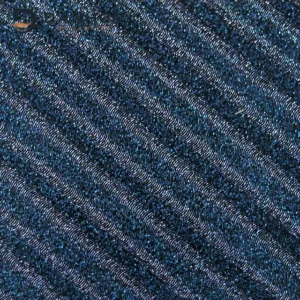
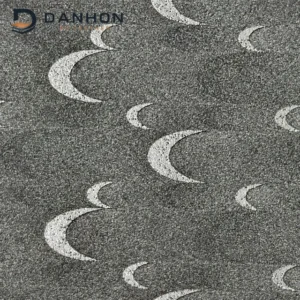
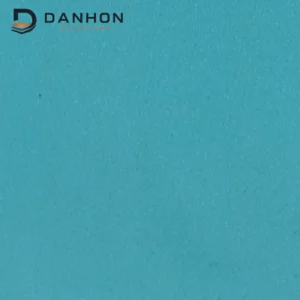
The supplied reference cards contain numbered samples from No.01 to No.144. However, not every numbered swatch appears to have exactly the same surface texture. Several references visibly show smoother surfaces, stronger grain, pebble-type patterns, textile-like directional textures or different levels of reflection.
For this reason, the card should be used as a material and color reference set rather than assuming that all No.01-144 references automatically belong to the exact same Micro Crepe construction.
Recommended confirmation: Select the preferred color reference first, then confirm whether the same color is available or can be developed with the required Micro Crepe surface through a physical sample.
Current Product Information
| Current Product Fact | Information |
|---|---|
| Material | TPU |
| Surface Style | Micro Crepe Texture |
| Visible Pattern | Dense Irregular Micro-Ridge / Fine Wrinkle Appearance |
| Surface Appearance | Low-Sheen / Matte-Looking |
| Visible Sample Color | Dusty Rose / Pale Mauve Pink |
| Reference Card | No.01-144 shown |
| Same-Surface Color Availability | Physical confirmation required |
Current data limitation: Exact thickness, backing, TPU construction, manufacturing process, softness, handfeel, performance and finished application cannot be confirmed from the supplied images and are therefore not stated as current product specifications.
Typical TPU Material Specifications
The following information is a category-level TPU reference rather than the confirmed specification of the current sample.
TPU materials can use different film, coated, laminated and textile-supported constructions. For many lightweight TPU film, coated or composite structures, approximately 0.3-0.8 mm is a commonly used reference range. Different backing structures, laminations and functional constructions may fall outside this range.
| Item | Typical / Standard Reference |
|---|---|
| Material Direction | TPU / TPU-Based Synthetic Material |
| Typical Lightweight Thickness Reference | Approx. 0.3-0.8 mm |
| Standard Width | 54″ / 137 cm |
| Typical Roll Length | Around 50 yards per roll |
| Current Sample Thickness | Not confirmed |
| Final Structure | Confirm according to project |
Backing and Structure Development
The visible crepe texture does not reveal the backing material. Depending on the final TPU construction, common textile directions that can be discussed include polyester fabric, polyester knitted fabric, nylon fabric and woven fabric.
For projects requiring a different composite construction, stretch or spandex fabric, high-tenacity nylon, mesh fabric and application-specific laminated textiles may also be evaluated.
These are development possibilities rather than specifications of the photographed sample.
Texture Development
If a buyer wants to develop a material based on this visual direction, the discussion can focus on the scale and density of the micro texture rather than simply requesting matte TPU.
Possible directions include a finer micro-crepe texture, more pronounced irregular ridges, shallower wrinkle appearance, more uniform fine texture or custom reference-pattern matching.
A physical surface reference is particularly useful because two materials described as fine textured can still look significantly different when the ridge scale and pattern distribution change.
Custom Color Development
For custom color development, buyers should provide both a Pantone color reference and a physical color swatch or reference material whenever possible.
On a fine textured surface, small ridges can alter how light and shadow affect the perceived shade. A Pantone reference communicates the basic target color, while a physical reference helps evaluate the combination of color and surface appearance.
No Pantone number has been estimated from the supplied photographs.
Performance Testing Options
Testing should be selected after the TPU construction and finished application are confirmed. Depending on the project, relevant physical testing may include tensile strength, elongation, peel strength, tear strength, flex resistance and abrasion resistance.
Hydrolysis resistance, yellowing resistance, cold resistance or color fastness can also be discussed when relevant to the finished product.
These are testing options and do not mean that the photographed material has already passed these tests.
REACH and Project Testing
REACH testing can be arranged according to project and destination-market requirements. The applicable test scope should be determined according to the final TPU construction, finished application, target market and customer specification.
Other chemical or regulatory requirements can also be discussed where necessary. The current material should not automatically be described as REACH Certified, REACH Compliant, eco-friendly, sustainable or non-toxic without supporting documentation.
Material Selection and TPU Series Positioning
This Micro Crepe Texture TPU represents a different surface direction from Danhon’s existing fine-textured matte, smooth-surface satin and nubuck-effect TPU material directions.
| TPU Direction | Main Surface Identity |
|---|---|
| Fine Texture Matte TPU | General fine micro-textured matte surface |
| Smooth Surface Satin TPU | Flat clean surface with satin reflection |
| Micro Nubuck-Effect TPU | Directional nap-like nubuck visual |
| Micro Crepe Texture TPU | Dense irregular micro-ridge and fine wrinkle appearance |
No application is assigned automatically to the current product. Final suitability should be reviewed according to the target thickness, backing structure, processing method, finished product and required testing.
Supply and Commercial Information
| Commercial Item | Danhon Reference |
|---|---|
| Standard Width | 54″ / 137 cm |
| Typical Roll Length | Around 50 yards per roll |
| Quotation Unit | Per Yard |
| Standard MOQ | 300 yards |
| Sample Preparation | Typically 3-5 days |
| Bulk Production | Typically 10-12 days after specification confirmation |
Pricing is quoted per yard according to the selected material construction, surface pattern, color, backing, quantity and development requirements.
Standard MOQ starts from 300 yards. Custom surface development, special backing or special color requirements may require separate quantity confirmation.
Actual sample and production timing depends on sample matching, color, construction, testing and order requirements and should not be interpreted as a guaranteed delivery date.
FAQ
What is different about a Micro Crepe TPU surface?
The visible surface contains dense, irregular micro ridges rather than a flat smooth finish or directional nubuck-style texture. Micro Crepe describes the visible texture of the supplied sample; the exact manufacturing method has not been confirmed.
Is this the same product as Danhon Fine Texture Matte TPU?
No. The earlier Fine Texture Matte TPU uses a broader fine-texture positioning, while this sample shows a more recognizable irregular micro-ridge or crepe-like pattern. For product and SEO purposes, the two should remain separate material series.
Are all No.01-144 references available in exactly the same Micro Crepe surface?
This cannot be confirmed from the supplied photographs. Several swatches visibly show different surface patterns or finishes. Buyers should select the preferred color reference first and then confirm whether that color can be supplied or developed with the required Micro Crepe surface.
Can Danhon match a custom color on this texture?
Custom color development can be discussed. Buyers should provide a Pantone reference together with a physical swatch whenever possible. For a textured surface, the physical sample is useful because the surface relief can affect the perceived color.
What TPU tests can be arranged for a project?
Depending on the final construction and application, relevant tests may include tensile strength, elongation, peel strength, tear strength, abrasion resistance and flex resistance. Hydrolysis, yellowing, cold resistance or color fastness may also be discussed where required. These are testing options and not current product test results.
What should I provide when requesting this material?
Provide the preferred surface reference, color-card number or Pantone target, intended product application, target thickness if known, backing requirements, estimated quantity and any testing requirements. This allows the full TPU construction to be reviewed before sampling.
Match a Micro Crepe TPU Surface
If this surface direction is close to your target, send Danhon the preferred color reference together with your finished-product application and estimated yardage.
For a custom texture or shade, a physical reference material plus Pantone number is recommended so the surface scale and color can be evaluated together rather than separately.
Contact Danhon for TPU material development and include your target thickness, backing requirement and testing needs when available.