Quick Answer
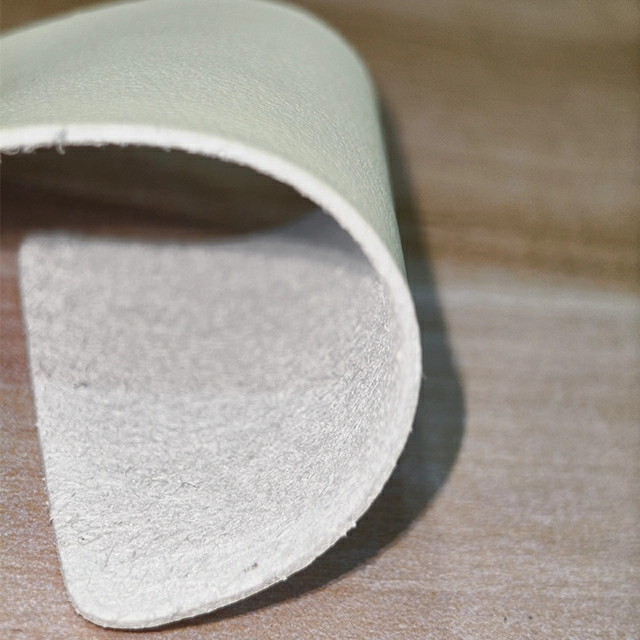
Danhon Fine Grain Microfiber Leather Material features an ivory to light warm-grey fine grain front surface with a visible fibrous reverse side. The supplied thickness image shows the material edge and bending form, but the exact thickness is not confirmed from the photo. This series is suitable for microfiber leather sourcing discussions where buyers need to compare surface grain, base structure, color selection and project-specific testing before sampling.
Material Overview
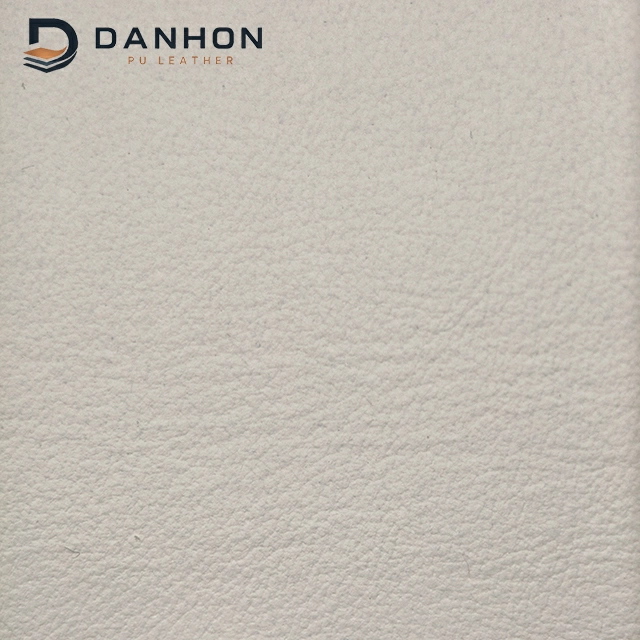
This Danhon microfiber leather material is defined by a clean fine grain surface on the front side and a fibrous reverse side visible from the back image.
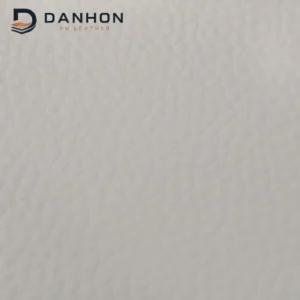
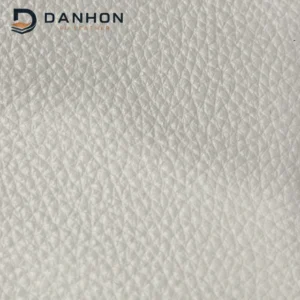
The front surface appears ivory to light warm grey, with a subtle leather-like grain rather than a smooth film, suede nap or decorative printed pattern. The finish appears low-sheen, making the grain and surface texture more important than strong gloss or reflective effect.
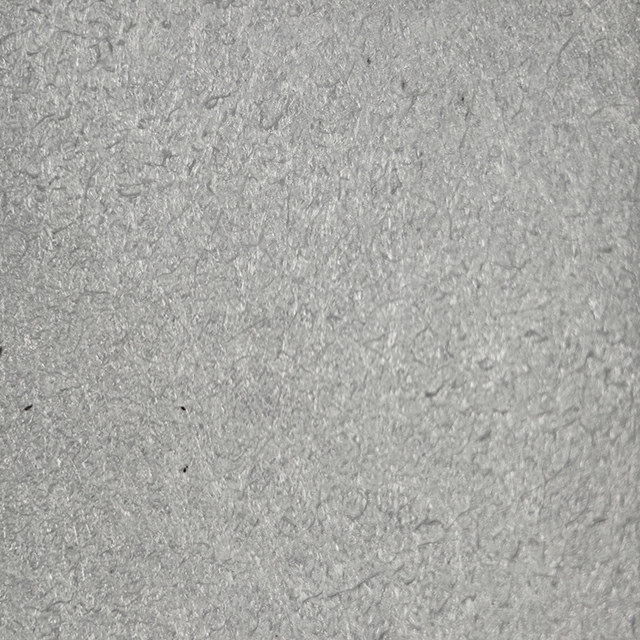
The reverse side shows a light grey fibrous structure. Because the material has been identified as microfiber leather, this backing view can be described as a microfiber-style fibrous reverse side. However, the exact internal construction, density, impregnation method and base composition are not confirmed from the image alone.
The side image shows that the material can be bent and that a visible cross-section exists, but there is no scale reference or measured value, so the current product should not be assigned an exact thickness.
Front, Back and Thickness Observation
The front image shows an ivory / light warm-grey color with fine leather-like grain and a low-sheen appearance. It does not show a large pebble grain, decorative motif or high-gloss surface.
The back image shows a light grey fibrous reverse side. Because microfiber leather is structurally different from ordinary fabric-backed synthetic leather, this product should not be described simply as standard knitted backing unless that structure is verified.
The thickness image confirms that a side edge is visible and the front and reverse sides can be visually distinguished. It does not confirm exact thickness, softness, elongation, peel strength, flex performance, abrasion resistance or finished application suitability.
Surface and Color Options
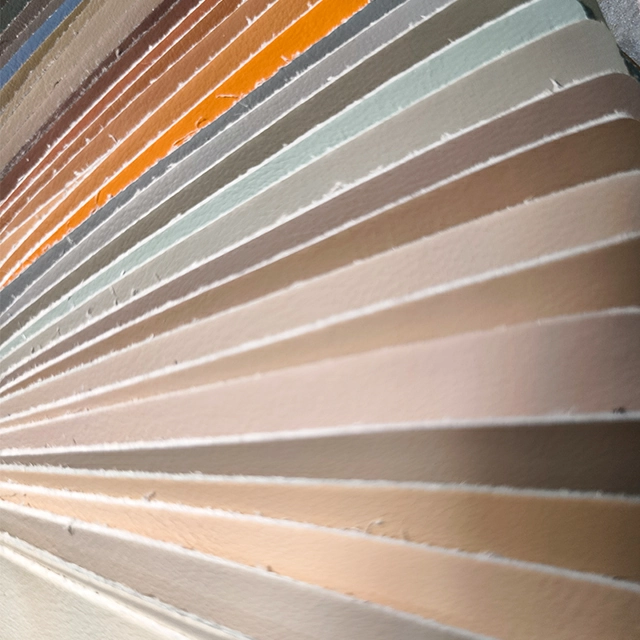
The supplied fan-style color card shows multiple color directions, including light neutrals, beige, taupe, brown, grey, black, orange, blue, green and other shades.
Because the color card is photographed as a fan rather than a numbered flat chart, the correct product wording is: color options can be reviewed from the fan-style microfiber leather color card, while final shade and surface consistency should be confirmed by physical swatch.
This avoids unsupported claims that every shade uses exactly the same construction or that all colors are immediately available for bulk production.
Current Product Information
| Current Product Fact | Information |
|---|---|
| Material | Microfiber Leather |
| Front Surface | Fine Grain |
| Surface Appearance | Low-Sheen / Matte-Looking |
| Visible Front Color | Ivory / Light Warm Grey |
| Reverse Side | Light Grey Fibrous Back |
| Visible Label | shown on sample card |
| Color Options | See fan-style color card |
| Thickness Image | Side edge shown; exact thickness not confirmed |
Current data limitation: Exact thickness, exact microfiber base density, internal construction, handfeel, softness, stretch, abrasion resistance, flex resistance, hydrolysis resistance, waterproof performance, REACH result and finished application are not confirmed from the supplied images.
Typical Microfiber Leather Specifications
The following information is a microfiber leather category reference rather than the confirmed specification of the current sample.
For many common microfiber leather applications, a typical thickness reference is approximately 0.6-2.0 mm. Additional microfiber structures may extend roughly from 0.5 mm to above 2.0 mm depending on substrate, density, surface layer and finished application.
| Item | Typical / Standard Reference |
|---|---|
| Material Category | Microfiber Leather |
| Typical Thickness Reference | Approx. 0.6-2.0 mm for many common microfiber leather applications |
| Extended Structure Range | Approx. 0.5 mm to above 2.0 mm depending on structure and application |
| Standard Width | 54″ / 137 cm |
| Typical Roll Length | Around 50 yards per roll |
| Current Sample Thickness | Not confirmed |
| Final Specification | Project-specific confirmation required |
The thickness reference above should not be entered into WooCommerce as the current SKU thickness unless the actual material has been measured or confirmed.
Microfiber Base Structure and Surface Development
Microfiber leather should not be described like ordinary fabric-backed synthetic leather unless the structure is verified. For microfiber leather projects, possible base-structure directions may include microfiber nonwoven base, PU-impregnated microfiber substrate, microfiber synthetic leather base, microfiber suede base, high-density microfiber substrate or application-specific microfiber composite structure.
For the current product, the visible reverse side supports describing it as a fibrous reverse side, but the exact internal base structure should remain subject to confirmation.
Surface development can be discussed around fine grain, smoother grain, nappa-style grain, pebble grain, custom embossing, matte or semi-matte finish. These are development options, not additional specifications already confirmed for the current sample.
Custom Color Development
The fan-style color card can help buyers shortlist a color direction before requesting a sample. For custom color development, buyers should provide both a Pantone color reference and a physical color swatch or material sample.
For light colors such as ivory, cream, pale grey and beige, a physical sample is especially useful because small differences in undertone can be difficult to judge from photos.
No Pantone number has been estimated from the uploaded images.
Performance Testing Options
Testing should be selected according to the final microfiber leather structure and finished application. Relevant project testing may include tensile strength, tear strength, peel strength, abrasion resistance, flex resistance, yellowing resistance, hydrolysis resistance and color fastness.
For light-colored microfiber leather, yellowing resistance and color fastness may be especially relevant depending on the target application and market, but no result is claimed for the current sample.
Testing should remain a project discussion, not a current-product claim.
REACH and Project Testing
REACH testing can be arranged according to project and target-market requirements. The applicable scope should be confirmed after reviewing the final microfiber leather structure, surface layer, color, finished application, destination market and customer testing requirement.
The current product should not be described as REACH Certified, REACH Compliant, eco-friendly, sustainable, non-toxic, waterproof or abrasion resistant unless a corresponding report or verified technical data is provided.
Applications and Material Selection
No finished application has been confirmed, so this product should not be automatically named as microfiber leather for shoes, microfiber leather for bags, microfiber leather for upholstery or microfiber leather for gloves.
Final suitability should be reviewed according to target application, actual thickness, base structure, surface grain, handfeel requirement, color standard, processing method and testing requirements.
Supply and Commercial Information
| Commercial Item | Danhon Reference |
|---|---|
| Standard Width | 54″ / 137 cm |
| Typical Roll Length | Around 50 yards per roll |
| Quotation Unit | Per Yard |
| Standard MOQ | 300 yards |
| Sample Preparation | Typically 3-5 days |
| Bulk Production | Typically 10-12 days after specifications are confirmed |
Pricing is quoted per yard according to the selected microfiber leather structure, surface grain, color, thickness, quantity and customization requirements.
Standard MOQ starts from 300 yards. For special color matching, specific base structures, customized surface grains or testing requirements, final MOQ and lead time should be confirmed according to the project.
Actual timing depends on material selection, color matching, sample approval, testing and order requirements.
FAQ
What makes this product a microfiber leather material?
The material has been identified as microfiber leather, and the uploaded images show a fine grain front surface with a fibrous reverse side. The exact microfiber base structure should still be confirmed by physical specification or sample review.
Is the thickness confirmed from the side photo?
No. The side photo shows the material edge and bending form, but it does not provide a scale or measured value. Exact thickness should be confirmed by measurement before being used as a product specification.
Can this microfiber leather be made in other colors?
Color development can be discussed. Buyers may select from the fan-style color card or provide a Pantone reference together with a physical color swatch for custom matching.
Is the back side a normal knitted fabric backing?
It should not be described that way unless verified. The reverse side appears fibrous, and microfiber leather commonly uses microfiber base structures rather than the standard knitted backing often seen on ordinary PU leather.
What tests can be arranged for microfiber leather?
Depending on the final structure and application, testing such as tensile strength, tear strength, peel strength, abrasion resistance, flex resistance, yellowing resistance, hydrolysis resistance and color fastness can be discussed. These are testing options, not current test results.
What information should buyers provide before requesting a sample?
Buyers should provide the intended application, preferred color or Pantone reference, target thickness if known, surface grain requirement, handfeel or structure requirement, estimated yardage and any testing needs. A physical reference sample is especially helpful for matching light colors and surface feel.
Request a Fine Grain Microfiber Leather Sample
Share your target application, preferred color, required thickness if known and estimated order quantity with Danhon.
For custom color or surface matching, provide your Pantone reference and physical sample whenever possible. Danhon can then review the suitable microfiber leather structure, sample direction, testing needs and quotation for your project.
Contact Danhon for microfiber leather sample development and include your color, surface, thickness and application requirements for evaluation.