Buyer: I often see suppliers describe a material as dry process PU leather. What does that actually mean?
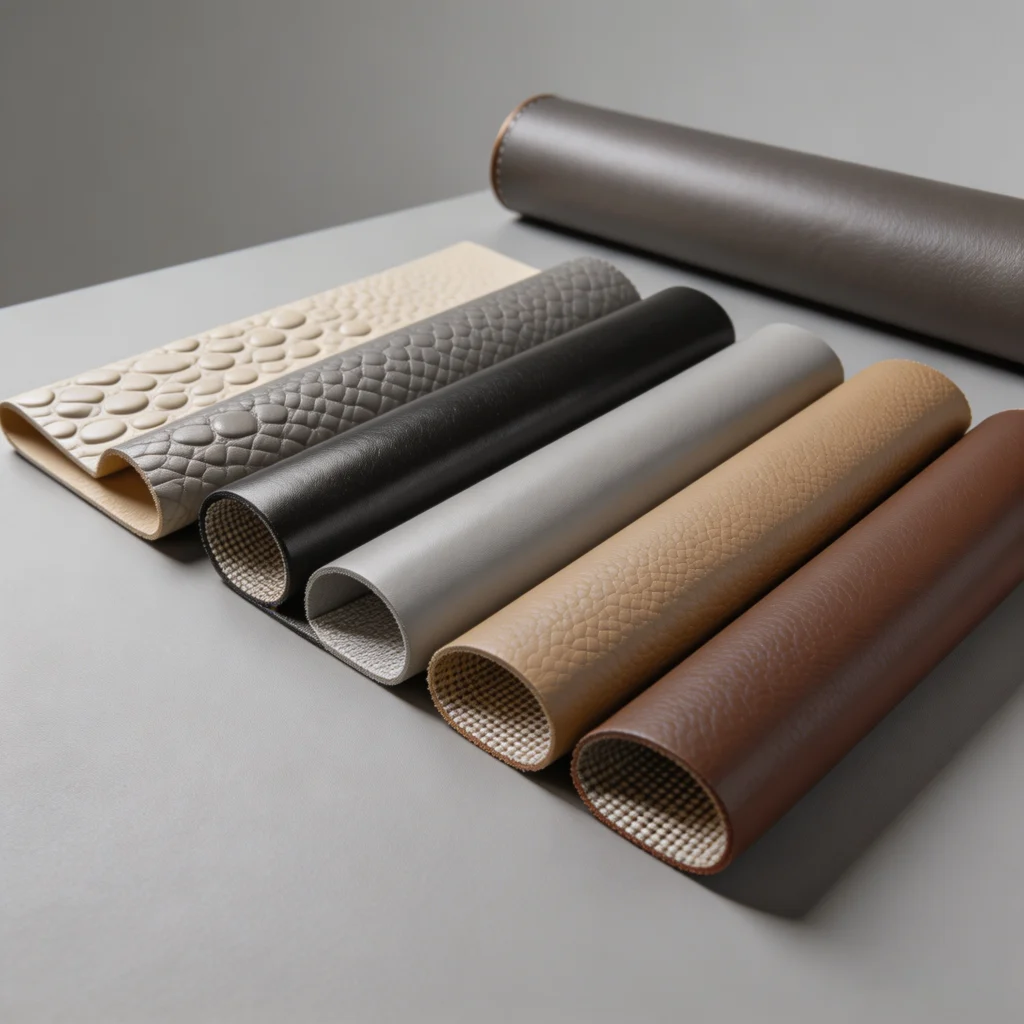
PU Leather Specialist: Dry process PU leather is a type of PU artificial leather made by forming one or more polyurethane coating layers and combining them with a textile backing. In a common transfer-coating process, the PU coating is first applied to release paper, dried or cured into a film, laminated to the backing fabric, and then separated from the release paper.
Quick Answer: The term “dry process” mainly describes the manufacturing route. It does not automatically mean that the material is solvent-free, waterproof, highly abrasion-resistant, or suitable for every application. Buyers still need to confirm the thickness, backing fabric, texture, hand feel, surface finish, and final product requirements.
What Does “Dry Process PU Leather” Actually Mean?
Buyer: Is dry PU leather simply a fabric with polyurethane coated directly onto it?
PU Leather Specialist: It can be produced through direct coating, but many dry-process materials use a transfer-coating method. In this process, the visible PU surface is built on release paper before being transferred and laminated to a textile substrate.
A published explanation of the dry PU leather production process describes both direct coating and transfer-coating routes. In transfer coating, the PU layer is formed on release paper before it is combined with the base fabric.
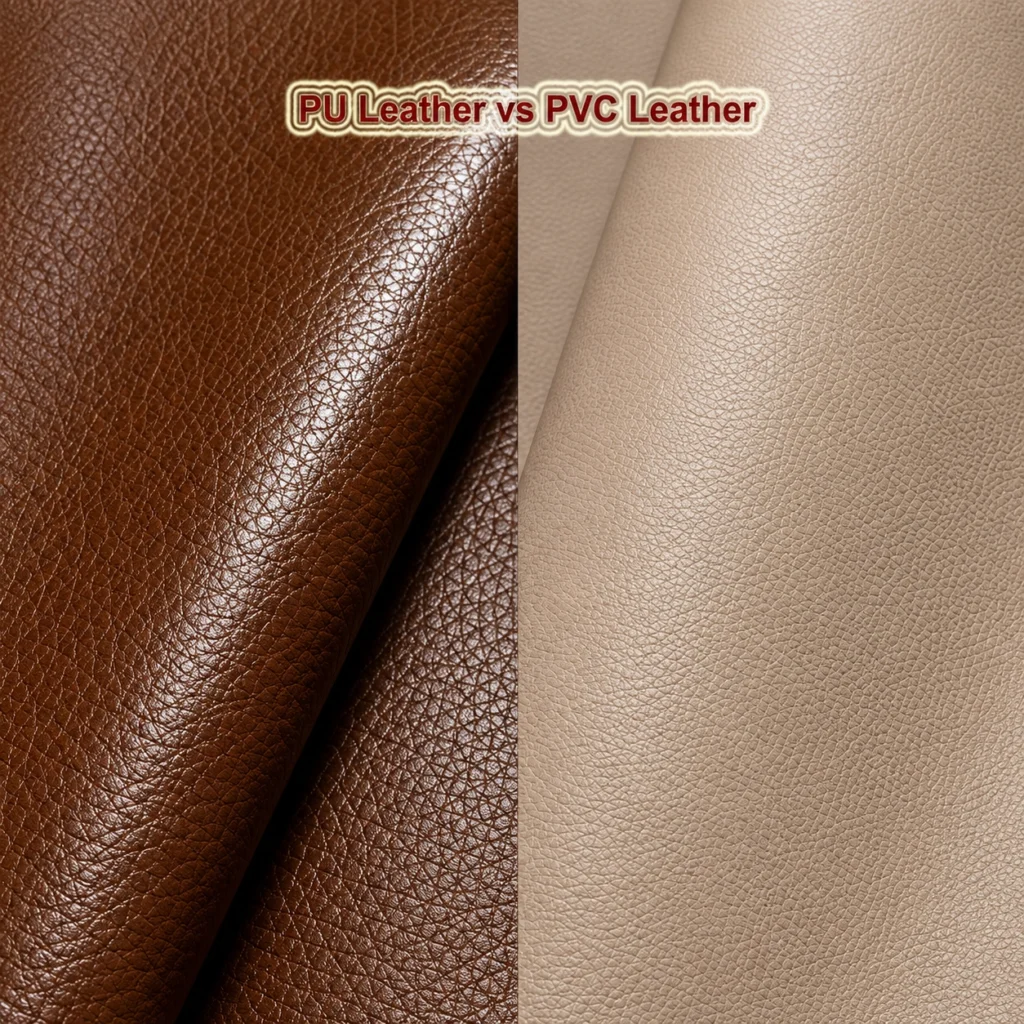
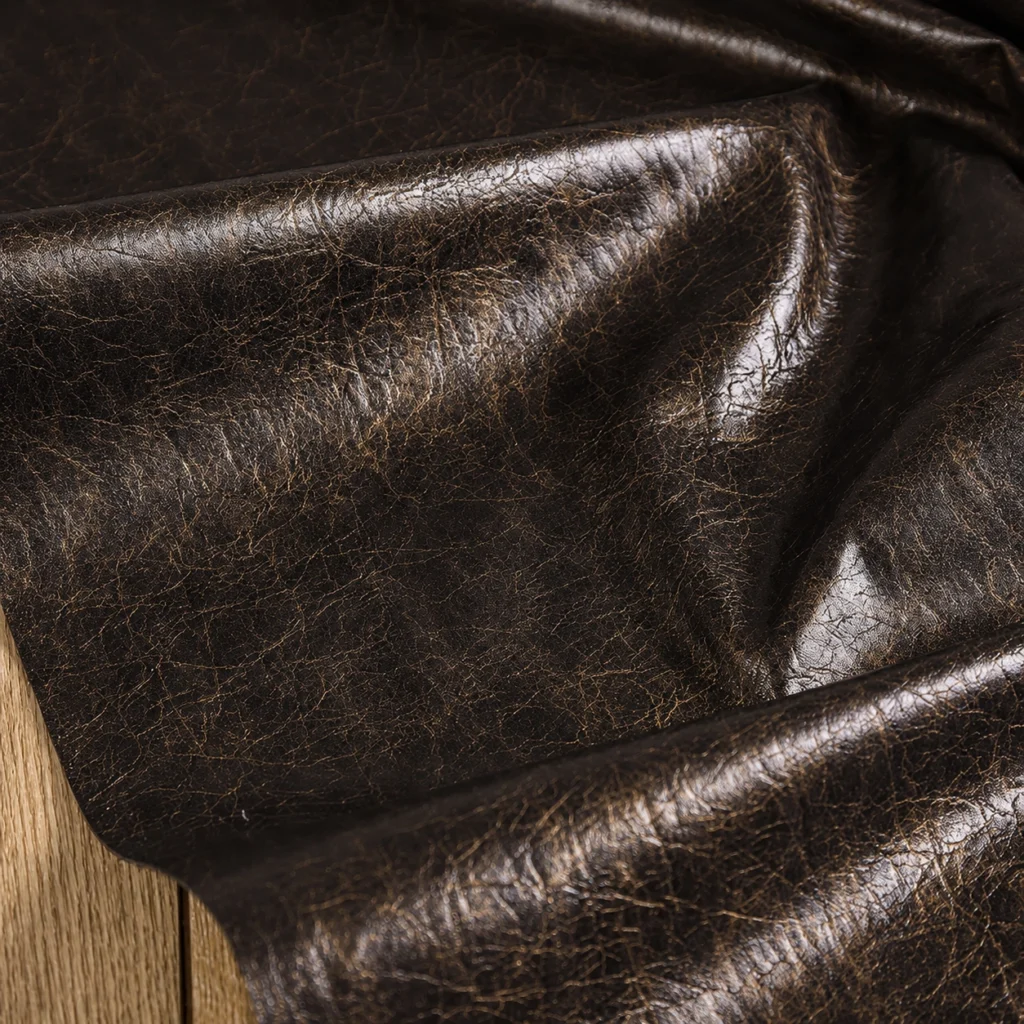
The release paper is important because its surface can influence the grain pattern, gloss level, and visual texture of the finished synthetic leather material. Smooth release paper may produce a clean surface, while embossed paper can transfer pebbled, litchi, napa-style, or other grain effects.
Research into the structure of artificial leather with textile support and polymer layers also shows why the final material cannot be judged only by its visible surface.
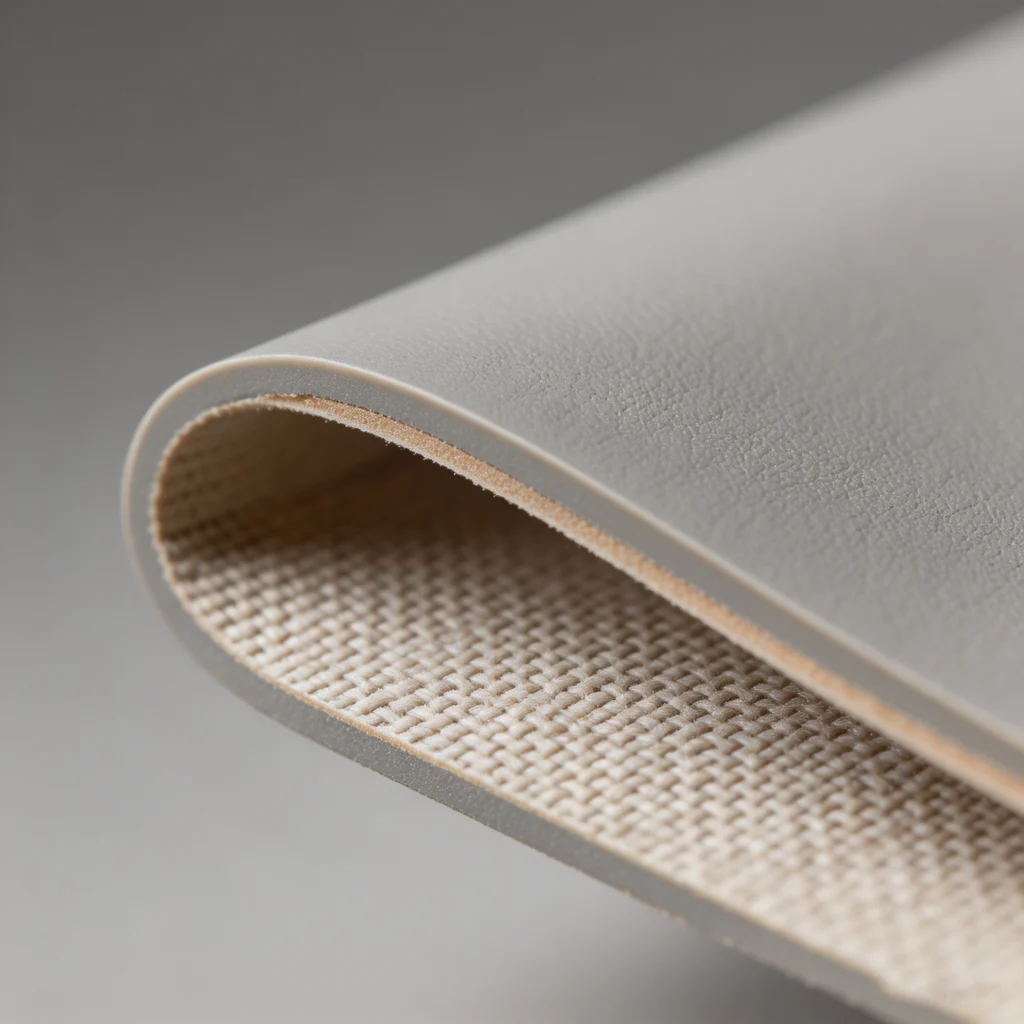
A dry-process PU leather material may contain several functional parts:
- A surface or top coating that controls appearance and touch.
- A compact PU layer that forms the main visible film structure.
- An adhesive or bonding layer when required by the construction.
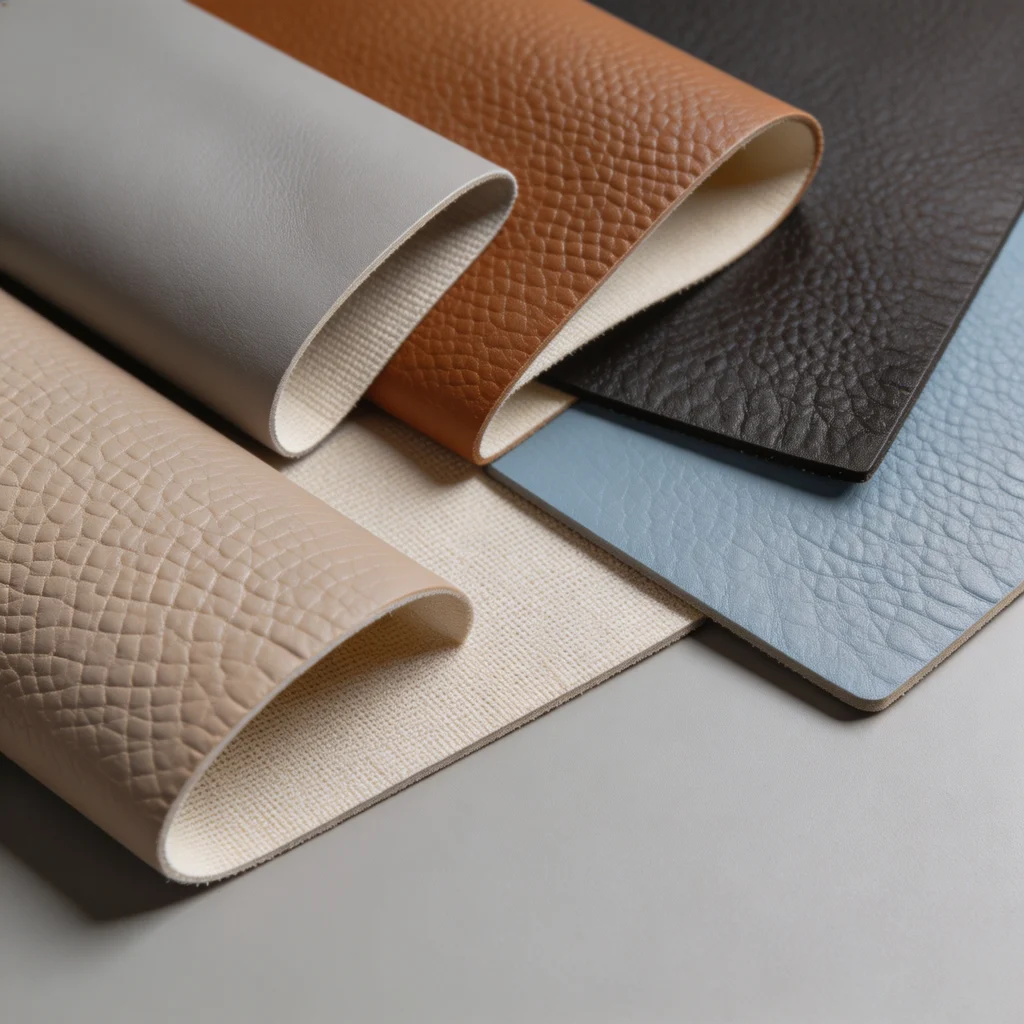
- A woven, knitted, or nonwoven textile backing.
This is why two materials described as dry process PU leather may still have very different softness, stability, flexibility, surface appearance, and production behavior.
How Is Dry PU Leather Produced?
Buyer: Can you explain the production process without using too many technical terms?
PU Leather Specialist: Yes. A simplified transfer-coating process normally includes the following stages:
- Release paper selection: A smooth or embossed release paper is selected according to the required surface grain.
- Surface coating: A prepared PU coating mixture is applied to the release paper.
- Drying or curing: The coated material passes through controlled heating stages to form a stable PU film.
- Additional layer application: Further PU or bonding layers may be added depending on the required construction.
- Backing lamination: The coated film is combined with a woven, knitted, or nonwoven textile backing.
- Final curing: The layers are bonded and stabilized under controlled production conditions.
- Paper separation: The release paper is removed, leaving its grain and finish on the visible PU surface.
- Finishing and inspection: The finished material may receive further surface treatment before color, thickness, width, and appearance are inspected.
Because polyurethane can be formulated into different material types, the exact resin formulation, coating system, and layer arrangement vary between products.
The process name alone is therefore not a complete material specification.
Does “Dry Process” Mean Solvent-Free?
Buyer: The word “dry” sounds cleaner. Does it mean the material is solvent-free?
PU Leather Specialist: No. This is one of the most common misunderstandings among material buyers.
“Dry process” describes how the PU coating is formed, dried, and laminated. It does not prove that the coating system is waterborne or solvent-free. Different manufacturers and product formulations may use different resin and coating systems.
Buyers should not treat the following terms as interchangeable:
- Dry process
- Waterborne PU
- Solvent-free PU
- Recycled material
- Sustainable material
Each term refers to a different production, chemical, or sourcing consideration.
If chemical restrictions or target-market requirements are important, ask the supplier for the specific material information, available documentation, and testing options. Buyers can also review Danhon’s currently available PU leather testing and certificate information, but final suitability should still be confirmed according to the specific material and project.
How Does Dry Process PU Leather Compare with Wet Process PU Leather?
Buyer: Is dry process PU leather better than wet process PU leather?
PU Leather Specialist: Neither process is automatically better. The two processes create different material structures and may suit different product requirements.
| Comparison Point | Dry Process PU Leather | Wet Process PU Leather |
|---|---|---|
| Basic production logic | PU layers are coated and dried before or during lamination with the textile backing. | PU is commonly coagulated to create a more porous internal structure. |
| Typical coating structure | Usually forms a relatively compact PU film. | Usually contains a more porous or microporous PU layer. |
| Surface control | Release paper can provide consistent grain and surface-finish options. | Additional surface finishing may be applied after the base structure is formed. |
| Air and moisture movement | May be more limited because of the compact film structure. | May provide greater air or moisture movement when the porous structure is suitable. |
| Common sourcing focus | Surface appearance, grain, color, thickness, backing fabric, and hand feel. | Porous structure, softness, base quality, finishing, and application performance. |
| Buyer decision | Often considered when controlled surface appearance and grain consistency are important. | Often considered when a porous structure or different comfort profile is required. |
The comparison should remain product-specific. Resin formulation, backing fabric, coating thickness, and finishing treatment may influence the final material as much as the general process category.
Why Is Dry Process PU Leather Used for Bags and Shoes?
Buyer: What are the main dry process PU leather applications?
PU Leather Specialist: Dry-process material may be considered for bags, footwear, garments, gloves, jewelry boxes, and packaging. However, each application needs a different balance of appearance, structure, softness, flexibility, and production stability.
Dry Process PU Leather for Bags
When comparing PU leather for bags, buyers can choose from different colors, grains, surface finishes, backing fabrics, and thickness directions.
Dry-process materials may be used for handbags, backpacks, wallets, luggage components, decorative panels, and other small leather goods.
However, an attractive surface does not automatically mean that the material is suitable for a structured bag. Buyers should also examine:
- Backing fabric stability
- Material thickness
- Folding behavior
- Edge appearance
- Cutting and stitching performance
- Compatibility with reinforcement materials
A thicker material may provide more structure, but it may also reduce softness and flexibility. A softer backing can improve hand feel, but it may not provide enough support for a rigid handbag shape.
Dry Process PU Leather for Shoes
When selecting PU leather for shoes, appearance is only one part of the decision.
For shoe upper applications, buyers may also need to consider:
- Flexing behavior
- Backing stability
- Cutting performance
- Stitching response
- Surface durability
- Softness and structural support
- Color and batch consistency
A material suitable for a decorative shoe panel may not be suitable for an area that bends repeatedly during wear.
Testing requirements should be discussed according to the shoe design, target market, and final application. Physical samples should also be reviewed under realistic folding, stitching, and assembly conditions before bulk production.
Which Specifications Matter More Than the Process Name?
Buyer: What should I compare when two suppliers both offer dry PU leather?
PU Leather Specialist: Start with the finished product and its manufacturing requirements, not only the process label.
| Specification | Why It Matters | Recommended Buyer Check |
|---|---|---|
| Thickness | Affects softness, structure, folding, and production handling. | Confirm an acceptable range and compare physical samples. |
| Backing fabric | Influences stability, stretch, strength, and hand feel. | Ask whether the backing is woven, knitted, or nonwoven. |
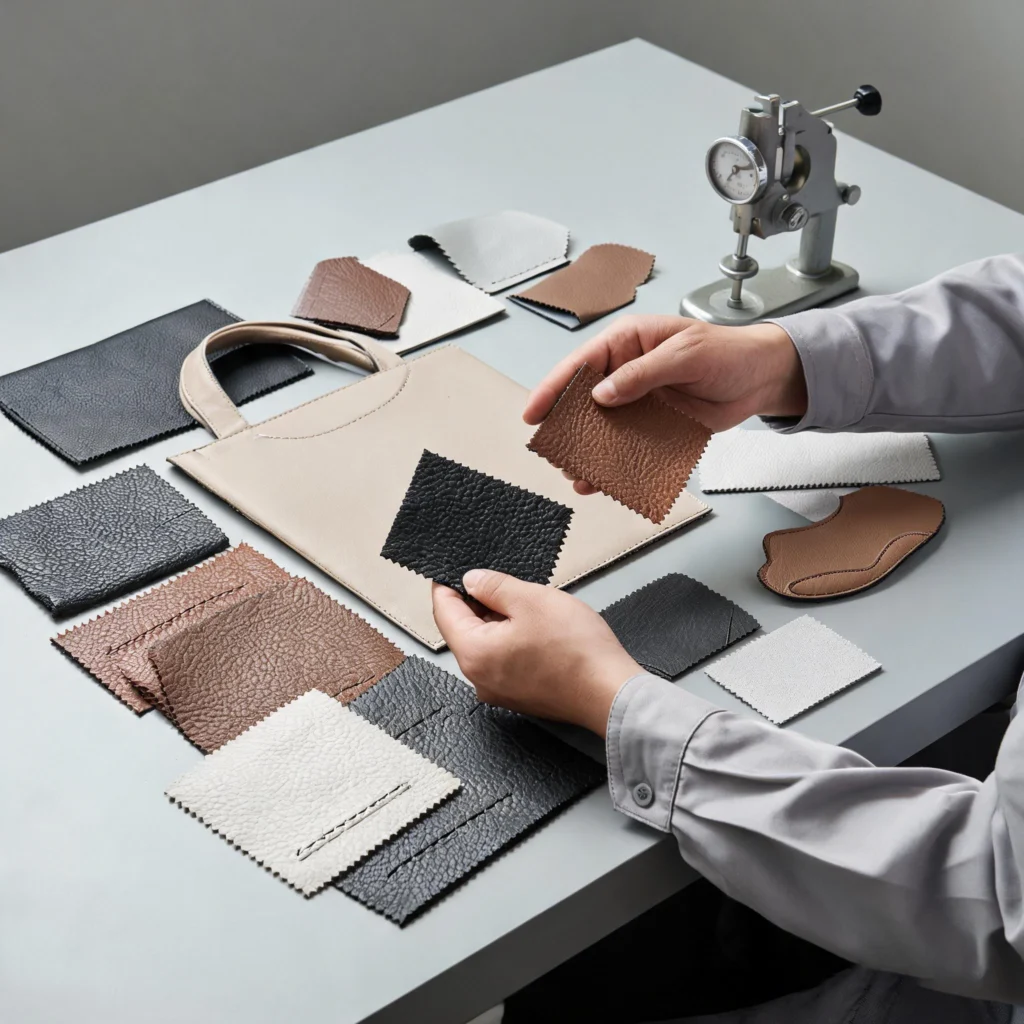
| Surface texture | Changes appearance, touch, light reflection, and finished-product style. | Review close-up samples instead of relying only on finished-product photos. |
| Hand feel | Determines whether the material feels soft, firm, dry, smooth, or elastic. | Provide a physical reference sample when possible. |
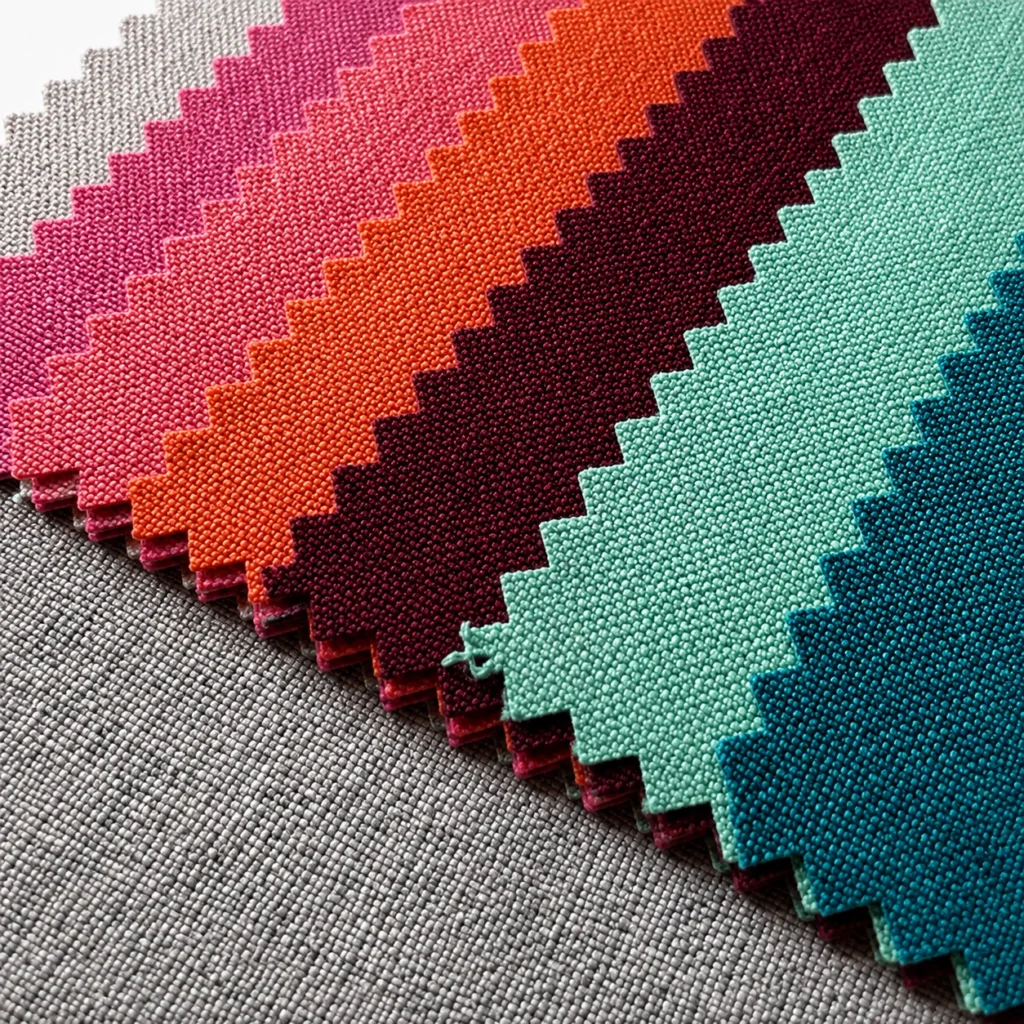
| Color | May appear different under different lighting and on different surface grains. | Use a color card to select the direction, then approve a physical sample. |
| Surface finish | Controls gloss, matte effect, touch, and visual presentation. | Confirm the finish together with the selected texture and color. |
| Application testing | Different products place different demands on the material. | Discuss testing according to the final product and target market. |
Danhon’s common PU artificial leather range is approximately 0.7mm to 1.3mm, with a common width of around 54 inches depending on the product. Buyers can review the available PU artificial leather products to compare different thicknesses, surface grains, colors, and application directions.
These specifications are useful starting points, but the final material should be confirmed according to each project.
What Common Mistakes Occur During Sample Approval?
Buyer: Why does the first sample sometimes fail to match the finished product photo?
PU Leather Specialist: A finished-product image rarely provides enough technical information for accurate material matching.
One common issue occurs when a buyer sends only a handbag or shoe photo and asks for the same material. The supplier may see the general color and grain, but cannot reliably determine the thickness, backing fabric, softness, stretch, gloss level, or required hand feel.
Other common mistakes include:
- Selecting a color only from a computer or phone screen.
- Choosing the texture before confirming thickness and backing fabric.
- Using a soft sample for a product that needs structural support.
- Approving the surface appearance without checking folding or stitching.
- Assuming that one test result means the material suits every application.
- Changing the color, texture, thickness, and backing at the same time.
- Failing to compare the sample under the actual product lighting conditions.
Color cards are useful for narrowing the initial direction, but final approval should normally be based on a physical sample.
What Information Should a Buyer Send to a PU Leather Supplier?
Buyer: What should I prepare before requesting a quotation or sample?
PU Leather Specialist: A clear sourcing brief can reduce misunderstandings and unnecessary sample revisions.
Buyers should provide as much of the following information as possible:
- The finished-product type, such as a handbag, shoe upper, glove, garment, or jewelry box.
- The preferred thickness or an acceptable thickness range.
- The required material width when it differs from the common width.
- A color reference, physical sample, or suitable color direction.
- A close-up image or physical reference for the required grain.
- The preferred hand feel, such as soft, firm, smooth, dry, or elastic.
- The backing fabric preference when known.
- The required surface finish, such as matte, semi-matte, or glossy.
- The target market and any project-specific testing requirements.
- The estimated order quantity and current development stage.
When exact specifications are not available, a supplier can begin by comparing several existing swatches. This is usually more reliable than trying to identify the entire material from one finished-product photograph.
How Can Danhon Support Dry PU Leather Sourcing?
Buyer: Can dry process PU leather be adjusted for different bag or shoe projects?
PU Leather Specialist: Suitable options can be discussed according to the product design, application, and production requirements.
Danhon supplies PU artificial leather for shoes, bags, garments, gloves, jewelry boxes, and packaging. Depending on the project, buyers can discuss:
- Color
- Surface texture
- Thickness
- Backing fabric
- Hand feel
- Embossing
- Gloss level
- Surface finish
For custom development, it is usually better to confirm one material direction at a time. Buyers can first identify a suitable base material and then adjust the color, texture, backing, or surface finish.
Changing every parameter at once may make sample evaluation more difficult and can increase the risk of repeated revisions.
Physical samples and color cards remain important because the same color may look different on smooth, matte, glossy, or deeply embossed surfaces.
Final Buyer Recommendation
Buyer: What is the most important point to remember?
PU Leather Specialist: Do not purchase dry process PU leather based only on the process name.
The term explains how the PU coating is formed and combined with the textile substrate, but it does not fully define the finished material.
The final result depends on:
- PU coating formulation
- Layer structure
- Backing fabric
- Thickness
- Surface texture
- Hand feel
- Color
- Surface finish
- Final application requirements
For bags and shoes, buyers should compare physical samples under realistic production conditions. The most suitable material is not simply the one with the most attractive grain. It is the material that matches the required appearance, structure, flexibility, and manufacturing process.
Frequently Asked Questions
What is dry process PU leather?
Dry process PU leather is a synthetic leather material made by forming and drying PU coating layers before or during lamination with a textile backing. In a common transfer process, the visible PU film is formed on release paper before being combined with the backing fabric.
Is dry PU leather the same as solvent-free PU leather?
No. Dry process describes the coating, drying, and lamination route. It does not confirm whether the coating system is solvent-based, waterborne, or solvent-free.
What are the main dry process PU leather applications?
Dry process PU leather may be considered for bags, shoes, garments, gloves, jewelry boxes, and packaging. Final suitability depends on the thickness, backing fabric, coating structure, surface finish, and application requirements.
Is dry process PU leather suitable for bags?
Dry process PU leather for bags can provide different texture, color, and surface-finish options. Buyers should also examine structural support, backing stability, folding behavior, edge appearance, and compatibility with the bag construction.
Can dry process PU leather be used for shoe uppers?
Certain dry process PU leather options may be used for shoe uppers and decorative shoe components. Flexing behavior, stitching response, backing stability, and surface durability should be checked according to the shoe design.
Is dry process PU leather better than wet process PU leather?
Not necessarily. Dry and wet processes create different material structures. The better choice depends on the required surface appearance, porous structure, softness, backing, production method, and final application.
Should buyers confirm PU leather by color card or physical sample?
A color card is useful for selecting the initial color and texture direction. Final color, grain, thickness, hand feel, and surface finish should normally be approved through a physical material sample.
Can the thickness and backing fabric be customized?
Thickness and backing-fabric options can be discussed according to the application and production feasibility. Buyers should check how any adjustment affects softness, structure, flexibility, and production handling.
Does dry process PU leather automatically provide good abrasion resistance?
No. Abrasion performance depends on the PU formulation, surface coating, material structure, and test conditions. It should be evaluated according to the final product and project-specific requirements.
What should buyers ask a PU leather supplier before ordering?
Buyers should ask about thickness, width, backing fabric, surface texture, hand feel, color approval, surface finish, customization options, and available testing support. The final application and target market should also be clearly explained.
Request Dry Process PU Leather Samples or Color Cards
If you are selecting dry process PU leather for bags, shoes, garments, or packaging projects, contact Danhon to discuss suitable thickness, texture, color, backing fabric, and hand-feel options.
Physical samples and color cards can help confirm the material direction before custom development or bulk production.